Act Now to End Violence Against Women – Is it Rhetoric or Reality in Sudan?

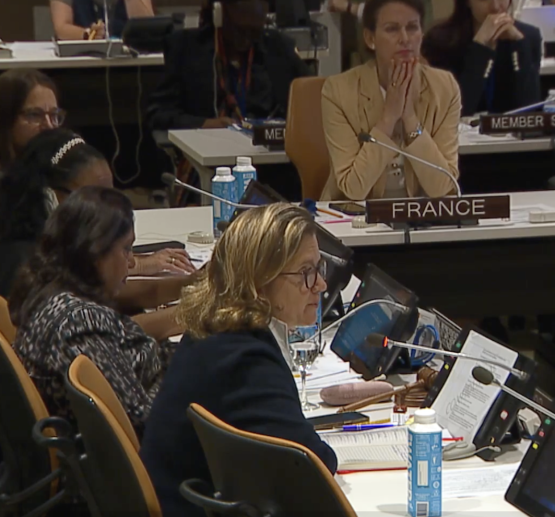
“Act Now to End Violence Against Women” was the theme of the recent global summit that was hosted by British government in London and was largely attended by people from all walks of life, including global intergovernmental institutions such as the UN and other nongovernmental organizations. While the summit was an important milestone toward addressing VAW (violence against women) worldwide, we believe there is a clear indifference in the world response to the plight of women. Unless there are practical steps taken and an inclusive approach that can speak to every single woman in conflict, or if the vicious attacks against women in Sudan are addressed, the campaign will only remain slogan.

Rape and Murder of a Woman in a Darfur Camp

While the world leaders and women’s rights advocates were meeting in London and debating how to address violence against women in conflict, sadly a Darfuri woman, Kltoma, was brutally raped by the Janjaweed militias and murdered[1] not far from Kalma camp3 where she had lived for years. However, there was no mention of this at the summit. Sudan, where the government policy and laws reinforce violence against women such as flogging women because of their choice of wearing pants and Darfur, where rape has been and still used as a weapon of war are notorious for VAW. Yet they were overlooked at one of the most significant platforms to address these issues.

Rape in Darfur is not just sporadic incidents, but it is a systematic plan by the government of Sudan and its Janjaweed militias to dehumanize, humiliate and kill the will of women in Darfur. It has continued to devastate women and girls for the eleven years of the crises in Darfur. It is imperative that the global summit includes the Darfur and Sudan in its priority agenda otherwise the campaign will not effectively eliminate a large amount of sexual violence in conflict in the world.

It is quite clear that because of the indifference and disparity in the way the world responds to the plight of women being raped and attacked, VAW has continued unremittingly in Darfur and Sudan.

Death Sentence for Meriam

By now, many have heard of the injustice that has befallen in Sudan concerning Meriam Ibrahim being sentenced to death for apostasy and adultery—apostasy because she has supposedly abandoned the Muslim faith and adultery because in Sudan’s Islamic law, Muslim women are not allow to marry non-Muslims (her husband is Christian). What makes it even worse is that Meriam recently had to give birth in prison because of her death sentence. The global community mostly agrees with the statement made by Amnesty International calling the decision “abhorrent”.

While there has been a large outpouring of support for her, the issue still remains of the injustice that she has experienced for expressing her right to religious freedom. Meriam is being persecuted for refusing to recant her Christian faith. However, the government does not see it this way. They believe that Meriam has abandoned the Islamic faith, even though she expresses that her mother, due to the lack of her father’s presence, raised her as a Christian during her childhood[2].

What this whole dilemma does is raise the debate of Sudan needing to allow not only religious freedom, but allowing more freedoms to women in general. Sudan has ratified the UN conventions meaning, they agreed to defend the concept of freedom of religion[3]. In going against this, it is another way of Sudan displaying their lack of willingness to develop as a state in the modern world. It also is an issue of oppressing women—if Meriam has testified in court that she was raised Christian, then there is no issue with her marriage and, therefore, she should not be persecuted. It is a problem of Sudanese suppression of women’s rights. Because the court wants to believe that she was not raised Christian and they want to believe she is lying, they treat her as such. Through all this we have found Sudan has problems in their justice system, in allowing expression of religious freedom, and in accepting that women should be given equal rights as citizens.

As always we stand vigilant to defend women’s rights. Darfur Women Action Group joined rallies outside of the White House and the Sudanese Embassy this past Thursday and Friday (June 12 and 13th) and stood in solidarity with her plight and to demand protection for Meriam, to have her death sentence overturned, and for her and her children to be granted protection by the United States government. Her children and husband are U.S. citizens and as a woman at risk of death who is a part of that family, she deserves protection and support from all world leaders.

What is happening in Sudan is the responsibility of the global community. Allowing a vicious government to continue deliberately committing atrocities against its own people and direct its most brutal attacks against women is immoral. Because of the inaction from the international community to protect women in Darfur from attacks against them it has continued with impunity. It is worth noting that the Global Summit to End Violence Against Women has overlooked the women of Darfur and excluded Sudan in general. The hard reality is that heinous crimes of raping a and murdering a woman continue, and sadly those who gather at the global summit have not expressed outrage or have even noticed what had happened in Darfur’s Kalma Camp

In order for the global summit and to succeed in completing its priority agendas and for their campaign to be effective, Darfur and Sudan should not be an exception.

By Niemat Ahmadi, President of DWAG and Genevieve Turcott, Outreach and Government Relations Intern

[1] http://reliefweb.int/report/sudan/south-darfur-woman-raped-and-murdered

[2] http://www.bbc.com/news/world-africa-27424064

[3] https://www.radiodabanga.org/node/74700

How Darfuri Women Must Overcome Gendercide and Gender Based Violence

Recently, in terms of genocidal actions, one of the most prevalent weapons an oppressor group uses to torture their female victims is rape. While is it widely known that rape is used as a weapon in genocide, it is confusing to some about why this could be conceivably worse than the other methods of torment that Darfuri women are being subjected to. While rape targets women mainly, it affects the entire community that the women belong to. In Darfur, the Janjaweed, a group who attacks the Darfuris, uses rape because it is the most effective way for them to be able to demoralize the women of the African tribes. They wait until the women are isolated from a group, usually when they are collecting firewood or water. There are, more often than not, cases of women being attacked in refugee camps, which is even more horrific considering Darfuri women come to these camps to find a safe haven from their destroyed villages. Eric Reeves has categorized a good portion of the reports from Radio Dabanga to give an idea of the types of attacks occurring.

By placing this target on women, the Janjaweed and their partners are committing what is known as gendercide. Gendercide is a term that was created by Mary Anna Warren to highlight the outstandingly large number of female civilian deaths that are occurring throughout the world. She did not want to make it a separate category within genocide, but rather wanted to make sure that people were aware of the horrible crimes that are perpetrated toward women. Gendercide is not just for women, usually, the men are the main victims, but what it highlights is a type of mass killing that focuses solely on one gender of that society[1]. An idea that is similar to the term gendercide is gender based violence, or GBV. This is an issue that spans the spectrum of not just genocide, but of violence in genera towards any gender for any reason.

The consequence of rape is that is affects the whole societal system of the victims. It is what is called a “social death”, one that does not physically kill the victims, but makes them shells of people, scarring them mentally and forcing them to live with the horrible memory. Genocide is extremely personal, and the perpetrators take extra care to make sure they scar a society to a point that they will never recover. How then, can these women be helped and what is the right way to protect them, or if they have already been attacked, what is the best way they can be comforted and helped to overcome the trauma? The first priority is protection. This will be needed in both the local villages and around the refugee camps, both places where women seem to be targeted the most. The next important element is listening to the victim. The more we can understand the struggles of the victim, the more we are able to help them recover in the post-genocide era. For technicality purposes, a report from Harvard University actually was able to categorize steps that would be the best way to approach helping the female rape victims in Darfur. These steps cover elements such as setting up places in the camps where the women can safely report if they have been raped to gynecological services for women who may be pregnant as a result of the rape.

It is so important to understand the gravity that the impact of rape has on the women who are subjected to it in Darfur. One of the main issues Darfur Women Action Group looks to address is violence against women and the use of rape as a weapon of war, and while we may never be able to understand what these women have gone through, if we can comprehend how it does affect them, we can better help empower them to overcome the effects of the genocide.

By Genevieve Turcott, Outreach and Government Relations Intern

Genevieve is a student at James Madison University majoring in International Affairs and minoring in Humanitarian Affairs. She has an immense passion for human rights, especially ending genocide, and global development through education.

[1] Genocide: A Comprehensive Introduction 2nd ed., Adam Jones, pp. 323

Rally on April 25, 2014 in Washington DC – To mark the Global Day for Action against Genocide in Darfur. The Sudanese diaspora

FOR IMMEDIATE RELEASE

CONTACT: Niemat Ahmadai

E-MAIL: niemat@darfurwomenaction.org , Telephone: 804 439 2022

Abdalla Babikir, Telephone: 202 369 1664

Rally on April 25, 2014 in Washington DC – To mark the Global Day for Action against Genocide in Darfur.

The Sudanese diaspora, along with other human rights groups, demand action to end the ongoing and escalating genocide in Darfur.

Washington, DC—The Sudanese diaspora and human rights groups will gather for a rally in Washington DC to express concerns and demand an urgent action to end the ongoing and recently escalating genocidal attacks in Darfur. This week Sudanese activists from all over the world will hold events, rallies, protests, and forums to raise awareness of the ongoing and escalating genocide in Darfur. The events, begun earlier in South Dakota, will conclude on Friday, April 25th in Washington DC and on April 26th in Toronto Canada. Other events will continue throughout May to draw the world’s attention to the rising violence in Darfur. Please join the Darfur Women Action Group and the Marginalized Sudanese Forum of North America on the sidewalk in front of the White House from noon-2pm for a protest on April 25th.

Since late February, Darfur has witnessed a new wave of bloody attacks, mass killings, rape, and displacement of thousands as the government-sponsored Janjaweed militias ignited a new surge of violence in Darfur. There have been more reports of intensified aerial bombings by the Sudanese government, particularly in eastern Jebel Marra and other areas in North Darfur, resulting in mass displacement. Recent UN reports indicate that the number of displaced people at the beginning of 2014 was around 215,000; however, many aid agencies have been barred from reaching communities in need, so this is a low estimate.

The Sudanese government has been accused of carrying out these mass atrocities. Its President, Omar al-Bashir, stands accused by the world of the most heinous crimes – genocide, war crimes and crimes against humanity. Despite the two warrants for his arrest by the UN International Criminal Court, Bashir remains at large as a fugitive of justice who continues to commit crimes and is free to travel and participate in international and regional forums. Many of the world’s leaders have remained silent in light of the recent violence in Darfur.

We are demanding that the Obama administration vigorously lead the UN Security Council to ensure the following demands are met: Investigation into crimes committed in Darfur, investigation into UNAMID’s ineffectiveness and the cover-up of Al- Bashir’s crimes and lack of adequate reporting. We also demand pressure for unimpeded humanitarian access and accountability for al-Bashir and his sponsored Janjaweed militatias along with support for the ICC to bring the criminals to justice. In addition, we demand pressure on UNHCR and other UN forces and agencies to provide protection and assistance needed to the Darfuri refuges in South Sudan, Chad and other countries where they remain vulnerable to attacks by multiple actors. On April

25th, people around the world will stand together with the people of Darfur to raise awareness of the ongoing violence in Darfur. Witnesses from the diaspora community will be available for interviews For more information about events in your area and how you can get involved please visit www.darfurwomenactiongroup.org . If unable to attend, please send a message of solidarity to info@darfurwomenaction.org

Global Day for Action against the Unfolding Genocide in Darfur April 25, 2014

On this day, the Darfuri and Sudanese diaspora, along with friends of Darfur and Sudan worldwide, will be holding events, including rallies, protests, forums, workshops and panel discussions in the United States, Europe, Canada, Africa and Australia to draw the world’s attention to and to protest the unfolding genocide in Darfur today.

Since February 28, 2014, Darfur has witnessed a new wave of bloody attacks, comprising mass killing, rape, and destruction of entire villages and camps, resulting in massive new displacement and loss of countless innocent lives. The government-sponsored Janjaweed militias – Rapid Support Forces (RSF) – are currently waging a new surge of violence in North, South, East and Central Darfur aimed at exterminating the remainder of the survivors of the 11 year long genocide; people who have continued to endure an unimaginable horror and dehumanization, while struggling to survive.

Intensified air bombing, particularly in eastern Jebel Marra and other areas in North Darfur, are occurring daily. Recent UN reports indicate that the number of displaced people at the beginning of 2014 was about 215,000 – and this is only from the places where the UN has some access. However, most of the affected communities are blocked by the government militias. In addition, the humanitarian organizations are threatened, expelled or prevented from reaching the needy.

As you all know, President Bashir of Sudan stands accused by the world of the most heinous crimes – genocide, war crimes and crimes against humanity. The International Criminal Court (ICC) has issued two warrants for his arrest with 10 counts. However, Bashir remains at large as a fugitive of justice who has continued to commit crimes while free to travel and participate in international and regional forums, where he is constantly cheered and welcomed as an ordinary diplomat

In spite of the longstanding suffering and the new surge of violence against our people in Darfur, world leaders remain silent or, at best, pay lip service with words of condemnation. This indicates that we are currently living in a very dangerous world where genocide can be and has, in fact, been tolerated to continue for more than a decade. Genocide is the worse type of human destruction and we believe that human destruction anywhere affects our humanity everywhere. Therefore, we are appealing to you all as ordinary citizens who are fighting against genocide to join us, become a voice, strengthen and amplify the voices of Darfuri survivors by speaking up for the people of Darfur and hold your leaders accountable for their inaction to end genocide or pursue accountability for these serious crimes that continue to be committed by al-Bashir and his government-sponsored Janjaweed militias.

Please Join Us

Details about the address and the places of the events will be forthcoming; stay tuned

You don’t want to miss this: DWAG’s 2nd Nantional Action Symposium- 2013

Dear Supporters:

We are less than 3 weeks away from our exciting national action symposium, Women and Genocide in the 21st Century – and it promises to be an extraordinary event that you definitely do not want to miss.

·         You will have a unique opportunity to meet a man of truth, the former head of the United Nations in Sudan and first-hand witness of the genocide attacks in Darfur, Dr. Mukesh Kapila. Dr. Kapila was the Special Advisor to the UN High Commissioner for Human Rights in Geneva and was also head of the UK Government’s Conflict and Humanitarian Affairs Department. In 2003, he was honored by Queen Elizabeth II and named a Commander of the Order of the British Empire for his international service. Driven by fury, he consciously and courageously ended his career/ability to work with both the UN and UK Government in order to bring light to the atrocities taking place in Darfur. His book, Against the Tide of Evil, provides an eye-opening, moving, thought-provoking, powerful, and passionate personal account of the Darfur genocide. He has recently joined the advisory board of DWAG. Watch an introduction and read about his extraordinary book at: www.mukeshkapila.org/book/about-book.html. We are honored to have him join us to share his own experience with genocide in Darfur.

·        You will also meet Emmanuel Itier, a member of DWAG’s Board and director of the powerful documentary FEMME, Women Healing the World, which will be shown at the Symposium. An experienced feature film producer, Emmanuel Itier directed the thrillerTell Me No Lies (2000), the horror film Scarecrow (2002), and produced the film Wildflower (1999) in addition to a number of other pictures. He also directed the Peace documentary The Invocation narrated by Sharon Stone, which features Desmond Tutu, His Holiness The Dalai Lama, Deepak Chopra, and many other worldwide peace activists. We are very excited to hear him discuss why he became a women’s rights activist and how women can contribute to the betterment of our world despite being victimized. Watch the official trailer for FEMME, Women Healing the World at: http://www.youtube.com/watch?v=RjYopoPo55A.

·       Hear the incredible story of El Fadel Arbab, a Darfuri genocide survivor, who was only 12 years old when he was exposed to the horror and tragedy that has befallen Darfur. You will also meet a group of wonderful high school students from Portland, Maine and see their outstanding art exhibit, ” The Beauty of Darfur and the Tragedy of Genocide” inspired by El Fadel’s story. Learn how the students were inspired by this extremely brave individual and how they are creatively turning his story into a beautiful work of art at:

http://www.wcsh6.com/video/default.aspx?bctid=1253347134001.

·         Meet the Advocacy and Women’s Rights Specialist for the UN Action Against Sexual Violence in Conflict, Letitia Anderson. Ms. Anderson helps develop a comprehensive advocacy strategy to encourage the Security Council to address sexual violence as a matter of international peace and security and to ensure that sexual violence is considered an issue of high priority to the Human Rights Council. She is also building a partnership base for the “Stop Rape Now” campaign. Prior to joining the UN, Ms. Anderson worked as Policy Adviser on Women and War to the ICRC in Geneva and has undertaken field research in DRC, Liberia, and Rwanda, and is author of two reports on IHL published by the ICRC. We are honored to have her with us to address sexual violence in war zones and how it affects women and their entire communities and what needs to be done to immediately respond to emergencies in addition to long-term needs to enable them to overcome tragedy.

·         Listen to the remarkable stories of women survivors from Rwanda, the Congo and Darfur. These stories will not focus on the aspect of women victimization and pain but on courage and resilience during their experiences of unimaginable suffering.

·         Meet a diverse group of civil society leaders from various regions of Sudan, who will be articulating their vision and priorities for sustainable change in their home land.

·          Contribute to the development of a strategy for sustainable change in Sudan and learn about DWAG’s unique approach to genocide prevention that will be utilized to end genocide not only in Sudan, but around the world.

·          Help build the movement that will educate, engage, and empower the affected communities and enabling them to become strong forces in combating genocide.

·          Meet with your Congressional Representatives and tell them what YOU care about and what THEY can do to help the suffering people of Sudan.

Come to the Symposium and leave with a wealth of knowledge that will help you as you advocate ending genocide in Sudan and around the world. We will be honored to have you join us and to work together toward ending genocide.

Join us for the Women & Genocide National Symposium 2013

On behalf of DWAG’s team:

Norrie Kurtz

Niemat Ahmadi

Dominique Perez

Brenda Tyler

An Empowering Weekend with Darfur Women Action Group

download (5)

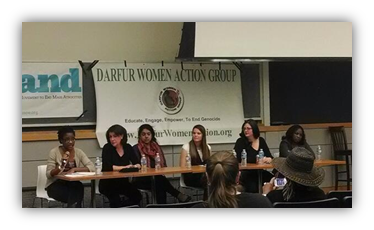
“It’s about action, not words”—these were part of the opening remarks from Elizabeth Blackney, media strategist and advocate, at the 2013 Darfur Women Action Group (DWAG) Symposium. Indeed there were a lot of words shared over the two day conference, but there was an even more urgent call to action by the many awe-inspiring panelists including women activists from the Democratic Republic of the Congo, Sudan, Syria, student activists, a UN representative, and many more.

The conference opened with remarks from the Darfur Women Action Group’s Chairwoman who reminded us that the species cannot survive if genocide is tolerated. This makes the appeal to end genocide personal, because it is true. Genocide is a crime against humanity, and therefore it is a crime against you and me. Niemat Ahmadi, founder of DWAG, gave a moving speech about her experiences in Darfur and provided some history about the creation of DWAG as a way to empower local voices to enact meaningful change. Niemat spoke powerfully as she reminded us that “Darfur is an example of the world’s inaction”. Equally as abhorrent is the continued use of sexual violence against women which is used as a weapon of war.

The conference got underway with a powerful session which included women survivors of various conflicts as well as other experts. Maisoon Ibrahim-Ateem, Darfuri and current Sudan Atlas Corps fellow, described the stigmatization of rape and reminded us that genocide is currently happening in Darfur where women are still systematically raped. Darfur women who are attacked are often abandoned by their communities and families. Rape not only inflicts physical and psychological wounds, but it tears the entire community apart and this makes it an “efficient” way to terrorize populations. While rape has been used as a weapon of war for many years, it is only recently that the world is beginning to recognize the severity. More is being done to take action and end the culture of impunity that exists in many conflict areas and throughout our world. Today there is a United Nations official working on sexual violence, and according to Latitia Anderson (specialist with UN Action for Sexual Violence), there are even more tools and training opportunities for peace workers to use to address these issues in communities.

Nita Evele, from Congo Global Action, interjected perspectives from another ongoing atrocity in the Democratic Republic of the Congo where she claims that there are two types of ongoing genocides: one is an ethnic cleansing and the second is a genocide towards women (note, the conflict in the DR Congo is not labeled a genocide despite 5.4 million people dead). Evele reported about an even more heinous act: whole battalions are raping babies and infecting them with HIV/AIDS as part of a longer term killing plan.

Women and men are clearly targeted during times of conflict, but it is women who are often excluded from the peacemaking process. Panelists from different international and local perspectives came together to discuss this very critical issue. The panelists discussed that women are usually seen as the victims, but they should not be categorized as such. Rather, women are resilient and there need to be more spaces within the peace building arena to share their voices and perspectives on the entire peace process—not just traditional “women’s issues”. Sadly, women are often blamed for an attack, such as rape and then experience the ensuing stigma, but the message from the panelists was to turn that blame around and shame the perpetrators. In fact some communities in Darfur have opened up ways for women and men to report rapes. This helps to empower the communities and women and turns the attention and blame on the people committing such horrible acts.

download (6)

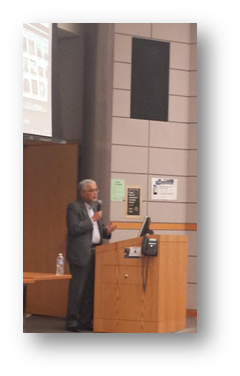
These things should not have happened—Darfur should never have happened. As Mukesh Kapila says, Darfur is the world’s most successful genocide because it has gone on for so long without intervention. When we talk about genocide, we often throw around the phrase “Never again”. Kapila sees this as a vacant phrase which lulls us into inaction. Kapila’s remarks were strong, and shook the room when he said that genocide is inevitable, and it will happen again. This might seem like a strange thing to say to a room full of young hopeful and enthusiastic genocide prevention advocates, but it is realistic. He urged us to set aside our natural inclination to blame governments and institutions for not doing more to address these atrocities because it removes our personal responsibility. It’s true, we have seen the failure of so many institutions over the last 10 years which have yet to end the violence in Darfur, but we shouldn’t be discouraged—instead, we should be empowered to take action on our own. Find organizations such as Darfur Women Action Group who are providing on-the-ground support to women in need. If I can challenge Kapila, I would agree with him, but add that we need to also empower ourselves to demand more of these failed institutions.

The conference included some great panelists, but there were also powerful young voices as several students shared their experiences ‘standing’ to end genocide. STAND leaders and other student activists from around the country came together to share their perspective on the issues and how to stay motivated. Sometimes the work that we do overwhelms us, and it’s difficult to stay energized and motivated especially when standing up to genocide. First of all, it’s important to remember that even reaching one person with your message can make an impact. One of the founders of STAND also reminded us that sometimes outrageous ideas can make a great impact and attract much needed media attention for the cause. Also, think outside the box, and remember the larger picture—always keep in mind what and who you are working for.

There was even more in store for the conference attendees—much more than a simple blog post can cover. For me it was a transformative weekend to be with such an inspiring crowd. I was energized to be around so many people who are doing such meaningful work to elevate this discussion, and challenge the status quo. When it comes down to it, we are all responsible for each other. We live in a global society where our actions here and now affect people across the globe. We need to take responsibility to learn as much as we can about these conflicts in order to contextualize them—so no one can BS you, as Elizabeth Blackney put it. The first step is education, and then it is action. Educate others about the world around them, and communicate with those institutions that have failed us. Demand more from the people at the top. And of course, when it comes down to it, do the most important thing you can: act. I will leave you with comments from Mukesh Kapila when he said that we have all forgotten that the word “humanitarian” starts with the word “human”—try and save a life, and do this on a regular basis, it is the greatest contribution you can make.

You can save a life by supporting the Darfur Women Action Group here.

A bit about the author: Andalisa Lopez first learned about ongoing mass-atrocities in high school, and from then on she advocated for awareness and action. At Muhlenberg College in Allentown, PA she organized a group of students to discuss international and domestic social justice issues, including genocide prevention. Majoring in Psychology and Media Communications she explored these disciplines in a senior honors thesis which examined race representation in the media, specifically looking at the way Africans are portrayed in US media. Andalisa moved to Washington DC to complete a year with AmeriCorps, and after finishing her service year, she joined United to End Genocide as an intern. Andalisa is excited to learn from her experience at United to End Genocide, and to keep pursuing her interests in social justice and genocide prevention.

Women & Genocide National Symposium 2013

Women & Genocide National Symposium 2013

STAND and Darfur Women Action Group are proud to present the 2nd Annual Women and Genocide in the 21st Century: The Case of Darfur National Symposium.

Join hundreds of activists, students, musicians, advocates, and genocide & gender experts as we explore the impact of genocide on women, and unite our words with action. By empowering affected communities, achieving meaningful inclusion and justice for victims, and influencing policy reforms, we are striving to bring a sustainable end to genocide in the 21st century.

At this symposium, you will:

  • Learn from leading genocide experts about the ongoing violence in Darfur and other current mass atrocities
  • Hear testimonials from survivors of sexual and gender-based violence
    Explore options and opportunities to empower women, especially in conflict and post-conflict settings
  • Discuss what needs to be done to energize the genocide prevention movement going forward
  • Raise awareness about the 10 years of genocide with minimal impunity in Sudan, and particularly its impact on Darfuri women
  • Gain skills in advocacy, campaign planning, and organizing for human rights
  • Participate in the creation of an annual strategy for an comprehensive policy on Sudan and the increased inclusion of women leaders
  • Lobby for enhanced and flexible funding for emergency crises, particularly with an eye towards sexual and gender-based violence; increased support for civil society, human rights defenders, and women’s leaders in Sudan; and the passage of the Sudan Peace, Security, and Accountability Act of 2013.


Dates: Saturday, Nov. 16th – Sunday, Nov. 17th; Optional lobby day on Monday, Nov. 18th

Venue: Funger Hall Room 108 at the George Washington University, Washington, DC

Registration: Click here to register for this conference. If you have any questions about scholarships and group discounts, please contact Haley at haubuchon@standnow.org.

Speakers:

Niemat Ahmadi

Niemat is a Darfuri activist, the founder of Darfur Women Action Group, and the Director of Global Partnerships at United to End Genocide.

Mukesh Kapila

Mukesh is a diplomat, human rights activist, and the Special Representative on Crimes Against Humanity for Aegis Trust. As the former UN Resident Coordinator for Sudan, he was responsible for first bringing the Darfur crisis to worldwide attention.

Bridget Moix

Bridget works at the School for Conflict Analysis and Resolution, with 15 years of experience working on peace-building and violent conflict prevention issues. She most recently led the foreign policy lobbying team at the Friends Committee on National Legislation, and has also served with Oxfam America, the Quaker United Nations Office (New York), Casa de los Amigos (Mexico), and the Quaker Peace Centre (South Africa). Bridget focuses her studies on questions related to preventing mass atrocities and war, improving nonviolent mechanisms for civilian protection, and supporting local capacities for peace first.

Emmanuel Itier

Emmauel is an experienced feature film producer, women’s rights activist, and a member of DWAG’s board. He will be showing his documentary on women empowerment “FEMME Women Healing the World” and will be available to for a discussion and Q&A.

Elizabeth Blackney

Elizabeth is an author, advocate, and a media and communications strategist. Her expertise includes a strong focus on maternal and child health, strategic diplomacy and other efforts to prevent war crimes, particularly forcible rape, Female Genital Mutilation, forced marriage and the deprivation of religious equality. Her presence on traditional and social media includes a regular column on The Huffington Post and at Ricochet. She has written for numerous NGO and advocacy organizations, and speaks to schools, universities, and conferences on building awareness and influencing core constituencies.

Many more speakers and panelists to come! Be on the lookout for frequent updates.

REGISTER for the Women & Genocide Symposium toda

Women and Genocide in the 21st Century: A Call for Action to End the Tragedy of Darfur

It’s far from over, and a durable resolution seems more distant with the recent escalated violence in my homeland.

Today the situation in Darfur for our people is extremely dire and dangerous. As of today, Darfur has the largest number of internally displaced people in the world. In Darfur, over 3 million people have been forced out of their homes and sent to suffer long or indefinite exiles without hope of return. Hundreds of thousands have been documented crossing the border to neighboring countries, and many more have crossed without being counted in official numbers.

Rape has been used as a weapon of war and distraction, and is committed repeatedly to further terrorize the defenseless. Furthermore, government-supported outsiders have taken our lands. Sadly, for several years the United Nations has successfully downplayed and stopped adding to its official figures the total number of people killed in Darfur as the result of Al-Bashir and its allies, the Janjaweed. For more than 3 years there have been no journalists allowed in Darfur and all means of communication have been curtailed. Humanitarian access has been severely restricted, and starvation is consistently used as an insidious weapon for killing. Aid organizations and their workers have been targeted and expelled, and in most cases, they walk out in silence, fearful of government retaliation against those who remain to assist the needy. The joint United Nations African Union mission in Darfur, UNAMID, has completely failed not only to protect the vulnerable IDPs but to protect its own members. The number of attacks against peacekeepers is rising and the number of their troops killed in Darfur increases daily.

Speaking with our families on the ground every day, we hear heartbreaking tales. Between January 2012 and today, attacks against civilians have dramatically escalated and the security situation is rapidly deteriorating. As an isolated example: between August 1st and the end of September this year, the scale of the attacks staged equaled the level of 2003-2004. Just this August, the first Kassab camp and its surrounding area was attacked, approximately 25,000 displaced persons have been forced to flee again, their homes were completely burned, tens of women, men and children were killed and hundreds more have gone missing. In late September Hashaba village, in the North, was attacked by both ground and aerial bombardment and over 100 civilians were reported dead. Unfortunately, the numbers reported were very conservative because of restriction of access. This is in addition to constant bombing in and around the areas of Jebel Marra and the complete blockade of aid access. Evidence showed that almost all of these attacks have again targeted the same tribes who have been systematically targeted for elimination since the beginning of the crisis. What else can you call this? It’s genocide. The crisis in our homeland is of global magnitude and it is imperative that we continue to bring it to the attention of the world community, remind them that if it’s not in the news that doesn’t mean it’s over and that Al-Bashir is never short of more orchestrated tactics to fool the international community.

The ICC has issued two arrest warrants against Al-Bashir alone and for three other suspects for crimes committed in Darfur. It’s increasingly clear that the world has compromised justice for the victims of genocide in Darfur in exchange for a nonexistent peace. That is why today our people in the regions of Numba Mountains, Blue Nile and Abyei are forced to join the people of Darfur in their misery, while their fate is left to be decided by their own murderers. Once again, women continue to bear the most suffering living in Darfur, South Kordofan or Blue Nile

Today, after ten years, the situation for women in Darfur remains tragic. Through 2010-2012 there has been a growing concern about widespread, systematic rape and sexual violence against women and girls. Just in 2 week ago , witnesses reported to Radio Dabanga that a three year old girl had been raped in Kass, South Darfur. Recent trends show that Darfuri women are being systematically targeted in other regions of Sudan, including the capital, Khartoum. There is, in fact, an increase in violence against female civil society leaders within Sudan at large. Female civil society leaders are continuously abused for raising their concerns about the repressive laws that restrict women’s freedoms and that allow impunity for security agents to abuse women under the Popular Discipline Act of the Sudanese security laws in the capital of Sudan.

Consequently, women activists and human rights defenders have been subject to arrest and derogatory treatment by the authorities of the oppressive government of Sudan. Last year, on International Women’s Day, women activists in Khartoum gathered peacefully to protest the rape of a Darfuri student by the regime’s security agents, demanding legal reforms of the repressive laws that legalized violence against women, such as flogging. Women were flogged or beaten in public because of their choice to wear pants, after which the government authorities arrested, beat, and interrogated over forty women.

Women represent about half of any nation’s talent and human resources, and even more so during times of war. In the midst of crises during which all resources are derailed and stretched to the limit, no society can afford to sideline those resources. In Darfur, Sudan, where rape is used and stilla weapon of war, women are extremely affected .They are still oppressed and have been forced to live in silence for ten years. As of today, women represent the overwhelming majority of the IDPs and refugees in Darfur and neighboring countries.

Darfur’s women, despite being long-suffering victims of war, have demonstrated an outstanding resilience, strength and resolve to combat genocide and keep hope alive in their communities. Nevertheless, the abilities of women have not yet been utilized effectively by actors and stakeholders working to bring peace to Darfur. Their real empowerment has not been prioritized. Unless women’s issues are brought to the forefront, a sustainable end to the crisis remains unattainable.

The sad reality is that ending the crises or attaining peace in Sudan is still very far off. This is particularly inarguable in Darfur, where women are gang raped on a daily basis, in and around the IDP camps, in villages and in cities, while their violators are treated with absolute impunity.

This reality demonstrates how crucial it is that DWAG exists. Our mission is to address these issues and work with partners and stakeholders to bring these important issues to the attention of advocates and policy makers who are concerned about women’s issues; as well as to integrate women’s issues into the broader genocide advocacy and its messaging, and to help develop strategies for women’s inclusion and meaningful empowerment at all levels. This is essential in order to effectively combat violence against women and prevent genocide in the future.

We have watched how the world community has failed the people of Sudan in Darfur and the other marginalized regions, and that is why we need to step up to our responsibility, to stay on the side of truth to do all that we can to make a difference even if it is one life at a time.

I called, and many of you have answered the call, for which I am so grateful. I am empowered by the fact that I am being joined by people from all walks of life, from California to New York and within our own DC area; by students, faith leaders and the advocacy movement. Some of the same leaders who have joined us in the past continue to carry on the mission. I will confidently say that despite the frustration and the longstanding suffering of our people in Sudan, with our collective effort, ending genocide is possible

I am humbled and strengthened by those who have joined me, people like my sister and dear friend in the fight, Maria Bello (click here to read her article of support), who has travelled from LA to be with us in DC to speak for the women of Darfur; Mark Kostabi, who flew from Italy to stand in solidarity with us by using his talents to bring attention to the plight of women, along with the distinguished speakers and the Sudanese musicians who have given their time and efforts in order to raise awareness. Those of you who have sent messages of support or joined us on Twitter or liked us on Facebook, your support invaluable and indeed you are making a difference. My fellow Sudanese from all regions of Sudan, who speak from their heart and committed to work together to build strategy for sustainable change in Sudan through the their collective effort, a strategy aspiring for a just and lasting peace for all the people of Sudan

Our recent symposium (Women and genocide in the 21st century) was the first ever symposium on women and genocide which have brought a lot of energy and galvanize the support of our members for which we are very grateful. With this kind of solidarity we will continue to fight against genocide until the world understands the magnitude of the genocide and its impact on men and women, and does something to end it sustainably.

To support our effort, please join us by visiting www.darfurwomenaction.org and don’t forget to add your email to our list serv on the top right of the website, thank you!

Statement by Darfur Bar Association (DBA): The Prosecutions and Systematic Security Arrests of Darfur Students in Universities

Darfur students are continually being targeted and subjected to different types of harassment by the students’ security and the public security organs. By arresting Darfuri students for long periods of time these the security forces are attempting to isolate Darfur student activists and human rights defenders from local and international environments, and hinder them from working on issues related to rights, general freedoms and activities of students movements.

The regime through its followers at the students’ security organ has taken waves of Darfur students to cunning trials after long periods in arbitrary detention. These actions are aimed at weakening Darfur students and diverting their attention from the national issues, through the regime’s affiliated students’ security organ, which is motivated by cheap political slyness.

Whenever a court rules a not guilty verdict for Darfur students, after a long period of unfair arbitrary detention, physical and moral torture and humiliating treatment which undermines human dignity, the regime considers the not guilty verdict as a temporary measure. The sufferings of Darfur students continue with the renewal of the arbitrary arrests without regulation or righteous procedures, the misuse of power and influence, substance abuse and abusing the usage of laws.

These unfair arrests have caused Darfur students to miss many years of study, which has deepened the feelings of citizenship inequality among the Darfur students and of negative discrimination, which generates the feelings of racism and social injustice which is threatening the coherence and national unity.

Today August 18, 2013, the Judge of Central Khartoum criminal court, Dr. Osama Ahmed Abdalla, has ruled a verdict of not guilty on five Darfur students in accordance to the article 141K/G in the cunning statement No 1153/2013, by Mutaz Abdalla Abdulgadir, a member of the security organ, due to lack of evidence. The released students were re-arrested on June 16, 2013 and they were detained, physically tortured by electric sticks and psychologically tortured through humiliating insults that degraded their human dignity. This torture continued for a one month period until July 16, 2013, when they were referred to the prosecutor of the crimes against the state, and they were kept in detention till July 7, 2013, when they were presented to the trail and five who were released on bond, are:

  1. Ahmed Abdulrhman Altahir, studying at Sudan University, fifth year, he was arrested at the University during his study.
  2.  Mohamed Abdalla Abdulkarim, studying at Sudan University, faculty of Music and Drama, fourth year, he was arrested inside the Omdurman Ahlia University.
  3.  Ibrahim Adam Alhag, studying at Alnilin University, Faculty of Law, second year, arrested inside the University.
  4.  Maawia Mohamed Musa Atim, studying at the Omdurman Ahlia University, Faculty of Economic and Administrative Science, third year, arrested inside the University.
  5.  Basam Khamis Karama, studying at the Omdurman Ahlia University, Faculty of Art, arrested in the University Library.

Student Ibrahim Musa Hassan who is studying at the Omdurman Ahlia University was charged under articles 169 K and G, and 1991-26 KSZ, and a session is set for August 20, 2013 for the ruling.

The students who were released on verdict of not guilty spent 46 days in detention and 18 days during the trail procedures, until they received an innocent verdict by the judiciary, after been subjected to torture by electric sticks, tapes, and severely racist insults, while their eyes were blindfolded for two days, in a severe and great violation to human rights. The DBA condemn these great violations toward innocent Darfur students, and it will take appropriate and necessary measures to demand rectifying their wasted human situations.

Darfur Bar Association

August 18, 2013

Edits done by MacKennan at Darfur Women Action Group