Escalated Violence Leads to More Protests and Attacks

Following the violent attacks in Misterei and Fata Bono, Darfur Women Action Group (DWAG) would like to speak out against the continuation of brutality in Darfur. Many civilians in the region have gathered to protest against the injustice and irresponsibility of the Sudanese interim government in response to the atrocities, but no substantial action has been made for the active protection of the civilian and displaced population.

On August 2nd, shots were fired in the Kass locality in South Darfur when a large group of gunmen and two battalions of the Rapid Support Forces (RSF) met, leaving 11 civilian villagers and four RSF soldiers suffering bullet wounds. More than 10 villages near Kass, South Darfur have reported attacks by Arab militia groups between July 31st to August 1st. The attack happened just after the release of two militia leaders and RSF members in the Kass locality, who were arrested on charges of targeting and killing civilians as well as looting property. Protesters had organized peaceful demonstrations in response to their release, urging for justice and accountability, but they were met with tear gas and live ammunition at the front of police headquarters.

Days before, on July 26th, protesters led a three-day blockade of the Khartoum-Port Sudan highway. After handing a memorandum to the Red Sea governor, Abdallah Ohaj, and witnessing the lack of official response, protesters closed the highway off for three consecutive days, demanding to include civilian governors in Kassala and El Gedaref. One of two bridges over the El Gash river were also closed to vehicles and other transports.

Despite the attack and the relentless protests for change and stability, the violence does not cease as perpetrators remain unaccounted for for their crimes. In fact, the incidents in Darfur exemplify unrest all across Sudan.

In Kadugli, fear of the Rapid Support Force (or RSF) has already sent another wave of displacement within the capital of South Kordofan. On July 28th, a protest took place in front of the state government secretariat, demanding stability amidst the repeated violence in the Kadugli region. Demonstrators presented a memorandum for secure roads, stability for the upcoming agricultural season, and justice upheld against the perpetrators in recent events. Calling upon the Secretary General of South Kordofan, Mousa Jabir, the demonstration in Kadugli is one of many that are present in Darfur, demanding accountability, peace, and security. At least 2,000 people have fled their homes after the violence that ensued the previous week. 

DWAG calls upon the Sudanese interim government to take proper measures to strictly ensure and enforce the protection of the civilian and displaced population in all areas of Sudan. Prime Minister Abdallah Hamdok has announced the deployment of additional troops to regions of conflict, which the UN-AU Mission in Darfur (UNAMID) has embraced. However, his joint force of army soldiers, security officers, and RSF militia should not be tasked for the security of the Sudanese people, given their history of violence and brutality. With traces linking the RSF directly to the former al-Bashir regime, the people of Darfur do not trust them with their safety. Local militia, especially the RSF, have done little to protect civilians and, in fact, are responsible for the majority of the violence in the area. Adding to their forces would likely do more harm than good, and the international community needs to be aware of the RSF’s motives and the people’s lack of trust for them, ensuring that any military force placed into civilian protection is held accountable to their mandate. DWAG urges the international community, and especially UN peacekeeping forces, to intervene and put an end to the casualties and work towards lasting peace and security in Darfur. The violence must end, and those in power must take action to save Sudanese lives and hold perpetrators accountable for their crimes.

Another Fatal Attack in West Darfur – A Call for Civilian Protection

Darfur Women Action Group (DWAG) is gravely concerned about the deadly attack that took place in West Darfur on Saturday, July 25th. At least 68 people were killed and 84 others were severely wounded in the Misterei massacre that took place over the weekend. Witnesses told Radio Dabanga that the attack began at 4:30 AM Saturday morning from two directions, and continued for more than eight hours. Armed men—including members of the Rapid Support Forces (RSF)—arrived on horseback, in vehicles, and on motorcycles. This is the second major attack in Misterei in a week, following the attack on peaceful protesters on July 17th that injured seventeen people. This chilling development is just another demonstration of the transitional government’s failure to protect the citizens of West Darfur, who have been plagued by violence for more than twenty years. 

DWAG would like to echo the calls of the West Darfur Doctors’ Committee, condemning the violence and acknowledging that the state’s Security Committee is to blame for allowing this violence to continue. West Darfur authorities have been slow in response to the recent attacks, which has cost countless lives. This attack is no short of continued attempts at genocide. The armed men have direct ties to the former regime, and this attack represents a failure on behalf of the West Darfur government, the Sovereign Council, and the Cabinet for their lack of urgency. Active members of the Resistance Committees in West Darfur, who have been impacted by the violence, have been warning of escalation for weeks. Armed groups have attacked peaceful sit-ins repeatedly with no response or intervention from authorities. 

Prime Minister Abdalla Hamdok, in response to the recent attacks, announced on Sunday that he would be sending a joint force of army soldiers, paramilitaries of the RSF, and security officers to the region to combat the violence. However, given the fact that the RSF was involved in this attack on civilians, DWAG questions this decision. The same entities responsible for the violence that killed sixty people over the weekend cannot protect the citizens of West Darfur. The RSF militia is directly connected to the Al Bashir regime, officially integrating into the Sudan Armed Forces last August. The RSF is still directly connected to Mohamed Hamdan ‘Hemeti’, and it is concerning that despite some of their members being directly responsible for this attack on innocent civilians in Misterei, even more of their forces will be deployed to “protect” civilians in the Darfur region. Additionally, it is a failure on behalf of multiple government agencies for failing to listen to previous calls for action. Violence has continued to escalate in the region for weeks, and it took the death of nearly seventy people for the central government to respond. The people of West Darfur have very little trust in the RSF given the many times they have participated in violent attacks against the very citizens they are mandated to protect as part of the Sudan Armed Forces. It is imperative that the RSF is not allowed to continue to terrorize the citizens in West Darfur. 

As the country—and the international community—continue to combat the coronavirus pandemic, Prime Minister Hamdok must ensure protection for the civilians of Darfur, so that they are not forced to fight two ‘pandemics’ at once. DWAG stands firm in this call to action for Prime Minister Hamdok. The people of Darfur are fighting two crises at once: the coronavirus and the continued violence in the region. A ceasefire must be implemented in the region, in combination with disarmament efforts, to ensure that the violence does not continue. The people of Darfur have suffered long enough. It is time that their repeated calls to action finally be answered. 

DWAG calls upon the international community to establish a strong UN peacekeeping force with a Chapter VII mandate in Darfur. The RSF cannot be responsible for protecting the citizens of Darfur, as their members are the ones responsible for committing these atrocities. In order to protect the citizens of Darfur, an independent peacekeeping force must be established in the region. DWAG calls upon Prime Minister Hamdok to urge the UN for support in establishing a peacekeeping force in Darfur. The prime minister has previously denied the need for UN peacekeepers in the region, but the violence and outcries of the Darfuri people reflect otherwise. A peacekeeping force can actually ensure the safety of the civilians there, unlike members of the RSF. A stronger RSF security force has done nothing to help the people, and it is time for the civilian population to get their voices heard. International intervention is imperative to de-escalating violence and saving Sudanese lives. Violence must end and accountability for perpetrators must be prioritized by holding those responsible, liable to their action. 

Accountability for Sexual Violence Crimes

Friday, June 17th, marked the 22nd anniversary of International Justice Day, a day honoring the creation of the Rome Statute of the International Criminal Court (ICC). It is imperative that as we reflect on the progress that has been made, we also recognize there is still more work to be done in securing justice for the victims and survivors of the genocide. We cannot forget the women who were victims of sexual and gender-based violence (SGBV) as a result of this conflict as well. In Sudan, nearly two decades of conflict has allowed for SGBV to be a common occurrence, despite recent ceasefires. There are reports of SGBV reported to RadioDabanga almost every day. The survivors of SGBV, especially when it occurs in conflict zones, are often left without justice due to the stigma attached to these crimes and often for fear of retaliation, women and families remain silent It is essential that as we continue the fight for justice, there is a dedicated effort to support the needs of survivors and hold the perpetrators of the SGBV accountable. There must be improved reporting mechanisms and protections for victims of SGBV and it is imperative that their needs are centered in the search for justice. 

Sexual and Gender-based Violence (SGBV) in Conflict and Why it’s an Issue 

Globally, sexual and gender-based violence (SGBV) impacts one in three women in their lifetime. The United Nations recently highlighted how insecurity and displacement often fuels an increase in SGBV. SGBV is widespread and often an integral part of conflict, but it is seldom talked about due to the stigma attached. Victims are often unable to come forward for fear of retaliation, as well as rejection from their community as a result of the crimes committed against them. Sexual violence is frequently used as a tactic of war and is a very effective strategy for smaller militias with less resources for other weapons. It is cheap and effective because the combatants can use their bodies as weapons with devastating impacts. It has lasting repercussions, often with the intent to destroy the fabric of the community in which it is wielded against. It perpetuates cycles of violence and the survivors are often left without access to resources and never see justice for the crimes committed against them. Survivors of SGBV in conflict are often too scared or ashamed to report what happened to them, making it difficult to find out actual numbers of incidents. 

Relevance to Sudan 

Sexual and gender-based violence, particularly systematic rape and sexual slavery, have been wielded against the people of Darfur during the long-standing crises. The Janjaweed are notorious for their brutal attacks against civilians, using kidnapping and rape as weapons of war. However, they are not the only group who have utilized SGBV during the conflict. Torture, rape and sexual harassment are seen as effective weapons against the enemy’s women, as it successfully demoralizes and terrorizes people, forcing them to flee their homes. Despite recent ceasefires, SGBV continues to happen, as new incidents are reported to RadioDabanga almost every day. Women from Fur, Zaghawa, Masalit, Berti, Tunjur, and other non-Arab ethnicities are targeted, although it is not exclusive to these groups. Given that the Sudanese government allowed Jajaweed fighters to infiltrate the security sector in the country, it is necessary for the transitional government to give reparations to the survivors of SGBV at the hands of the government and the government-backed militias. Women and girls are not only fearful of attacks by these groups, but also rebel groups fighting against the central government and their allies as well. Even in times of peace, women still had to be fearful of the threat of SGBV. 

Not only does rape occur during conflict, but women and girls living in internally-displaced persons (IDP) or refugee camps are vulnerable to SGBV there as well. For example, in June 2008, at a refugee camp in Chad, a group of women, aged 13 to 30, were tortured by other Sudanese refugees located inside the camp. Accused of prostitution, dozens of men took turns beating them with whips and sticks, in front of the entire camp, in an attempt to shame the women. As a result, the women of the camp crafted a document, a 14-point manifesto (known as the FARCHANA Manifesto), that calls for the empowerment of women within refugee camps. The women and girls in these camps (quote from woman at the Farchana camp in Chad) have said that, at times, it is safer for them back in Sudan, where they had “some freedoms” unlike in Farchana, where they have none. This is just one of the many examples that even after women make it to IDP or refugee camps, they are not suddenly immune to SGBV. 

There is social stigmatization that takes place, which combined with the lack of accountability for perpetrators of these attacks, make women fearful and distrusting of law enforcement, meaning they are unlikely to come forward. There is a veil of secrecy that surrounds reporting SGBV, which makes it difficult for aid workers to get accurate numbers of those impacted. 

Need for Accountability 

While there has been impunity for all of the perpetrators of the genocide in Darfur, women and girls who were victims of SGBV are even more likely to be denied justice. Similar to the systematic rape in Darfur, the Rapid Support Forces has also used rape against Sudanese women during the June 3rd  2019 , a famous incident to quell protest. During the thirty years of al-Bashir’s ruling Sudanese laws have been used to oppress women and the popular disciplinary act has been actively used to oppressed or commit violence against women in the capital Khartoum. Women were flogged for the simplest things such as wearing pants. Despite all the promises made, the current interim government of Sudan has failed to adequately integrate the voices of women or allow meaningful participation. This will make reforming institutions and laws to be favorable to women difficult when they are not at the table. Therefore, there is a desperate need to bolster the justice system’s ability to handle crimes related to SGBV, as the current system is ill-equipped to handle the needs of victims. There needs to be laws put in place that centers the needs of the victims and a firm commitment to increase the number of female police officers in the country who would be more equipped to respond to these crimes. 

In this regard, the International Criminal Court represents a unique opportunity that all actors and stakeholders need to leverage to ensure that accountability for crimes against women must not go unpunished. The Rome Statute has specific articles that deal with sexual and gender-based violence and in the case of Darfur, the ICC has confirmed that rape has been used as a tool of genocide. 

While empowering women in conflict to participate in decision making is crucial, without proper accountability for crimes committed against women, conflicts can’t be resolved sustainably. Resolving the problem of Sudan can’t be possible without accountability for crimes committed against women and the effective participation of women at all levels of decision making. 

Another Deadly Attack in West Darfur

Darfur Women Action Group (DWAG) would like to express its grave concern about the deadly violence that took place in the capital of West Darfur over the weekend that left many injured and seventeen dead. Two separate incidents, one on Friday, July 17th and one on Sunday, July 19th, left many injured and three dead. DWAG would like to raise the alarm about this systematic violence and calls on the Transitional Government of Sudan to take effective action to end this cruel act against innocent civilians in Darfur.

On Friday, July 17th, International Justice Day, Militias affiliated with Rapid Support Forces attacked villages in West Darfur Ammar Ibrahim where seventeen people were injured during a sit-in at Misterei in Beida after a group of gunmen opened fire on the peaceful protests. Friday was the 11th day of the sit-in. A spokesperson and member of the Resistance Committees that is active in West Darfur Ammar Ibrahim told RadioDabanga that the attack took place right after a delegation of the Beida Resistance Committees Coordination had met with the governor. 

On Saturday, July 18th, a group of gunmen on motorcycles attacked and destroyed a number of buildings in Beida. They began first by raiding the market, before continuing on to destroy the office of the Beida Resistance Committees, the house of the former commissioner, and the Beida Language and Science Institute, all while threatening bystanders. 

On Sunday, July 19th, the violence culminated when fighting erupted in El Jebel district in El Geneina, when a shooting killed three people and wounded several others. It is unclear what the reason behind the shooting is, however, the situation has been contained after army forces were deployed to the area. 

These attacks on civilians in West Darfur are not new nor a single incident – it’s a part of a well-orchestrated policy of the former regime to exterminate the people of Darfur. Despite al-Bashir’s removal from power, his totalitarian regime is very present in Darfur today and the interim government is failing to stop its forces from attacking its citizens. It is extremely alarming that these people have been under attack over the last 17 years and they are yet to be protected today. 

These attacks are endangering the lives of millions of innocent civilians and threaten the stability of the Darfur region and the country at large. It is imperative that the Transitional Government address the underlying issues that caused these acts of violence to happen. There needs to be a dedicated effort to withdraw these militias out of civilian areas and remove their guns and other weapons and hold those responsible accountable.

Additionally, DWAG calls on the transitional government to echo the calls made by the United Nations to ensure a national cease-fire takes place as the country responds to COVID-19. It is imperative that the government release an action plan that responds to the ongoing violence that is taking place so that no more citizens are dying in the aftermath of the decades-long conflict. 

These attacks further underscore the Interim government’s inability to protect civilians in Darfur and the need for UN civilian protection forces with a Chapter (VII) seven mandate throughout the interim period to ensure that vulnerable populations are protected.

Attacks Against Civilians in Darfur Must End

Attack on civilians intensified while the interim government of Sudan is misleading the world 

In the past month, despite the COVID-19 pandemic crisis that continues to ravage the country of Sudan, the violence in Darfur only grew from constant clashes and attacks on innocent civilians including vulnerable displaced persons camps.

  • Jebel Marra (June 2): Three civilian women were killed and six children, including an eight-month-old infant, were injured. The Sudan Armed Forces condemned the attackers, but no updates on arrest have been made.
  • Kadugli (June 5): Members of the Rapid Support Forces shot three farmers dead in their farms. No one has been held accountable for the incident.
  • Jebel Marra (June 9): A soldier was shot dead by gunmen and three women were abducted. Two of the three women have been released, while one is still being held.
  • In the 2nd week of June, a group of farmers were attacked by Janjaweed militias and severely wounded, which prompted citizens to protest and demand protection.
  • In another incident, two brothers were brutally attacked in a house invasion in Kabkabiya city. The two brothers were kidnapped while the perpetrator hijacked their car. After getting shot and severely beaten, they were thrown out about 50 miles away from the city. The police refused to pursue the attackers with an excuse of not having a police car at the time. The two brothers were finally found in a critical condition after civilians searched for them and were taken to Kabkabiya hospital for surgeries.
  • Kalma (June 10): Two people were killed and one was injured by an armed group near one of the largest displacement camps in Darfur. The case was investigated by the police and the Minister of Cabinet Affairs appealed for the public to cooperate as he vowed to bring justice.
  • Nierteti (June 28): A displaced woman and an army soldier were shot dead with two more soldiers wounded in a gunfight between unidentified armed men. 
  • Kabkabiya (June 30): Six demonstrators, including two children, were wounded at a protest when officers fired tear gas and opened fire.
  • On Tuesday, July 7th, a 35-year-old man was shot and killed by janjaweeds in Shobs village while working on his farm near Kabkabiya town.

Even in a time of global emergency, the atrocious violence continues without pause. These attacks are not isolated incidents. In fact, it’s a part of the systematic attack that continued to be perpetrated by Arab militias affiliated with Rapid Support Forces against the indigenous Darfur. To fight against the killings, rapes, and beatings that remain unresolved or ignored, we must bring attention, increase pressure, and hold the interim government of Sudan and the international community to accept their responsibility by ensuring effective civilian protection in Darfur. The authorities must be held accountable for their promises to bring justice and end violence.

As advocates of justice for the victims in Darfur, the Darfur Women Action Group urges the international community and global governments to bring justice for the Sudanese community and to listen and amplify the voices of protestors on the ground. Protect Darfur civilians from attacks and the ongoing gross human rights violations and advocate for a civilian government in Sudan. By demanding accountability, the people of Darfur and Sudan may one day have lasting peace.

While negotiating the deployment of UN forces, Prime Minister Hamdok refused a chapter seven mandate and presented a plan to provide civilians protection in Darfur, though in reality nothing has been materialized on the ground.

The member states of the United Nations Security Council including the United States must hold the interim government of Sudan accountable. 

Without safety and security in Darfur, South Kordofan, and proper accountability, there will not be peace, stability, or transformation in Sudan.

Monthly Update (June)

Violence across Sudan despite the ongoing pandemic crises 

In June, violence in Sudan continued particularly in Darfur where millions of the displaced are still in camps while the country battled the COVID-19 pandemic with its limited resources and the weight of economic crisis. Attacks against indigenous Dumfries by Arab militias continued casualties and injuries, causing thousands to protest against the constant violence and injustice due to the government’s blind eye to the protection of its people and its ability to hold perpetrators accountable. To commemorate the first anniversaries of the June 3rd massacre and the following June 30th ‘March of Millions,’ the people of Sudan held demonstrations for the victims in solidarity. Meanwhile, former Darfur Janjaweed leader, Ali Kushayb, was finally arrested by the Central African Republic and transferred to ICC custody for his war crimes and crimes against humanity. His arrest spread hope for refugees and other victims as discussion of extradition with other suspects continues. 

COVID-19 UPDATE

As of June 20th, Sudan’s Federal Ministry of Health reported a total of about 8,900 coronavirus cases with at least 548 deaths. Hospitals were shut down early in the month due to a shortage of medical staff, who feared for their safety and urged for protective equipment and regulations. With both the extended lockdowns and the global economic crisis, food prices have risen to more than double the previous year. Sudan now faces high prices, reductions in labor income, lack of access to food, and increased malnutrition.

Meanwhile, woman activist Maryam Hussein visited about 10 displacement camps to spread awareness of COVID-19. Despite the dangers women face in camps, Hussein stressed that without easy access to the internet, camp residents must be informed and aware of the dangers of leaving their houses. The technological limitations in the area remain an issue as residents may be unaware of, or dismissive towards, COVID-19 protocol, which could be linked to a general distrust in the government.

However, during the week of June 12th, Sudan received its first COVID-19 aid package from the European Union. Carrying medical equipment, vaccines, water purifiers, kits, medicine, and medical staff protective equipment, the EU Humanitarian Air Bridge is provided by funding from the EU in response to the COVID-19 crisis to support and strengthen global health and economic systems. A second flight arrived in Sudan on June 24th with 35 humanitarian workers to help with medical and humanitarian services.

CONFLICT LEADS TO MORE DISPLACED

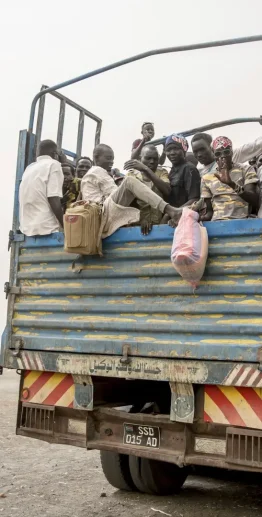
In early June, at the Ethiopian-Sudanese border, a Sudanese captain was killed in an Ethiopian shifta raid. Three civilians, including a woman, were wounded, but this incident appears to be one of multiple reports of armed attacks on Sudanese people having been made with many dead or wounded. The Ethiopian Ministry of Affairs has acknowledged the incident and believes no hostility between the two countries is necessary. At least 5,000 Sudanese residents were displaced and left their homes in fear.

In the South Kordofan capital Kadugli, recent violence has caused about 4,000 families to flee to the Nuba Mountains, a rebel-held territory in South Sudan. In the past month, 775 families have been affected by violent clashes. At least 17 people have died, and the district’s health unit, water source, and multiple homes were destroyed and looted.

As the displaced population increases from recent conflicts, the Strategic Initiative for Women in the Horn of Africa (SIHA) released a statement regarding an increase of rape for displaced women in North Darfur. The announcement linked the increase of urinary fistula among girls to a 50% increase in rape and sexual violence. As a result of the coronavirus precautions, military power in the state has increased, leaving human and women’s rights activists vulnerable or often ignored. Exposed to violence from militias and armed security forces while working in precarious jobs, the network emphasizes that the struggles of women must be acknowledged as serious issues in order for authorities to properly attend to them.

THE ARREST OF ALI KUSHAYB

On June 9, 2020, Ali Muhammad Ali Abd–Al-Rahman, or commonly known as Ali Kushayb, was taken into the International Criminal Court (ICC) custody and suspected for war crimes and crimes against humanity committed in Darfur. Former senior Janjaweed commander, Ali Kushayb allegedly played a major role in civilian attacks and the violence against rebel forces and Sudanese citizens. As a mediator between the Janjaweed militia and the Sudanese government, he has reportedly committed serious violent crimes in the killing of civilians, rape, torture, and other cruel treatments. 

The ICC issued arrest warrants for Kushayb in 2007 until Ali Kushayb, for fear of arrest, fled to the Central African Republic, where he surrendered and was then arrested on June 8, 2020. As of June 15, the war criminal was transferred to The Hague in the Netherlands to face justice.

News of Kushayb’s arrest has renewed hope for refugees. Most consider his arrest to the ICC a great victory, but only one of many on the path to justice. Refugees and other victims continue to encourage and demand the extradition of other suspects in Sudan to face trial with the ICC. Cooperation with the transitional government is necessary to hold suspects accountable for the full extent of their crimes committed in Darfur. The Sudanese government welcomed Kushayb’s arrest to the ICC and have agreed to further discuss the extradition of others.

IN MEMORY OF THE VICTIMS

June 3rd marked the first anniversary of the June 3rd massacre of a government attack during a sit-in, which left 127 protestors dead, about 700 injured, 70 raped, and over 100 missing. Leaders of the uprising honored the victims with speeches and Koran recitations whilst demonstrators marched and urged the investigation committee to prosecute those responsible. 

The June 3rd massacre was a horrifying government attack on Sudanese civilians during a peaceful sit-in in Khartoum. While protesting for the removal of former President Bashir, military forces opened fire on hundreds of protestors. After about a year demanding an investigation on the incident, the Rapid Support Forces, a paramilitary group working with the government, and other government forces were ultimately deemed responsible for the violence that ensued in an investigation report by the Sudanese Archive and the Human Rights Center Investigation Lab, UC Berkeley. The Prime Minister has released a statement to arrest those responsible, but the Rapid Support Forces has notably been integrated into the Sudan Armed Forces and has been thriving with a vast business empire since. Protests continue to demand accountability from the government in the prosecution process for the victims of the massacre.

Later in the month, following the arrest of Ali Kushayb, demonstrations were held in Mukjar to commemorate the deaths of the 79 people killed in the 2004 massacre. Standing on the square where Ali Kushayb allegedly opened fire on the civilians, demonstrators mourned for the dead and read the opening Sura from the Koran.

The West Darfur Network for the Protection of Displaced Women, as well as other civil organizations for motherhood and childhood, stood vigil with many others in solidarity for the victims of the 2004 massacre. Bringing attention to women’s rights, organizational leaders spoke of Kushayb’s trial and the pursuit of justice for those responsible for the genocide, rape, humiliation, and displacement of women in Darfur. Moreover, leaders demanded the recognition of women and their role in peacebuilding, activism, and government along with support for local projects and initiatives.

In another demonstration on June 30th, protestors marched in memory of last year’s June 30th ‘March of Millions’ when demonstrators demanded a civilian government and an investigation of the violent events from the June 3rd massacre. Ten people were killed on that day, allegedly by security forces and the Rapid Support Forces. One year later, the Sudanese Professional Association released a press statement, echoing the voices of many in the Sudanese community to “complete the goals of the glorious December revolution and correct the path of the transitional period.” Families of the victims sent a memorandum to the Sovereign Council and the Council of Ministers, demanding justice and remembrance, whilst massive marches took place in Khartoum in commemoration.
Pulling Peacekeepers from Darfur will be a Murderous Mistake

President Niemat Ahmadi recently expressed her opinion on the UN Security Council’s expected decision to withdraw the UNAMID peacekeeping force from DARFUR, as well as to authorize a replacement mission in Sudan. We strongly implore the UNSC to reconsider such decisions.

Please read and share President Ahmadi’s article in Passblue: https://www.passblue.com/2020/05/27/pulling-peacekeepers-from-darfur-will-be-a-murderous-mistake/

Sudan’s Transitional Military Council is Now Legitimized

Events that have transpired in the past week in Sudan have heightened tensions throughout the country even as they try to move on from the al-Bashir regime. It is hard to believe that the country will be able to move forward with the continued involvement of proponents of al-Bashir’s regimes still in power.  It appeared that the Transitional Military Council (TMC) and their regional supporter’s strategy has gained traction among political elites and granted them the legitimacy they desperately seek.

  • The New Constitution of Sudan was signed on Saturday, Aug 17, and after a 48-hr delay, the leadership of the Forces for Freedom and Change (FFC) has agreed on their cabinet members for the new government. There was a significant amount of infighting within the leadership over the best candidates for the new sovereign council, especially of candidates representing the regions of Darfur and the Nuba Mountains.  It was obvious that the selections were made by people in power without support from the locals in the regions. There was a concern if Darfur’s plight would be heard in the new government; however, recent events in the region clearly show that it will not. 
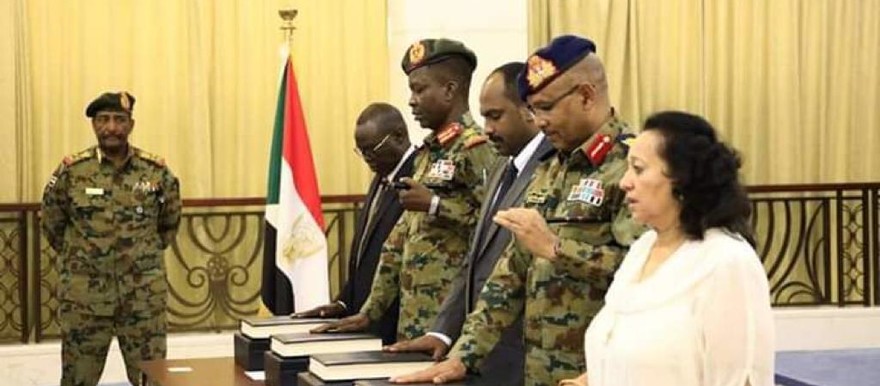
  • The New Sovereign Council sworn in this morning will be headed by al-Burhan the former head of the TMC and al-Bashir’s top man in implementing the Darfur carnage. The council is made up of six civilians and five former TMC members, including General Mohammed Hamadan Dagalo the current commander of the Rapid Support Forces (RSF). The New Sovereign Council will fall under Prime Minister Abdullah Hamdok, after his swearing-in ceremony 9 pm tonight in Khartoum. 

In the past week, al-Bashir’s corruption trial has started in Khartoum, he faces charges within Sudan over accepting millions of dollars from Saudia Arabia. The Khartoum courts are also looking to try other members of the former regime and bring them to justice. Meanwhile, the courts have shown no interest in handing over al-Bashir and his regime to the International Criminal Courts (ICC) that still have arrest warrants out over their involvement in the genocide in Darfur. It would be more appropriate for al-Bashir to be tried by the ICC rather than the courts of Khartoum.  Additionally, the families of slain protestors from the December Revolution call for justice and retribution for the forces that carried out the acts of violence. The families have said in the absence of justice they will take to the streets to call more attention and push for justice to be served. 

The challenge for this interim government will be their willingness to stop violent attacks on civilians, resolve the longstanding crises or pursue justice for the most serious crimes. We doubt with the military taking full control after al-Bashir’s overthrow that their sector of the leadership will not try and take control of this government. Moving forward we and the people of Sudan must stand vigilant and speak up to hold the interim government accountable for their every action. 

If you can share this with 5-10 people in your network and ask them to do the same, you will make a difference.

With our collective effort, we can make a difference.  We can end it.

Please follow us on Facebook, Twitter, and Instagram.

CONTINUED VIOLENCE IN DARFUR OVER THE WEEKEND

The Darfur Women Action Group expresses outrage at the continued acts of violence that are being perpetrated by the Rapid Support Forces (RSF). It is inexcusable that on Saturday, the day the New Constitution was signed, the RSF continued its attacks against innocent civilians in Jebel Marra in Darfur. The attack has left three dead and two critically wounded. DWAG has expressed its reservations about the power-sharing agreement in the weeks leading up to the signing of the New Constitution and the events that occurred on Saturday further proves to us that the new agreement will not remedy the situation.

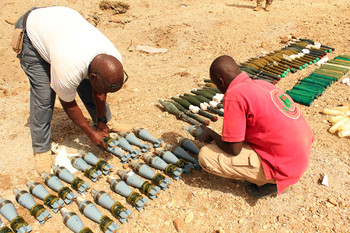
Just a day after, the continued effects of the war zone that the al-Bashir regime has made Darfur were seen again when an unexploded ordnance claimed the lives of two teenage brothers and severely maimed their sister on a farm in West Darfur. Darfur is still currently littered with unexploded ordnances from previous encounters with the RSF which draws out the pain and suffering that the Darfuri people endure. The international community must make it clear to the Alliance for Freedom and Change and the Sudanese Military Council that Darfur must not be overlooked or left to be a free zone for the RSF while they are celebrating in the capital. Without civilians protection, an end to these brutal attacks, and accountability for the perpetrators there will not be peace in Sudan.


Statement on the US Denial of Entry Visa for Salah Gosh

The Darfur Women Action Group commends Secretary of State Pompeo and the United States’ decision to deny the entry visa of Salah Gosh, former head of Sudan’s National Intelligence and Security Services (NISS). We appreciate the commitment that the United States showed in holding Gosh accountable for his actions in the Darfur genocide, which includes gross violations of human rights and torture. In the future, we hope the United States shows a continued dedication in holding all members of the former al-Bashir regime responsible for their involvement in the genocide in Darfur. We urge Secretary Pompeo to use other effective tools such as travel bans, asset freezing, sanctions, and criminal accountability measures to hold perpetrators of such serious crimes accountable. We also urge Secretary Pompeo to use these tools to prevent members of the former al-Bashir regime from collaborating with the United States, its international allies, and its regional allies at all levels. This action by the Secretary of State demonstrates the United States’ leadership’s commitment to the prevention of atrocities, such as gross human rights violations, and their ability to hold criminals accountable.