There’s more violence in Darfur now, not less

Niemat Ahmadi

In reference to Sudanese Ambassador, Khalid Mustafa’s letter, stating “violence in Darfur is much reduced.”

I find Mr. Mustafa’s letter dismaying and far from reality. As a survivor of the genocide in Darfur, millions of Darfuris and I long for peace and absence of violence. However, it’s not the type of fictional peace portrayed by Mr. Mustafa and his government for the sake of rebuilding international relations or ending their self-imposed isolation.

Let us set the facts straight.  The condition in Darfur has never been about the fighting between rebel and the Sudanese forces.  It’s about the Sudanese government’s systematic burning of villages, the slaughter of hundreds of thousands of innocent women, men and children, and ordering of rape of women and girls. These acts resulted in the International Criminal Court’s indictment of President al-Bashir and three officials who have yet to face justice.

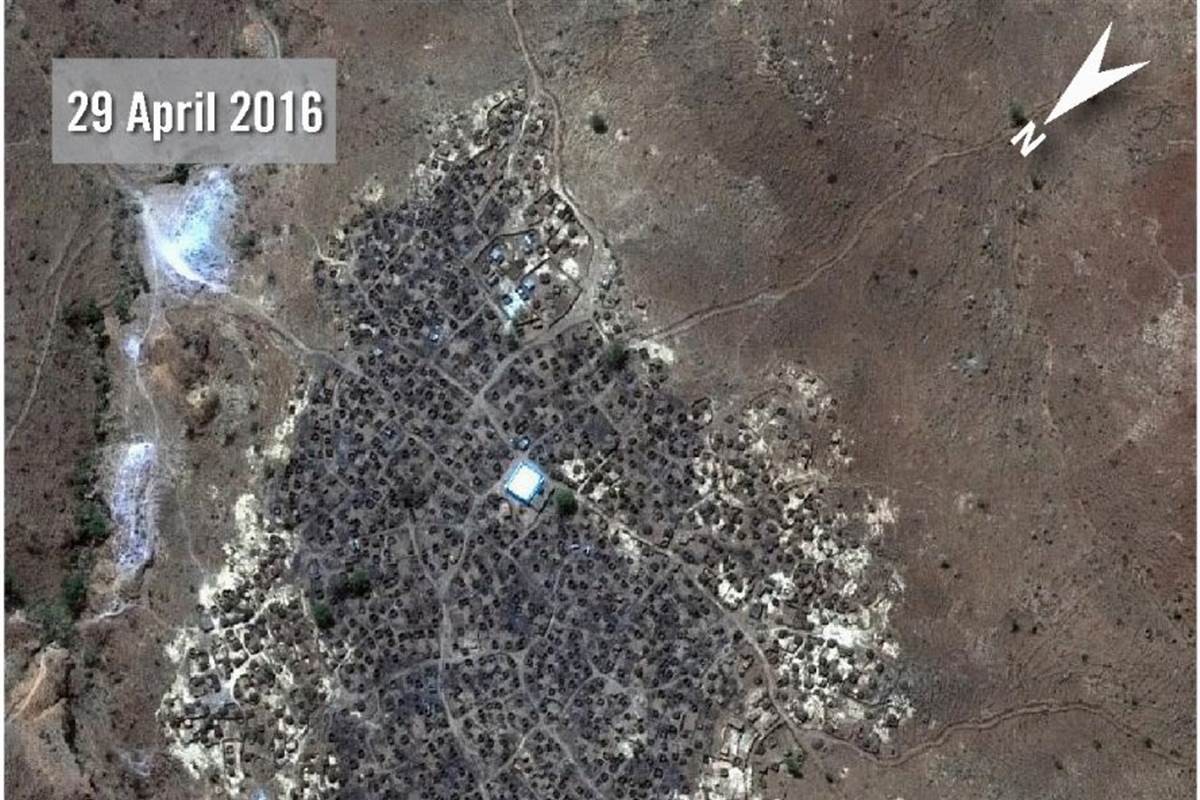
In 2016, Darfur witnessed the worst attacks in its 14-year of genocide, including allegations, brought by credible sources, of chemical weapons attacks and rape, which continues at an alarming rate. Just this past week, a camp in Kiraning was burned, three people were killed, including a woman and a seven-year-old boy and many were injured. These attacks were perpetrated by Sudanese Armed Forces against helpless IDPs, women, and children.

The statement made by the current head of UNAMID is the same statement made by former UNAMID leader, Rudolph Adada, in 2007, “the war in Darfur is over.” UNAMID’s failure has led its leadership to falsify success, disregarding the suffering of the people whom they are supposed to protect.

Today over 3 million genocide victims who have been languishing in camps for nearly 14 years, their land has been reallocated to new settlers, as a reward for implementing Khartoum’s plan in Darfur.

The Janjaweed and the notorious Rapid Support Forces are integrated into the armed forces. They continue to commit atrocities to silence civilians for Khartoum.

Khartoum continues to isolate Darfur. Its intention is noted in the arrests of Dauod, a Darfuri-American, and Mr. Cox, a British journalist. If Darfur is accessible for international reporting, why did the British journalist and the Darfuri-American need to sneak into Darfur? This incident alone questions the credibility of Mr. Khalid Mustafa and his government.

We believe, to validate its rhetoric. Ambassador Mustafa and his government at least allow the 13 NGOs expelled in 2009 to return and open full access to Jabel Marra, for investigation into allegations of chemical weapons, return confiscated lands, and to disarm the violent and terrorizing Rapid Support Forces, Janjaweed and other militias, or President al-Bashir turn himself into The Hague, as the minimum basis for peace with justice.

A shorter version of this letter was published in The Guardian

Hunted in Sudan


Based on Philip Cox’s original article: “Hunted in Sudan,” recently printed in the Guardian…

It may not be apparent from the international community’s recent pacification of Khartoum, but Al-Bashir’s government has not ceased in its brutality. British journalist Phil Cox and his Darfuri translator and producer Daoud Hari witnessed this brutality first hand in an attempt to document reports of chemical weapons strikes in the Jebel Marra region. Before they could get to their destination, they were arrested, beaten, and tortured in Kobar Prison, Khartoum.

Perhaps naively, Channel 4, the British cable news station who commissioned the report, never thought that they would fall victim to the same human rights abuses the journalists were trying to expose. They claim that Cox and Hari had been briefed of the dangers that could await them; they knew the consequences. These two men had seen the horrors first hand over a decade ago. Cox covered the conflict in its infancy and Daoud Hari, born and raised in Darfur, fled his home in Chad after being tortured in 2006. He voluntarily served as a translator for wartime journalists in order to expose the atrocities on the ground.

The journalists began their journey at a Darfuri refugee camp in Chad. Some of the first footage they shot was of Darfuri refugees who told them that even though they had escaped Bashir, they were still afraid. Too afraid to even gather wood for their fires. So afraid that they had begun to build permanent homes because most had given up the thought of returning home. Some also expressed that the international community, after all of our fervor a decade ago, had forgotten them.

They entered Sudan in a three jeep caravan with armed guards but they soon learned, by listening in on militia radio, that Cox had a $250,000 (US Dollars) bounty on his head. Helicopters were circling above. All routes in and out of Sudan were closed. They decided that they had no choice but to trust their mission to smugglers that could get them into Jebel Marra.

It was not long after they began their trip with the smugglers that they were stopped, beaten and chained together. Cox believes that it was a rogue, Sudanese government affiliated, Rapid Strike Force militia that had captured them. They spent the first few days chained to a tree in the hot sun. The captors softened after a few days and wanted to play with Cox’s camera. During this time he pretended to teach them how to use the camera while secretly taping them. It was this footage that would be the cause for torture and imprisonment. After a few more days, Daoud and Cox were told that Cox would be sold to the government and Daoud would be let go. They left Daoud on the side of the road, in the middle of nowhere with one cigarette and a bottle of water. He did not run, he stayed close to the road and that is where they found him the next day. The militiamen put them both in an airplane and told them they might be thrown from the sky. The two journalists begged for their life. It would not be the last time.

Daoud and Cox reached Kober Prison in Khartoum. This is where they were interrogated beaten, and electrocuted. Cox was also on the wrong end of a mock execution. In prison, they met regular people; businessmen, students, and workers who had been jailed for as little as sharing a text message deemed ‘subversive’ by the government. Cox spent 40 days in jail before being released because of international diplomatic pressure. Daoud was released a few weeks before him.  They did not see receive access to council for a week and neither was charged. After all of the abuse, Cox was able to hold on to that footage.

Both Daoud and Cox choke with emotion when speaking of their experiences. All I can think about are the thousands of people that experience and will continue to experience this kind of treatment and much worse every day in Sudan. If the international community continues on its path of pacification and apathy,  the violence will not end until every voice of the opposition is silenced and every man woman and child who stands in the way of Khartoum’s greed and lust for power are gone.

I’ll leave you with this quote from British journalist Phillip Cox:

“Daoud and I experienced first-hand the lengths that the Sudanese government will go to stop any independent reporting on what is happening in Darfur. Our time in prison gave us a terrifying insight into the brutal tactics of the Sudanese security forces, and it also revealed the arbitrary and heavy-handed way any perceived opposition or anti-government criticism is dealt with.”

A Call To Action

Daoud, an American citizen, and Cox, a British citizen, were lucky enough to receive intervention on their behalf. But who will intervene for the people of Darfur?

I urge our readers to share this story and tell the world that the people of Darfur are still being attacked, imprisoned, tortured and worse as witnessed by Daoud Hari and Phillip Cox. Much worse has happened and will continue to happen if we do nothing.  

We urge our leaders not to abandon the people of Darfur who are systematically oppressed and terrorized by their own government, and we need your help!

Camp Attack in Darfur

Bijan Razzaghi

On April 9th of 2017, a camp in El Genneina, West Darfur full of displaced persons or IDPs was attacked by Sudanese government-backed Janjaweed militias. The pretext was that the displaced persons were to be removed from inside the camp and market to a location outside. The market provided the displaced persons with basic living requirement’s such as food, water, and opportunities to make a living, but as well as a safety measure for the displaced, as they need a market inside the camp, instead of traveling miles away another market and subjecting themselves to an attack on the way. The government forces refused to listen to the displaced persons and moved in with support of the Sudanese military, which led to the deaths of three innocent people, including a seven-year-old boy who was shot, and left as many as a dozen wounded. The militia then burned the market and was transferred to Geneina hospital, which is known for its poor treatment of patients.


The tactic being used by the Janjaweed and Rapid Support Forces is one of systematic genocide. The pattern being observed is the continued displacement of individual’s already previously displaced. The aim of this being to demoralize the people of Darfur and to break their will to fight back or to stay in Darfur. The land of the displaced people is being used by the government for agriculture. As people are forced out of Darfur, they are pushed towards the border with Chad, or towards South Sudan.  The acts that are taking place violate the Geneva Convention, specifically Rule 89, Violence to Life, which prohibits the killing of innocent noncombatants. The violence against children, in particular, is being used by the militia. This is to bring fear of repression into the local people of Darfur.  A child’s death for example often is the breaking point for a family and that event makes that family more submissive to the government of Sudan and the militias will. In this case, they will be forced to move from their home to another place. The family, in particular, the men in that family, are less likely to act against the militia and government because of the fear of losing more children from the militias attacks in which case the cost of reprisal is a tragedy.  The same method is being used against women, in this case, women are often being sexually assaulted and raped in and around their camps. This is being done to force them to move.


The attacks are all blatant disregards for human life and reflect on inhuman methods in dealing with innocent civilians who have already been violently forced from their homes. The genocide in Darfur has been going on for 13 years the illusion that it is over is merely Omar al-Bashir’s attempt to sway public attention away from the genocide.  In addition to these violent attacks, it is the responsibility of UNAMID to uphold resolution 2296 and provide security and safety for these displaced persons and protect them from attack. UNAMID has been granted a civilian protection mandate under UNSC-R 1769 with chapter VII regime of the United nation These attacks take away the credibility of UNAMID in the eyes of the Janjaweed and the Sudanese armed forces which will embolden them to conduct more attacks.

Impacted by the Holocaust, Campaign Intern Works to End Darfur Genocide


Carla Ruas

On April 30, 2006, 50,000 people gathered at the National Mall, in Washington, DC, to participate in the “Save Darfur” rally, an event planned to mobilize support for the victims of the Darfur genocide. In the crowd were activists, politicians, and celebrities, as well as an observant 10-year-old named Adeena Eisen. “I remember realizing that there was something horrible happening in the world,” says Eisen, who is now an intern at DWAG; “And that it was important to speak out.”

Eisen was born and raised in the Washington, DC area, as part of a traditional Jewish community that was deeply impacted by the Holocaust. They vowed to make sure that such an atrocity never took place in the world again. Eisen took the vow to heart and continues to strive for it in her life and career.

Family History

In the early 1930’s, antisemitism was sweeping through all aspects of life in Poland. Eisen’s paternal grandfather’s family decided to leave the country in search of better opportunities. They found a new home in Canada. In the following years, they watched, horrified, as Nazis took over Europe and as discriminatory measures against Jews turned into genocide. By the end of the Holocaust, most of their extended family in Poland had perished.

The family eventually moved to the United States, where Robert Eisen was born. Marked by his family’s history, he went on to study Judaism with a broader interest in the relationship between religion, peace and violence, and is now Chair of the Department of Religion at George Washington University (GWU). He married Naomi Eisen, a dedicated Grant Writer for the Montgomery Housing partnership – an organization that works to provide affordable housing to low-income families in Montgomery County, Maryland. Adeena is the daughter of Robert and Naomi.

Growing up, the young Eisen grappled to understand how such horrific acts could be perpetrated against her ancestors. “It has been hard,” she admits. “But at the same time, it has shaped me, not only religiously, but also in the way that I look at other atrocities happening around the world and how it impacts people’s lives.”

Taking action

Eisen is currently an undergraduate student at George Washington University (GWU), where she focuses on International Relations and Philosophy. She chose these fields because she believes that they complement each other – while one covers politics and foreign affairs, the other helps one to think critically and make good arguments. “My goal is to use them to understand what kind of values we should strive for in the world.”

In January, Eisen also began an internship at DWAG. The organization appealed to her because it works to end modern-day genocide and because it strives to give affected communities and women a voice. The genocide in Darfur has been ongoing for thirteen years, and women and girls are systematically raped by Sudanese army men and militia. However, peace deals tend to exclude women from the negotiating table, and justice and accountability for such acts have not been considered a priority. “I really want to change that, and I feel that DWAG really cares about it,” Eisen says.

As part of her work at DWAG, she is organizing and mobilizing the Rapid Response Network, a group of volunteers around the world that help DWAG achieve its goals by engaging in simple actions. Rapid Responders often call their legislators to ask for their support, educate their community, mobilize friends and family to sign petitions and share DWAG’s content on social media to bring attention and demand effective response to genocide in Darfur.

Eisen’s goal is to draw more attention to DWAG’s cause. Attention for the Darfur genocide has dwindled, in spite of increasing violence against civilians on the ground. “I remember when Darfur was a really big deal but soon that attention faded and today I want to see that kind of attention and care from individuals, students, activist, and policy makers again,” she says. “I want to see the kind of mobilization that I saw in that rally eleven years ago.”

Peace for Darfur is Outreach Intern’s Goal


Carla Ruas

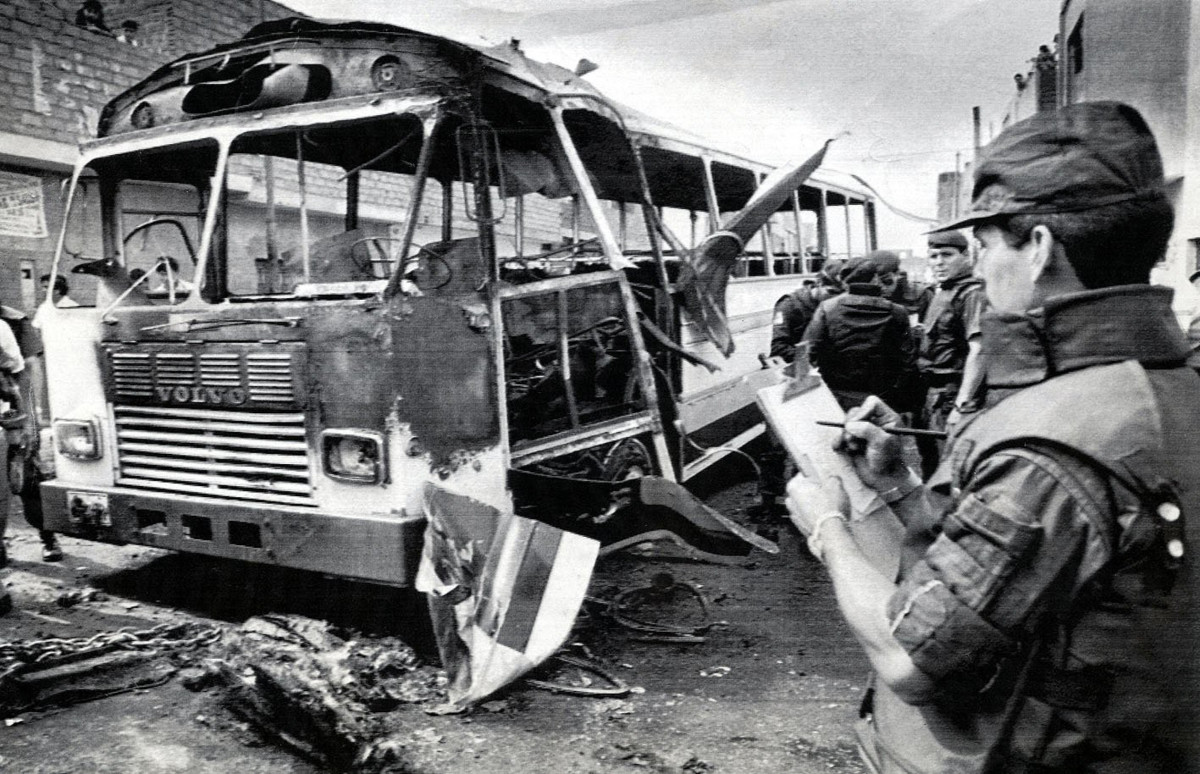
In the early 1980s, a communist militant group named Shining Path gained power in Peru, attracting a large number of followers and taking over territories in the countryside. In the process, the group became extremely violent. Members assassinated political rivals, community organizers and peasants who opposed their beliefs. They also killed innocent civilians by planting deadly bombs in shopping malls, banks, and on the streets.

Nicholas Cabrejos, Darfur Women Action Group’s (DWAG’s) Outreach Intern, was only two years old when terrorist attacks became more frequent in his city of birth, Lima. His parents were terrified. They feared that their child would grow up in a violent environment and without access to a good education. After considering their options, they made the difficult decision to leave the country and moved to the United States.

In contrast to the violent environment in which he was born, Cabrejos — or Nick, as he likes to be called — now exudes peace and tranquility to everyone around him. “I hate conflicts of any nature,” he says, “I believe that progress is hindered when energy is spent on fighting”. This aversion to hostility led to an interest in working to end conflicts across the globe. To that end, Cabrejos is studying political science at Marymount University, and he plans to acquire a master’s degree in conflict resolution in the future.

Darfur Genocide

It was at Marymount University that Cabrejos first learned about the Darfur genocide. In the beginning of 2016, he attended a panel about Sudan that featured DWAG’s president and genocide survivor Niemat Ahmadi. Nick was struck by Niemat’s powerful presentation about the ongoing genocide in Darfur, and how it has affected more than 400 thousand people over 13 years.

Cabrejos was so struck by the situation in Darfur that he approached Ms. Ahmadi during the panel’s coffee break. “I remember eating a sandwich while anxiously waiting for the right moment to approach her,” he recalls.“I asked her if there was anything that I could do to help.”

Since then, Cabrejos has been a fixed presence at DWAG’s office in Washington, DC. His job as an Outreach Intern is to make connections with individuals and organizations that can advance DWAG’s cause and projects. According to Cabrejos, the best part of his work is reminding important people — such as members of the United States Congress — that there is an ongoing genocide in Darfur. “They are very busy with other issues, so I am proud to be the one who educates them about the urgency of the situation,” he says.

The benefits of his internship might go even further. In the future, Cabrejos wants to apply the knowledge that he is acquiring in international relations and conflict resolution towards improving life in his home country. “I want to improve education for children in Peru, especially in the countryside,” he says. “But I will always take the Darfur cause with me, for the rest of my life.”


al-Bashir’s Visit to Jordan Was an Affront to Justice

Niemat Ahmadi

Sudanese President Omar al-Bashir recently traveled to Jordan for the 28th summit of the Arab League. His presence was a stark contrast to 2014, when Jordan did not allow him to enter Amman, the capital of Jordan, to attend the summit. The reason for the ban was the pending arrest warrant issued by the International Criminal Court (ICC). Since 2009, al-Bashir is wanted for five counts of crimes against humanity, two counts of war crimes, and three counts of genocide.

Jordan has always been known as the Arab world’s leader in providing a safe haven for refugees. The country has taken in thousands of Iraqis, Palestinians, and Syrians as they fled war zones. However, the Jordanian Government should not allow a war criminal such as Omar al-Bashir to enter the country without facing the consequences of an international arrest warrant.

As recently as January 2016, President al-Bashir’s regime used chemical weapons against civilians in Darfur and the Nuba mountains killing nearly 250 people – mostly women and children. Additionally, it is a well-known fact that the regime has sponsored terrorism, welcoming Al Qaeda into the country in the 1990s, and more recently arming terrorist organizations such as Hamas and Islamic jihadist groups. All of these blatant violations of international law are good reasons for al-Bashir’s immediate arrest and ban from international conferences such as the Arab League summit.

All states must abide by their treaty obligations and anything to the contrary hurts the ICC’s objectives and aims, as recently pointed out by Prince Zeid bin Ra’ad Zeid al-Hussein, the United Nations High Commissioner for Human Rights. Jordan, as an important player in the region, should stand with the victims of genocide in Darfur instead of aiding a criminal such as al-Bashir to evade justice.

New Perspectives on Genocide Prevention

by Adeena Eisen

“This is not just a humanitarian issue,” said Anne-Marie Slaughter, President and CEO of New America, a think-tank based in Washington D.C. Slaughter was referring to the international community’s handling of mass atrocities. On January 31, 2017, she spoke as part of the panel “After Aleppo: Prospects for Preventing Mass Atrocities in the New Trump Administration,” which I had the privilege of attending at the New America headquarters. The purpose of the panel was to address how the United States and the international community should respond to mass atrocities, especially in light of the new Trump administration.

Slaughter, who introduced the panel, spoke of how it is a grave mistake to address mass atrocities solely as humanitarian crises. In fact, if governments that commit human rights abuses are not stopped, they will inevitably pose security threats to the international community.

Such a perspective is vital to the goals of Darfur Women Action Group (DWAG). The genocide in Darfur does not just affect people living in the immediate region, but it also has repercussions for the global community. For example, the flow of refugees to European countries from crisis-affected areas—including Darfur—has presented major challenges to the European Union (EU). If the international community had acted preemptively to end such crises in Darfur or elsewhere, perhaps Europe would be dealing with a less overwhelming influx of refugees, which is difficult for any society to handle. This demonstrates that the international community has a stake in preventing mass atrocities.

Of course, preventing mass atrocities must be done out of good will too, or else it leads to short-sighted solutions. For example, the European Union (EU) is currently investing large sums of money to prevent more refugees from entering Europe. Even if this ‘solution’ is successful in keeping refugees out of European borders, it will not benefit the victims or end the genocide in Darfur.

Unfortunately, the tools needed to deal with genocide and other mass atrocities are limited. Luckily, other speakers on the panel were able to offer potential solutions that could expand the range of tools needed to prevent such crimes against humanity. Rich Fontaine, President of the Center for New American Policy, discussed the importance of investigating the financing of mass atrocities. This strategy could be especially relevant because the U.S. recently lifted sanctions on the Sudanese government. Reinstating these sanctions may block some of the financial resources that enable the government to commit human rights abuses against Darfuris.

This panel was valuable because it serves as a reminder that we must speak up and raise awareness among global leaders that ending the genocide in Darfur is in their own interest. By doing so, we can hold the Sudanese government accountable for genocide, war crimes, and crimes against humanity committed in Darfur and change how the international community responds to genocide.

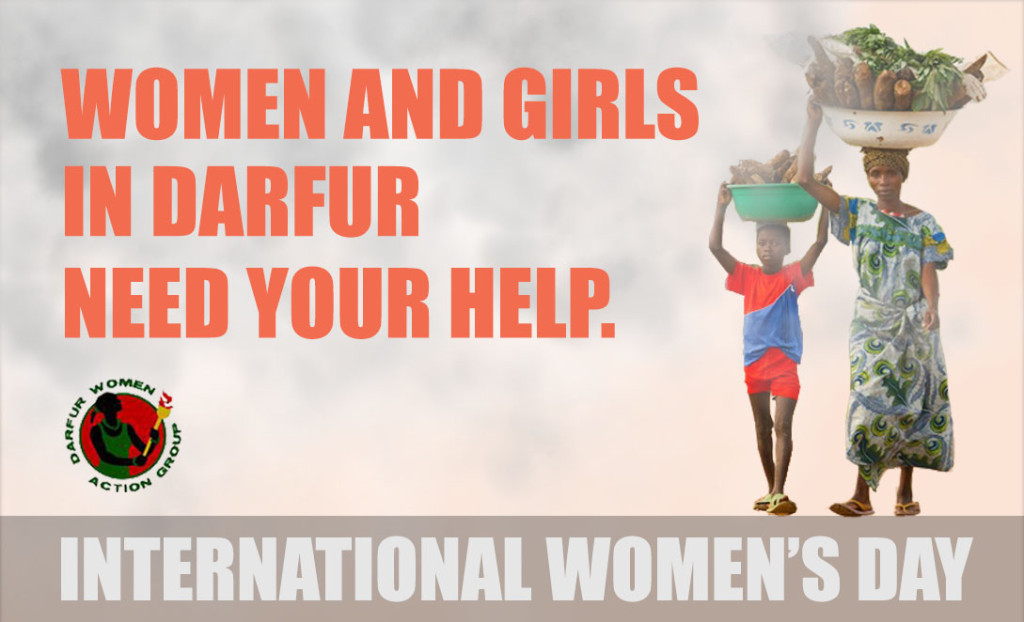
International Women’s Day 2017

We hear stories of resilience, tragedy, and horror every single day. And yet, international institutions continue to betray and ignore the women of Darfur. You can help.

Dear supporters,

On this International Women’s Day, we would like to bring your attention to the daily suffering and resilience of women in Darfur, and ask for your help. While most women around the globe are celebrating their achievements, Darfuri women are still under genocidal attack and continue to be victims of brutal and systematic sexual violence. In the meantime, international intuitions are failing to hold the perpetrators accountable.

Darfur Women Action Group (DWAG) strives to change the way that the world responds to crimes committed against women in Darfur and we need your help.

Today, we will honor one of these brave women by sharing her story. Nafisa Suleiman Haroun, 36 years old, was recently stabbed in the heart while fighting for dignity. Please read her story and support Darfuri women by taking the actions suggested at the bottom of our statement. By honoring Nafisa we will honor every single woman who has been a victim of genocide in Darfur and elsewhere.

On February 13, five women left their village in Barbogat area, North Darfur state, to collect firewood from a nearby valley. For the past 13 years, firewood has been the main source of fuel and cooking for families in displaced camps. Usually, women have to walk for many hours, or sometimes for a whole day, to reach a forest.

As the five women distanced themselves from their homes, three armed men on horseback surrounded and attempted to rape them. The women resisted with all their strength. They refused to be violated. They did not want to become victims of the systematic rape in Darfur – a tactic used by the Sudanese regime to undermine Darfuris.

As the women fought back, the armed men grew angry with their refusal. One of the men stabbed 36-year-old Nafisa Suleiman Haroun – in the heart. She died on the spot. Nafisa paid a very high price for her dignity.

We were horrified and deeply impacted by the news reports of this incident on the heels of International Women’s Day. Not only because it is tragic, or because the stabbing in the heart is symbolic of the situation of women in Darfur, but also because similar incidents of rape and violence happen every day in the region with total impunity.

Womens Day

What is happening in Darfur?

For more than 13 years, the Sudanese government’s military forces and their allied militia (Janjaweed) have carried out systematic attacks against the Darfuri people based on their ethnicity. They have bombed villages, abducted civilians, looted private property, and used rape against women and girls as a weapon of war and intimidation. As a result, over 3 million Darfuris were forced to leave their villages for Internally Displaced Person’s (IDP) camps located in Chad. Over 80% of these people are women and children, who live with limited access to humanitarian assistance, education, and protection.

Countless women and girls are subjected to brutal rape, humiliation, beating, starvation and diseases on a daily basis. Rape and sexual violence in Darfur are not mere byproducts of war. They are well-planned and deliberately orchestrated attacks intended to tear apart families, break down leadership structures, and leave long-term social, emotional, and physical scars on entire communities.

Despite the alarming rate of rape and other forms of sexual violence, little has been done to address the situation. Until today, no research has been conducted to determine the exact number of women raped and the impact of sexual violence on women and girls. Tragically, the perpetrators have not been brought to justice.

International leaders have failed to take action, and have been echoing the Sudanese Government’s narrative that the crisis in Darfur is over. Even though the Sudanese Government claims that the situation has improved, violence is progressively getting worse. According to a report by Amnesty International, in the first six months of 2016, at least 32 villages in the Jebel Marra region were bombed with chemical weapons, killing between 200 and 250 civilians. On the very first day of 2017, military troops viciously invaded the city of Nertiti, in Jebel Marra, and committed a brutal massacre, slaughtering 10 innocent civilians and injuring another 60 people during the attacks.


Please join us this month to speak up for the women in Darfur, empower survivors, and seek justice for victims:


      • Share our statement on social media and use the hashtag #StopRapeInDarfur.
      • Donate to our organization to support our “Women Empowering Women” project to raise U$ 10,000 by the end of March.
      • Organize a screening of our “Violence Against Women” video to educate more people. Contact us and we will send you a link!
      • Organize a fundraising event for DWAG. We will give you all the tools to help us reach our fundraising goals.
      • Invite DWAG to speak at your school, congregation or community center in order to educate more people about the situation in Darfur.


With gratitude,

Niemat Ahmadi, President Darfur Women Action Group
1050 17th Street NW , Suite 1000
Washington, DC 20036

An Open Letter to the International Community About al-Bashir’s Pending Arrest Warrant

On the 8th anniversary of Sudanese President al-Bashir’s arrest warrant, we at Darfur Women Action Group (DWAG) would like to express our grave concern regarding the continued impunity that the president enjoys. Despite the fact that the International Criminal Court (ICC) has charged President al-Bashir with committing genocide, war crimes and crimes against humanity, many countries have failed to cooperate with the ICC in holding him and other Sudanese leaders responsible for these heinous crimes.
We had hoped that justice would be forthcoming, if not through the ICC then through other forms. Instead, we have observed the United States improve relations with Sudan, even lifting economic sanctions that have been in place since the 1990s. At the same time, the European Union recently joined Sudan in creating an initiative that bars refugees from entering Europe. By allowing the Sudanese regime to get away with its crimes with impunity, the United States and the European Union not only undermine the ICC, but also embolden President al-Bashir and other war criminals who feel entitled to ignore (and even deny) the applicability of customary international law, including the Geneva Conventions, the Convention on the Prevention and Punishment of the Crime of Genocide, and the Universal Declaration of Human Rights (UDHR).
The international community has repeatedly failed to impose consequences for President al-Bashir’s atrocities and has allowed the government of Sudan to continue its crimes in Darfur and throughout Sudan with impunity, betraying the people of Sudan who face violence every day.


ON THE ANNIVERSARY OF HIS INDICTMENT, LET US NOT FORGET:


THE CRIMES
President al-Bashir stands accused of the world’s most heinous crimes—genocide, war crimes and crimes against humanity. The president launched the genocide in Darfur more than 13 years ago, by ordering the Sudanese Armed Forces and allied Janjaweed militias to carry out a scorched-earth campaign against the civilian population.

Since then, more than 300,000 people have been reported killed and thousands of villages have been destroyed. Rape has been systematically used as a weapon of war, and girls and women are attacked on a daily basis. Human rights defenders such as lawyers, journalists, and students are regularly arrested, tortured, and/or killed in custody.
To date, the Sudanese Government continues to carry out or sponsor violent attacks against innocent civilians in Darfur – including a recent massacre in Nertiti City that left 13 people dead and 60 people wounded. We are also deeply troubled that there have been allegations of the use of chemical weapons which still have not been investigated by the United Nations (UN).
DETERIORATING HUMANITARIAN CONDITIONS
In 2009, after learning of the ICC arrest warrant against him, President al-Bashir retaliated. The Sudanese President forced 13 international NGOs to leave Sudan and shut down three national organizations that provided lifesaving assistance for internally displaced people (IDPs) in Darfur. As a result, humanitarian conditions severely deteriorated and IDPs were subjected to starvation, diseases, water shortages, and acute malnutrition. To this day, conditions have not improved. Over 3 million Darfuris remain displaced and are unable to return home, in part because foreigners have occupied most of their lands.
EIGHT YEARS OF IMPUNITY MUST END
March 4, 2017, marks the 8th anniversary of the ICC arrest warrant against President al-Bashir. During this time, we have seen some ICC state parties demonstrate a strong commitment to justice by restricting al-Bashir’s ability to travel freely around the world.
Other countries, however, have consistently failed to hold the president accountable. China, a United Nations Security Council member, welcomed President al-Bashir for a state visit in 2011. Other ICC members, such as Chad, South Africa, the Democratic Republic of the Congo, Djibouti and Nigeria, have greeted and hosted the president. Among the countries that are not ICC members but have also welcomed Bashir are Egypt, Eritrea, Ethiopia, Iran, Iraq, Kuwait, Libya, Morocco, Qatar, Saudi Arabia and South Sudan.
The failure to hold President al-Bashir accountable not only has devastating effects inside Sudan, but sends the wrong message to leaders like Syrian President Assad and others who are perpetrating extreme violence throughout the world. It supports their ability to continue killing their own people with total impunity.
If not in the name of the Security Council resolutions which referred the matter to the ICC; if not in the name of the Rome Statute, then in the name of the Geneva Conventions binding on all States, we urge all members of the United Nations Security Council (UNSC) and the States parties to the Rome Statute to stand for justice and make this year the last anniversary of President al-Bashir‘s impunity.
We demand that Member States of the United Nations, and especially members of the Security Council and the Rome Statute, abide by the obligations deriving from the ICC arrest warrants against President al-Bashir and other Sudanese leaders. They will get far more justice in The Hague than their victims have gotten. To our African brothers an sisters, we recall that the African Charter on Human and Peoples Rights clearly articulates and obligates African Union’s members to promote justice, rule of law and human dignity at home and internationally. To our Muslim brothers and sisters, we recall that Islam prohibits attacks on civilians especially the rape of innocent women and girls.
We urge western countries to consider withholding military and/or economic aid (with the exception of humanitarian aid) from countries that allow President al-Bashir to enter into their territory without being arrested. The United Nations (UN) should also seriously consider adopting new mechanisms to allow the enforcement of ICC arrest warrants on any areas administered by the UN, including its headquarters.
It is imperative that the international community makes it clear to President al-Bashir and all perpetrators of genocide, war crimes, and crimes against humanity, that their impunity will not be tolerated for another year.


The Cost of Ignoring Chemical Warfare in Darfur

Bijan Razzaghi

Blog
Photo by Amnesty International

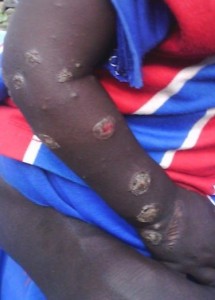
Bloody vomiting, difficulty breathing, diarrhea, rashes on the skin, miscarriage among women and loss of vision. These are some of the symptoms described by the victims of chemical attacks in Jebel Marra, a region in Darfur, Sudan. According to a report published by the nonprofit Amnesty International, more than 30 chemical attacks were carried out by the Sudanese government in the area of Jebel Marra in 2016 – as recently as September. The strikes claimed the lives of at least 250 innocent civilians, including many children, and continue to cause pain and suffering. Reports coming from the ground indicate that many individuals are still dealing with health complications stemming from the chemicals.

The government has denied independent investigators access to the areas affected, and therefore a thorough investigation into the chemical weapons use in Darfur is still pending. However, photographs and testimonies from victims suggest that the chemical of choice for these vicious attacks was blister agent (also known as mustard gas) – a compound of sulfur mustard and nitrogen mustard. The substance, used by Saddam Hussein against Iran and the Kurds in the 1980s, can cause blistering and peeling of the skin, respiratory distress, and loss of vision. The compound is not an instant killer, but it can trigger long-term health complications that can eventually be fatal. In other words, deaths caused by this agent are slow and painful – making it the most cruel war weapon in the market.

The compound was most likely delivered through artillery shells or aerial bombs dropped by Sudanese Air Force planes SU-24s, SU-25s, and A-5s. It is widely known that these aircraft were provided by Russia and China, and that they are capable of carrying these types of chemical bombs. The planes have been spotted in airfields located in the cities El Fesher and Nayala – which is in itself a problem. Their presence violates the United Nations Security Council’s (UNSC) resolution 1556, which states that no military aircraft should be operating in the Darfur region.

Fighting Impunity

Although there is no physical evidence of the attacks in Darfur, there is little doubt that they took place. Among the 56 witnesses featured in Amnesty International’s report, many described bombs falling from the sky that exploded into “a toxic cloud of smoke.” This description matches other accounts of chemical weapons recorded in different parts of the world. Other than that, it is hard to believe that hundreds of people in Darfur would lie about what they saw and experienced, as well as the resulting health issues that affects them to this day.

These tragic testimonies should have been enough to make the international community demand justice and accountability for these crimes. In the least, they should have sparked sufficient outrage for the United Nations to demand immediate access for an independent investigation in the area. However, there has been little to no reaction from most world leaders, including the United States. It is surprising, considering that three years earlier a similar event occurred in Syria and there was a major reaction, even resulting in the destruction of that country’s chemical weapons. Why is Sudan an exception?

It is particularly important that the international community be reminded that the chemical weapons attacks in Darfur violate the Chemical Weapons Convention (CWC), an arms control treaty supported by the United Nations (UN) that forbids the production, stockpiling and use of chemical agents. Furthermore, they violate the laws of war determined by the Geneva Convention, specially the ones that protect civilians and civilian objects. And lastly, the use of chemical weapons by the Sudanese government demonstrates a blatant disregard for human life and the wellbeing of citizens living in Darfur and the the values that the Geneva Convention has preached.

It is time that this issue be treated with the seriousness that it deserves. The victims’ accounts need be taken into consideration as evidence. The United Nations (UN), the United States and member states of the Organisation for the Prohibition of Chemical Weapons (OPCW) must demand immediate access to the areas affected for an independent investigation. The Sudanese government should be held to the same standards as other leaders who have committed similar crimes. It is morally and legally imperative to apply appropriate measures on the chemical attacks in Darfur, and to ensure that perpetrators pay for their crimes.

Ignoring serious crimes such as genocide and the use of chemical weapons will not only embolden criminals like President al-Bashir of Sudan, but will also further erode international norms and put our institutions’ competency in question.