Attack on Education: Targeting University Students from Darfur is an alarming trend in Sudan

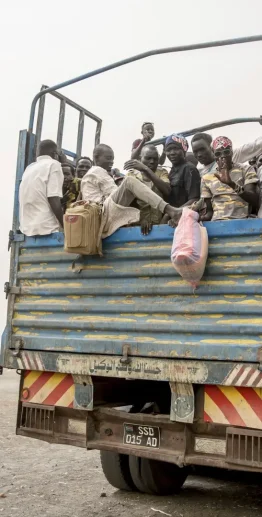
Over the last two days, pictures of tragedy have surfaced on social media. A group of young university students, with only backpacks, a dim sadness on their faces and exhausted from miles of walking on their feet’s to reach the capital of Sudan. It’s the Sudanese authority that has prevented the public transportation to carry them.

Around 1,000 Darfuri students forced to resign from the University of Bakht El Rida in El Duwiem in the White Nile state, this week. Reports from the university indicate that officials consistently harassed Darfuri students. The events at the University of Bakht El Rida highlight the widespread, systematic discrimination against Darfuris in Sudan by the government and its security apparatus for more than a decade. In May of 2017, nine Darfuris were arrested on falls accusations of murdering two police officers without any evidence to back up this serious claim. This sadly not a single incidents other students consistently faced discrimination from pro regime university leaders

The African Centre for Justice and Peace Studies cites a police raid on the 9th of May which was targeted towards Darfuri students exclusively, and many reports claim that were often excessive use of force against the student population. This was not the first police raid the university experienced. One on 21 June 2011 left 18 students injured. Reports over the years highlight the abuse these students experienced. There were consistent attacks, leaving many injured and or killed in the wake. Students were also randomly arrested or detained. Students who attempted to fight back and reclaim their right to education were brutally beaten and targeted. Reports from inside the university highlight how officials created a racial discrimination against Darfuri students

As of the 20th of July 2017, the over 1,000 students who resigned en masse were stopped from entering Khartoum. Bus drivers in El Sough El Shaabi in El Duweim were routinely told by government authorities not to transport Darfuri students, leaving students with no choice but to march to the capital on foot to demand the release of the nine students accused of murder. The Sudanese National Intelligence and Security Services (NISS) is preventing the students from entering the capital, in what Amnesty International calls a “callous disregard of their rights to freedom of expression and peaceful assembly.” Reports state that the group of students has grown in number, now reaching about 1,500. As they are not able to enter Khartoum, these students are in Sheikh El Yagout in the White Nile state. The Sheikh El Yagout village has been praised by many for providing these students with lodging and other necessities during the plight of these students.

It should be noted, however, that many students did not let this intentional discrimination and miss treatment interfere with their desire to get an education. When buses stopped transporting them, they began to walk. The ultimate outcome should not diminish the bravery these students exemplified; they were consistently trying to overcome the discrimination they faced. Darfuri students organized protests and worked extremely hard to do well in school.

The systematic abuse of the Darfuri population runs too deep, however, and the actions that were taken by these students to end discrimination against them only helped to fuel it. Those who participated in demonstrations or were at the top of their classes were targeted and isolated. Many were accused of crimes with no shred of evidence to back up the accusation.
We should not be fooled by the narrative the Sudanese government is promoting. Violence in Darfur has not decreased, and violence against Darfuris has only become more intense. What happened to these students demonstrates the vile nature of the government’s tactics against Darfuris; these attacks are seeping into their everyday lives with the goal of depriving them of any semblance of a healthy and happy life.
It’s a part of deliberate tactics to weaken the Darfuri societies. When millions are driven out of their home, children can’t go to school, and university students are systematical targeted, what will be the future of Darfur with an entire generation deprived of education

It should be noted that this story is still developing; the 1500 students are still in Sheikh El Yagout trying to get into Khartoum; We must keep an eye to ensure that the government wouldn’t harm them. Trying to fight for their most basic rights, and as they are fighting, they should know that their struggle is not in vain. We must demand accountability for the Sudanese government and its barbaric behavior and human rights violation against students and expose them to the world.

Understanding the Golo Attack: The Need for UNAMID and the Illusion of Peace in Darfur

Roksana Verahrami 

Last Friday, as the UN made its decision regarding UNAMID’s funding, the world was once again reminded of the need for UNAMID, despite its past failures.


In a wicked and ironic twist, last Friday, the 30th of June 2017, a group of women were raped. While this type of incident is, sadly, very familiar to many in Darfur, it is the following events which showed the determined brutality of the Sudanese armed forces.


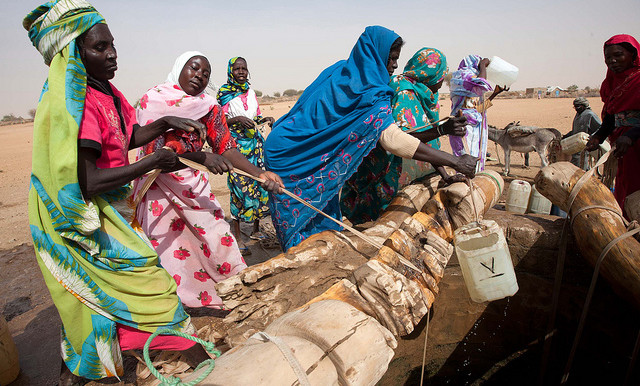
The incident took place in Golo, Central Darfur, near Jebel Marra. There was a group of women gathering water when army soldier appeared and raped them. Those near the scene tried to aid the women by beating them with sticks. One of the soldiers was killed, and many others were wounded.  After this, the soldiers began to attack people with a bombardment of missiles and bullets. The violence did not stop there; soldiers then proceeded to raid houses and shops and robbed people of their belongings. Witnesses report that soldiers forced several donkey cart owners to transport the stolen goods back to the military garrison of Golo.


As of now, there are still many people who are not able to return home. They are living in caves and valleys because they have nowhere else to go. Those involved in the Golo attack are in desperate need of humanitarian assistance, but the possibility of receiving aid is beginning to look more and more unlikely.


This type of incident serves us to remind us about the need for accountability and transparency. When an attack this brutal occurs, we need to ensure that nothing like it happens again. However, as this was happening; as a group of women was being raped and innocent civilians saw their homes torn apart; the international community decided to let that be the status quo.


The fact that these types of attacks are a reality for thousands of Darfuris reflects a fundamental failure on international community’s part. With our silence, we have let it happen. History is supposed to teach us to learn from our mistakes and to do better; to right the wrongs of those who came before us. The case of Darfur is not an exception. Those who came before us failed, and it is our duty to change the status quo. It is our jobs as citizens to speak up and hold our leaders accountable.


Over the years, Darfur has seemed to disappear from the public’s conscious. Reports from mainstream news sources regarding Darfur stopped, after all the situation in Darfur was not new anymore, it became a continuous state, the violence never stopped. Moreover, the violence has not stopped. Every day there are new reports of violent attacks, people killed, women and girls raped, farmers abducted, and the list goes on.


While we were not the one committing these acts, we were bystanders in the world’s most successful genocide. The lack of news coverage, the lack of public outrage, it all contributed to the suffering of thousands of innocents. Our silence killed, we should be reminded of that.


Moreover, as the UN announced its decision regarding UNAMID’s funding, we should be reminded of our past mistakes, and not just in the case of Darfur. We should remind ourselves of Cambodia and Rwanda and of all the other genocides which have occurred as a result of our silence. Despite what the past as taught us, the UN refuses to learn and instead keeps making the same mistakes.


With the UN’s decision to cut back on peacekeeping operations what happened in Golo is likely to occur again; in fact, it is likely that these types of attacks will occur more frequently. The UN needs to realize that they have played into the hands of an indicted war-criminal; the UN has bought al-Bashir’s narrative, one promoting a peaceful and stable Darfur, and that narrative does not have an ounce of truth to it. The Golo attack is a testimony to the fact that government-sponsored violence is a reality in Darfur which contradicting the fictional narrative that states that the situation in Darfur has improved.


The fact of the matter is that there are still thousands of people in Darfur who need some humanitarian assistance, and for them, the withdrawal of peacekeepers is practically a death sentence. The UN should be made aware of this fact. They should also look back to the chatter upon which their organization was created and realize that the values which were enshrined in their founding have become nothing more than words on a piece of paper.

Darfur Needs You

DARFUR NEEDS YOU NOW MORE THAN EVER

SPEAK UP

SILENCE KILLS MORE PEOPLE

EVERY DAY!!!!

Fourteen years into Darfur’s catastrophe and civilian casualties increase each day while the world remains SILENT!!!

Violence, rape, arrests, and torture have devastated the lives of the innocent civilians in Darfur. Countless men, women, and children have lost their lives while the living endures unimaginable suffering with nowhere to turn. Despite the alarming rate at which the violence continues, world leaders have faced the situation in Darfur with silence. Those who have spoken out have not moved beyond words of condemnation.

At the beginning of 2017, the Sudanese army attacked innocent civilians in the cities of Nertiti and Elgenaina, West Darfur. These were not the only attacks the Sudanese army has carried out. Subsequent reports out of Darfur highlight the systematic rape of women and girls. While this happens, while the people of Darfur continue to suffer, the international community is moving toward rewarding Sudan.

As you may have seen, 2016 was a challenging year for our people in Darfur, and we were hopeful that 2017 might be different. Unfortunately, the attacks continue at an alarming rate, and the international community is continuing to fail Darfur. Amidst the atrocities taking place in Darfur, the Sudanese government is working hard to change its narrative. President al-Bashir and his accomplices are doing so by confusing the facts on the ground and reporting that Darfur is peaceful, thus perpetuating his lies.  Millions of people are displaced. There are refugees under attack with nowhere to go. The Arab Janjaweed Rapid Support Forces have been fully integrated into the Sudan Armed Forces and have been granted the permission to kill burn and oppress the people of Darfur. The Sudanese Government has falsely declared a ceasefire, only to prepare for the largest offensive in years.

The Situation Remains Urgent:

Throughout 2016, violent attacks, killings, rapes, arrests, and torture have devastated the lives of the long-suffering innocent civilians of Darfur. Many men, women, and children have lost their lives, and those who have been forced to flee have nowhere to turn due to the restriction of humanitarian aid.

Starting in January 2016, there were unprecedented attacks in Central Darfur’s Jebel Marra. Amnesty International estimated that well over 250 chemical bombs were dropped on villages solely inhabited by civilians, killing mostly women and children. There have been an estimated 30 attacks from January 2016 to September 2016 The United Nations has failed to report the use of chemical weapons in Darfur, to provide an accurate account of what is happening, nor to provide an estimate of how many innocent lives have been lost. By failing to do this, the UN has helped pave a path for al-Bashir to get away with genocide.

Consequently, a new surge of violence continued throughout 2016 in Central Darfur. The Sudanese government intensified ground attacks as well as aerial bombings in Jebel Marra. The targeted areas are mostly inhabited by civilians, a majority of whom are affected, women and children. According to sources on the ground, about over 400 villages around Jebel Marra have been destroyed and over 400,000 people have been forced to flee, some to the caves at the top of the Marra Mountains. The remainder has been driven to camps and nearby cities seeking protection, still struggling to survive as they have been left to sadly face the harsh winter, the flood in the rainy season and the harsh tropical sunshine without shelter or food. Reports also confirmed that the Janjaweed and the Government forces had raped many women and girls and some were even taken hostage; their fates remain unknown. Many more of those who have not been able to flee are trapped on mountaintops living in caves without humanitarian assistance

The Ongoing Tragedy:

What you may not know is that there are about 400,000 people who have repeatedly been displaced in 2016, adding to those who were already displaced. Over 3 million people remain in camps and have been there for last 13 years as violence escalates and the government of Sudan severely restricts humanitarian efforts. Rape and all forms of sexual abuse continue at an alarming rate in the displacement camps where women are the majority inhabitants. For 13 years, millions of Darfuris have remained displaced and continue to live in fear without the possibility of returning home, while the number of newly displaced people continues to grow exponentially. Many of the targets also include college students who are being abducted, imprisoned, and killed. The genocide continues unabated.

Darfur Still Faces Challenges:

President al-Bashir, the mastermind behind the genocide in Darfur and a man indicted and wanted by the International Criminal Court (ICC), is still actively pursuing his genocidal campaign in Darfur and other regions of Sudan. Despite the alarming situation in Darfur, the international community has chosen to ignore it. Similarly, the mainstream media has failed to cover the current situation, and the ongoing genocide is no longer making headlines.  Sources, such as The New York Times and The Washington Post, that used to report on Darfur, no longer report on the ongoing atrocities. The government of Sudan has made every effort to isolate Darfur from the outside world. For example, President Obama’s special envoy to Sudan and South Sudan never even visited Darfur. The Representative of the UN Secretary-General on Sexual Violence in Conflict Zones has also failed to visit Darfur in recent years despite the weaponization of rape which prevalence remains unhindered. UNAMID, the forces that have been put in place to protect civilians, have failed to carry out their mandate and remain under severe restrictions. Impartiality and incompetence have characterized the mission.  UNAMID spokesperson, Aicha Elbasri reported that UNAMID had not reported deaths and sexual violence committed by the regime forces. In many instances, UNAMID leaders attempt to please the Sudanese government by helping them falsify information related to Darfur, while innocents suffer due to their neglect.

Al-Bashir, the indicted genocidal criminal, has successfully blocked access to information from Darfur to continue his crimes and get away with murder.

Bashir is Changing the Narrative:

In 2017, the Sudanese government began to form a new narrative which has sadly been reinforced and accepted by leaders within the African Union, European Union, and the United States. The narrative is a propaganda lie about the situation in Darfur. The new version of Darfur that al-Bashir paints state that there is little to no violence in Darfur. This narrative ignores the millions of the genocide victims who are still under attack, rape, and oppression with total impunity. On the contrary, the Janjaweed Arab militias (Rapid Support Forces) have grown more powerful, still committing crimes and controlling everywhere in Darfur including the cities. Despite the alarming situation in Darfur, the international community has chosen to ignore al-Bashir’s leading role in the massacre as its leaders look the other way. Similarly, the mainstream media has failed to cover the current situation and the ongoing genocide. Darfur is no longer making headlines in the New York Times, Washington Post, Aljazeera network or the BBC – as it had in the past.

Likewise, many advocates have moved away from the Darfur issue or have passively accepted the narrative imposed by the Sudanese government, which replaces the word “genocide” with “mass atrocities or conflict.” It may seem like a simple grammatical tweak, but there are severe consequences to this change. Avoiding the word “genocide” waters down the urgency of the situation in Darfur and allows the world to move away from this issue and focus on other international crises around the world

The Lifting of Sanctions and the Failure of the European Union:

While the genocidal campaign continued uninterrupted, in his last week in office, President Obama shamefully lifted the sanctions against Sudan using the same fictional justification that was propagated by the Sudanese government. The two previous administrations initially had imposed these sanctions as the result of Sudan harboring terrorist grounds and committing genocide in Darfur. Lifting sanctions are the equivalent of giving the government of Sudan a free pass to international trade, investment and more financial transaction and cash in hand, which will further enable them to slaughter and rape the innocent people of Darfur.

To date, no credible information shows that Sudan has ceased its support to terrorist groups nor ended its attacks in Darfur. Reports indicate that attacks in Darfur have actually escalated and now include the use of chemical weapons. The conditions for permanently lifting sanctions are that Sudan must cut ties with terrorist groups. Secondly, and more importantly, Sudan must end its attacks in Darfur, allow unhindered humanitarian access, disarm the Janjaweed militias and bring lasting peace to Darfur and Sudan. Regrettably, the Sudanese government has worked to falsify reports, rather than being genuine and lasting peace to Darfur.

The European Union has already established collaboration with Sudan in an attempt to curb the flow of African refugees to Europe by giving Sudan €100,000. The EU made the deal while knowing that the ICC still wants to arrest Bashir. The hypocritical nature of the deal is not something to take lightly. Many of the countries in the EU abide by the Rome Statute, and to make a deal with Sudan while arrest warrants for al-Bashir are still in place is a direct violation of the moral codes many of the countries have held.

With the money from EU, Sudan has empowered the Rapid Support Forces, militias that have committed and will continue to commit unimaginable crimes against the people of Darfur under the pretext of “protecting” them.

The reality is that the Janjaweed, in addition to committing violence against the people of Darfur, are trafficking refugees fleeing prosecution from Sudan’s neighboring countries. The EU is enabling this with their ignorance. While the deal may have been set up with good intent, the reality proves that it has further prolonged the suffering of many Darfuris and others.

Many advocates have moved away from Darfur or have accepted the change of narrative that the Sudanese government and its allies are promoting. They accept the changes in language, the replacing of the word “genocide” with “atrocities” to water down the urgency of the situation. This has let the international community treat Darfur with less urgency and has allowed the world to move away from focusing on Darfur.

We can still change this if we speak up. We know it’s difficult but not impossible.

This month is critical in shaping Sudan’s relationships with the rest of the world. At the end of June 2017, the new administration will review the possibility of permanently lifting sanctions against Sudan. The collaboration between the EU and Sudan is also advancing. That is why we need you and your support. Together we must speak up and demand that our leaders not reward a genocidal regime or promote impunity for genocide!  

Trends of Recent Escalation:

The fact is that in the last four years Darfur has witnessed the increase of destruction and horrific disregard for the lives of innocent men, women, and children.

Some of you may think the crisis in Darfur has ended because it is not being reported in the news, but the truth is that over 460,000 Darfuris were displaced in 2013 and in 2014, another 500,000 were displaced. And in the span of twenty-four hours on October 14, 2014, 221 women and girls were raped in Tabit village. Those who committed such a vile act have suffered no consequences! What happened to those 221 women and girls is not an isolated incident but a systematic tactic and deliberate policy of the regime. Then in the first three months of 2015, 233,000 people were displaced, and 2016 saw another 400,000 people displaced. While declaring a false cease-fire, the Sudanese Armed Forces massacred 13 people and over 50 were injured in Nertiti, West Darfur. Similar attacks took place in Elgeneina, the capital of West Darfur, as recently as June 2017.  The government has indiscriminately attacked over 20 villages in North Darfur where thousands have fled their homes and are still in need of urgent humanitarian assistance.

Refugees Continue to Face Challenges:

On December 18th and 19th, 2015, 700 Darfuri refugees, who had escaped the genocide, were suddenly and forcibly deported from Jordan back to Sudan, to face the very genocidal regime from which they had fled.

In a recent statement, the Sudanese Vice President reported that the government of Sudan had declared a plan to end displacement by 2017. While the plan may sound like an attempt to stop the genocidal campaign in Darfur, in reality, it means wiping out the helpless citizens who are internally displaced and living in camps.

Darfur 2017 has witnessed constant attacks, especially in Nertiti, Jebel Marra and West Darfur, including constant attacks on women. Sexual violence is escalating every day. In most cases, women are stabbed when they fight back or refuse to be raped.

In 2016, while attacks continued, the Sudanese government held a referendum in and on Darfur. Of course, the people of Darfur did not have the ability to vote, due to the constant attacks being carried out by their government. Most of the land from which refugees have fled have been redistributed to Arab tribes and new settlers, who were brought by the Sudanese government to inhabit the Darfur region. This is a dangerous move which represents the final stage of the Darfur genocide if it is allowed to continue. What is going on in Darfur today is very systematic; it is directed towards the same group whom the government has singled out for extermination since 2003. In a sense, it is Sudan’s “Final Solution.”

This is why we need you, your voice, and your support!

With the all persisting challenges, the Darfur Women Action Group and its supporters have remained vigilant and have refused to stand idly by. We say NO to the silent conspiracy in Darfur and have decided that we must speak up, continue to empower the survivors and continue to educate and mobilize citizens like you.

To set the record straight, DWAG has created a “Facts versus Fiction Campaign” to provide our supporters with accurate information about the genocidal campaign in Darfur.

We call upon our supporters and our volunteers to stand with us. We are currently mobilizing and organizing the Darfuri diaspora within the United States and across the globe to use their voices to bring more attention to this terrible situation and demand that our leaders act now before it’s too late.

We can’t do this without your support, and that is why we are calling upon you. We know you care and you will not be a bystander in the face of these horrific crimes. DWAG believes that in the face of genocide, we must not let our leaders turn a blind eye. In the face of genocide, every human being has a moral and ethical obligation to do whatever they can to stop it. We need you to add your voice and speak with us and mobilize the masses.  If we can reach out to more people, we will compel our leaders to act promptly.

DWAG needs resources and manpower to change this. We at the Darfur Women Action Group are determined to continue to fight against these horrific crimes. We will continue to expose al-Bashir’s offenses to the world and will continue to fight for justice for the victims and accountability for the perpetrators of the world’s worst crimes.

Our voice has been loud, and we have given hope to the affected community and ensured that their plight will not be forgotten.

We need you all. Together, we must continue the fight to make sure that al-Bashir and his cronies do not get away with murder.

In the coming days, we will continue to share updates and provide you with opportunities to take action.

Please help us spread the word and get more people involved.

Do what you can from where you are to empower us to continue to fight for justice in Darfur and across Sudan. As Dr. Martin Luther King Jr. said, “The time is always right to do the right things”.

There are many ways you can get involved and help us change the reality for the people of Darfur;

  • Write a letter to your representatives asking that they prioritize Darfur and ending genocide in their policy.
  • Write a letter to the editor of your local newspaper asking them to bring attention to Darfur.
  • Donate to help DWAG secure more resources to fight against these unprecedented challenges.
  • Volunteer to become a DWAG ambassador who can spread the word and ensure that others know about Darfur.
  • Use social media or send us a recorded message asking others to join.

With our collective effort, we can make a difference.

We are grateful to have you all by our side.

With gratitude,

Niemat Ahmadi
There’s more violence in Darfur now, not less

Niemat Ahmadi

In reference to Sudanese Ambassador, Khalid Mustafa’s letter, stating “violence in Darfur is much reduced.”

I find Mr. Mustafa’s letter dismaying and far from reality. As a survivor of the genocide in Darfur, millions of Darfuris and I long for peace and absence of violence. However, it’s not the type of fictional peace portrayed by Mr. Mustafa and his government for the sake of rebuilding international relations or ending their self-imposed isolation.

Let us set the facts straight.  The condition in Darfur has never been about the fighting between rebel and the Sudanese forces.  It’s about the Sudanese government’s systematic burning of villages, the slaughter of hundreds of thousands of innocent women, men and children, and ordering of rape of women and girls. These acts resulted in the International Criminal Court’s indictment of President al-Bashir and three officials who have yet to face justice.

In 2016, Darfur witnessed the worst attacks in its 14-year of genocide, including allegations, brought by credible sources, of chemical weapons attacks and rape, which continues at an alarming rate. Just this past week, a camp in Kiraning was burned, three people were killed, including a woman and a seven-year-old boy and many were injured. These attacks were perpetrated by Sudanese Armed Forces against helpless IDPs, women, and children.

The statement made by the current head of UNAMID is the same statement made by former UNAMID leader, Rudolph Adada, in 2007, “the war in Darfur is over.” UNAMID’s failure has led its leadership to falsify success, disregarding the suffering of the people whom they are supposed to protect.

Today over 3 million genocide victims who have been languishing in camps for nearly 14 years, their land has been reallocated to new settlers, as a reward for implementing Khartoum’s plan in Darfur.

The Janjaweed and the notorious Rapid Support Forces are integrated into the armed forces. They continue to commit atrocities to silence civilians for Khartoum.

Khartoum continues to isolate Darfur. Its intention is noted in the arrests of Dauod, a Darfuri-American, and Mr. Cox, a British journalist. If Darfur is accessible for international reporting, why did the British journalist and the Darfuri-American need to sneak into Darfur? This incident alone questions the credibility of Mr. Khalid Mustafa and his government.

We believe, to validate its rhetoric. Ambassador Mustafa and his government at least allow the 13 NGOs expelled in 2009 to return and open full access to Jabel Marra, for investigation into allegations of chemical weapons, return confiscated lands, and to disarm the violent and terrorizing Rapid Support Forces, Janjaweed and other militias, or President al-Bashir turn himself into The Hague, as the minimum basis for peace with justice.

A shorter version of this letter was published in The Guardian

Hunted in Sudan


Based on Philip Cox’s original article: “Hunted in Sudan,” recently printed in the Guardian…

It may not be apparent from the international community’s recent pacification of Khartoum, but Al-Bashir’s government has not ceased in its brutality. British journalist Phil Cox and his Darfuri translator and producer Daoud Hari witnessed this brutality first hand in an attempt to document reports of chemical weapons strikes in the Jebel Marra region. Before they could get to their destination, they were arrested, beaten, and tortured in Kobar Prison, Khartoum.

Perhaps naively, Channel 4, the British cable news station who commissioned the report, never thought that they would fall victim to the same human rights abuses the journalists were trying to expose. They claim that Cox and Hari had been briefed of the dangers that could await them; they knew the consequences. These two men had seen the horrors first hand over a decade ago. Cox covered the conflict in its infancy and Daoud Hari, born and raised in Darfur, fled his home in Chad after being tortured in 2006. He voluntarily served as a translator for wartime journalists in order to expose the atrocities on the ground.

The journalists began their journey at a Darfuri refugee camp in Chad. Some of the first footage they shot was of Darfuri refugees who told them that even though they had escaped Bashir, they were still afraid. Too afraid to even gather wood for their fires. So afraid that they had begun to build permanent homes because most had given up the thought of returning home. Some also expressed that the international community, after all of our fervor a decade ago, had forgotten them.

They entered Sudan in a three jeep caravan with armed guards but they soon learned, by listening in on militia radio, that Cox had a $250,000 (US Dollars) bounty on his head. Helicopters were circling above. All routes in and out of Sudan were closed. They decided that they had no choice but to trust their mission to smugglers that could get them into Jebel Marra.

It was not long after they began their trip with the smugglers that they were stopped, beaten and chained together. Cox believes that it was a rogue, Sudanese government affiliated, Rapid Strike Force militia that had captured them. They spent the first few days chained to a tree in the hot sun. The captors softened after a few days and wanted to play with Cox’s camera. During this time he pretended to teach them how to use the camera while secretly taping them. It was this footage that would be the cause for torture and imprisonment. After a few more days, Daoud and Cox were told that Cox would be sold to the government and Daoud would be let go. They left Daoud on the side of the road, in the middle of nowhere with one cigarette and a bottle of water. He did not run, he stayed close to the road and that is where they found him the next day. The militiamen put them both in an airplane and told them they might be thrown from the sky. The two journalists begged for their life. It would not be the last time.

Daoud and Cox reached Kober Prison in Khartoum. This is where they were interrogated beaten, and electrocuted. Cox was also on the wrong end of a mock execution. In prison, they met regular people; businessmen, students, and workers who had been jailed for as little as sharing a text message deemed ‘subversive’ by the government. Cox spent 40 days in jail before being released because of international diplomatic pressure. Daoud was released a few weeks before him.  They did not see receive access to council for a week and neither was charged. After all of the abuse, Cox was able to hold on to that footage.

Both Daoud and Cox choke with emotion when speaking of their experiences. All I can think about are the thousands of people that experience and will continue to experience this kind of treatment and much worse every day in Sudan. If the international community continues on its path of pacification and apathy,  the violence will not end until every voice of the opposition is silenced and every man woman and child who stands in the way of Khartoum’s greed and lust for power are gone.

I’ll leave you with this quote from British journalist Phillip Cox:

“Daoud and I experienced first-hand the lengths that the Sudanese government will go to stop any independent reporting on what is happening in Darfur. Our time in prison gave us a terrifying insight into the brutal tactics of the Sudanese security forces, and it also revealed the arbitrary and heavy-handed way any perceived opposition or anti-government criticism is dealt with.”

A Call To Action

Daoud, an American citizen, and Cox, a British citizen, were lucky enough to receive intervention on their behalf. But who will intervene for the people of Darfur?

I urge our readers to share this story and tell the world that the people of Darfur are still being attacked, imprisoned, tortured and worse as witnessed by Daoud Hari and Phillip Cox. Much worse has happened and will continue to happen if we do nothing.  

We urge our leaders not to abandon the people of Darfur who are systematically oppressed and terrorized by their own government, and we need your help!

Camp Attack in Darfur

Bijan Razzaghi

On April 9th of 2017, a camp in El Genneina, West Darfur full of displaced persons or IDPs was attacked by Sudanese government-backed Janjaweed militias. The pretext was that the displaced persons were to be removed from inside the camp and market to a location outside. The market provided the displaced persons with basic living requirement’s such as food, water, and opportunities to make a living, but as well as a safety measure for the displaced, as they need a market inside the camp, instead of traveling miles away another market and subjecting themselves to an attack on the way. The government forces refused to listen to the displaced persons and moved in with support of the Sudanese military, which led to the deaths of three innocent people, including a seven-year-old boy who was shot, and left as many as a dozen wounded. The militia then burned the market and was transferred to Geneina hospital, which is known for its poor treatment of patients.


The tactic being used by the Janjaweed and Rapid Support Forces is one of systematic genocide. The pattern being observed is the continued displacement of individual’s already previously displaced. The aim of this being to demoralize the people of Darfur and to break their will to fight back or to stay in Darfur. The land of the displaced people is being used by the government for agriculture. As people are forced out of Darfur, they are pushed towards the border with Chad, or towards South Sudan.  The acts that are taking place violate the Geneva Convention, specifically Rule 89, Violence to Life, which prohibits the killing of innocent noncombatants. The violence against children, in particular, is being used by the militia. This is to bring fear of repression into the local people of Darfur.  A child’s death for example often is the breaking point for a family and that event makes that family more submissive to the government of Sudan and the militias will. In this case, they will be forced to move from their home to another place. The family, in particular, the men in that family, are less likely to act against the militia and government because of the fear of losing more children from the militias attacks in which case the cost of reprisal is a tragedy.  The same method is being used against women, in this case, women are often being sexually assaulted and raped in and around their camps. This is being done to force them to move.


The attacks are all blatant disregards for human life and reflect on inhuman methods in dealing with innocent civilians who have already been violently forced from their homes. The genocide in Darfur has been going on for 13 years the illusion that it is over is merely Omar al-Bashir’s attempt to sway public attention away from the genocide.  In addition to these violent attacks, it is the responsibility of UNAMID to uphold resolution 2296 and provide security and safety for these displaced persons and protect them from attack. UNAMID has been granted a civilian protection mandate under UNSC-R 1769 with chapter VII regime of the United nation These attacks take away the credibility of UNAMID in the eyes of the Janjaweed and the Sudanese armed forces which will embolden them to conduct more attacks.

Impacted by the Holocaust, Campaign Intern Works to End Darfur Genocide


Carla Ruas

On April 30, 2006, 50,000 people gathered at the National Mall, in Washington, DC, to participate in the “Save Darfur” rally, an event planned to mobilize support for the victims of the Darfur genocide. In the crowd were activists, politicians, and celebrities, as well as an observant 10-year-old named Adeena Eisen. “I remember realizing that there was something horrible happening in the world,” says Eisen, who is now an intern at DWAG; “And that it was important to speak out.”

Eisen was born and raised in the Washington, DC area, as part of a traditional Jewish community that was deeply impacted by the Holocaust. They vowed to make sure that such an atrocity never took place in the world again. Eisen took the vow to heart and continues to strive for it in her life and career.

Family History

In the early 1930’s, antisemitism was sweeping through all aspects of life in Poland. Eisen’s paternal grandfather’s family decided to leave the country in search of better opportunities. They found a new home in Canada. In the following years, they watched, horrified, as Nazis took over Europe and as discriminatory measures against Jews turned into genocide. By the end of the Holocaust, most of their extended family in Poland had perished.

The family eventually moved to the United States, where Robert Eisen was born. Marked by his family’s history, he went on to study Judaism with a broader interest in the relationship between religion, peace and violence, and is now Chair of the Department of Religion at George Washington University (GWU). He married Naomi Eisen, a dedicated Grant Writer for the Montgomery Housing partnership – an organization that works to provide affordable housing to low-income families in Montgomery County, Maryland. Adeena is the daughter of Robert and Naomi.

Growing up, the young Eisen grappled to understand how such horrific acts could be perpetrated against her ancestors. “It has been hard,” she admits. “But at the same time, it has shaped me, not only religiously, but also in the way that I look at other atrocities happening around the world and how it impacts people’s lives.”

Taking action

Eisen is currently an undergraduate student at George Washington University (GWU), where she focuses on International Relations and Philosophy. She chose these fields because she believes that they complement each other – while one covers politics and foreign affairs, the other helps one to think critically and make good arguments. “My goal is to use them to understand what kind of values we should strive for in the world.”

In January, Eisen also began an internship at DWAG. The organization appealed to her because it works to end modern-day genocide and because it strives to give affected communities and women a voice. The genocide in Darfur has been ongoing for thirteen years, and women and girls are systematically raped by Sudanese army men and militia. However, peace deals tend to exclude women from the negotiating table, and justice and accountability for such acts have not been considered a priority. “I really want to change that, and I feel that DWAG really cares about it,” Eisen says.

As part of her work at DWAG, she is organizing and mobilizing the Rapid Response Network, a group of volunteers around the world that help DWAG achieve its goals by engaging in simple actions. Rapid Responders often call their legislators to ask for their support, educate their community, mobilize friends and family to sign petitions and share DWAG’s content on social media to bring attention and demand effective response to genocide in Darfur.

Eisen’s goal is to draw more attention to DWAG’s cause. Attention for the Darfur genocide has dwindled, in spite of increasing violence against civilians on the ground. “I remember when Darfur was a really big deal but soon that attention faded and today I want to see that kind of attention and care from individuals, students, activist, and policy makers again,” she says. “I want to see the kind of mobilization that I saw in that rally eleven years ago.”

Peace for Darfur is Outreach Intern’s Goal


Carla Ruas

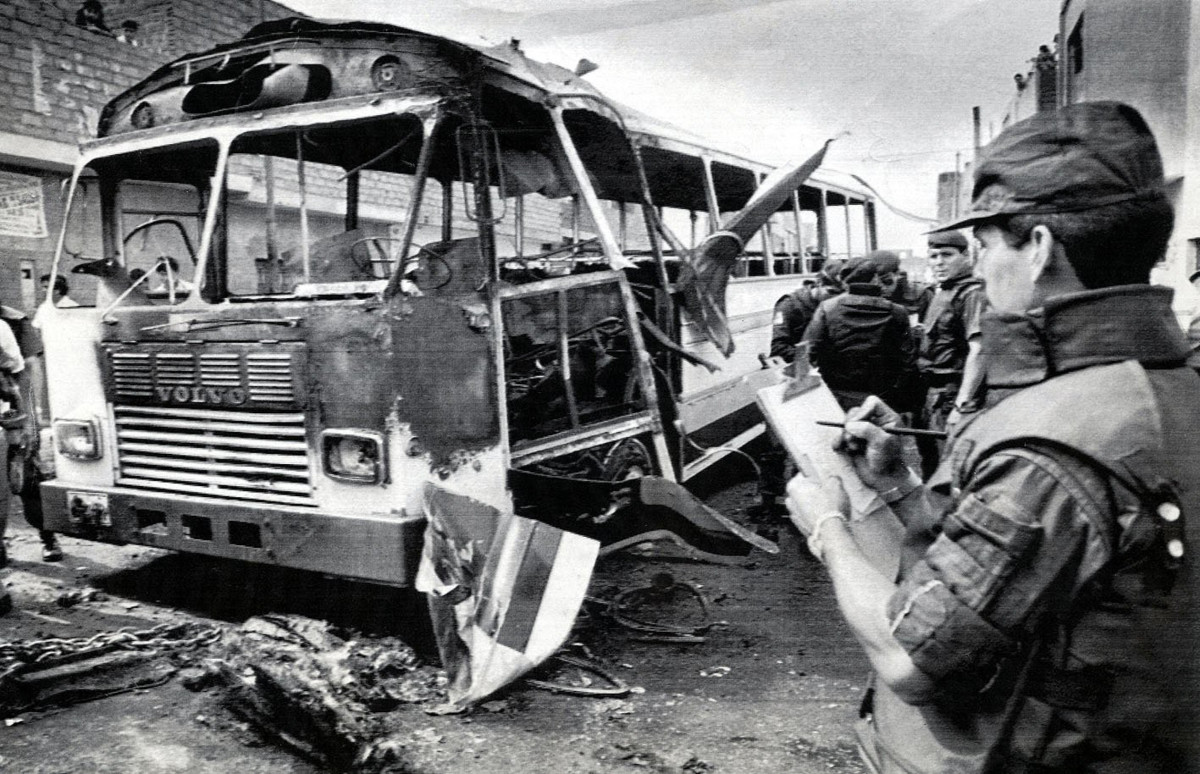
In the early 1980s, a communist militant group named Shining Path gained power in Peru, attracting a large number of followers and taking over territories in the countryside. In the process, the group became extremely violent. Members assassinated political rivals, community organizers and peasants who opposed their beliefs. They also killed innocent civilians by planting deadly bombs in shopping malls, banks, and on the streets.

Nicholas Cabrejos, Darfur Women Action Group’s (DWAG’s) Outreach Intern, was only two years old when terrorist attacks became more frequent in his city of birth, Lima. His parents were terrified. They feared that their child would grow up in a violent environment and without access to a good education. After considering their options, they made the difficult decision to leave the country and moved to the United States.

In contrast to the violent environment in which he was born, Cabrejos — or Nick, as he likes to be called — now exudes peace and tranquility to everyone around him. “I hate conflicts of any nature,” he says, “I believe that progress is hindered when energy is spent on fighting”. This aversion to hostility led to an interest in working to end conflicts across the globe. To that end, Cabrejos is studying political science at Marymount University, and he plans to acquire a master’s degree in conflict resolution in the future.

Darfur Genocide

It was at Marymount University that Cabrejos first learned about the Darfur genocide. In the beginning of 2016, he attended a panel about Sudan that featured DWAG’s president and genocide survivor Niemat Ahmadi. Nick was struck by Niemat’s powerful presentation about the ongoing genocide in Darfur, and how it has affected more than 400 thousand people over 13 years.

Cabrejos was so struck by the situation in Darfur that he approached Ms. Ahmadi during the panel’s coffee break. “I remember eating a sandwich while anxiously waiting for the right moment to approach her,” he recalls.“I asked her if there was anything that I could do to help.”

Since then, Cabrejos has been a fixed presence at DWAG’s office in Washington, DC. His job as an Outreach Intern is to make connections with individuals and organizations that can advance DWAG’s cause and projects. According to Cabrejos, the best part of his work is reminding important people — such as members of the United States Congress — that there is an ongoing genocide in Darfur. “They are very busy with other issues, so I am proud to be the one who educates them about the urgency of the situation,” he says.

The benefits of his internship might go even further. In the future, Cabrejos wants to apply the knowledge that he is acquiring in international relations and conflict resolution towards improving life in his home country. “I want to improve education for children in Peru, especially in the countryside,” he says. “But I will always take the Darfur cause with me, for the rest of my life.”


al-Bashir’s Visit to Jordan Was an Affront to Justice

Niemat Ahmadi

Sudanese President Omar al-Bashir recently traveled to Jordan for the 28th summit of the Arab League. His presence was a stark contrast to 2014, when Jordan did not allow him to enter Amman, the capital of Jordan, to attend the summit. The reason for the ban was the pending arrest warrant issued by the International Criminal Court (ICC). Since 2009, al-Bashir is wanted for five counts of crimes against humanity, two counts of war crimes, and three counts of genocide.

Jordan has always been known as the Arab world’s leader in providing a safe haven for refugees. The country has taken in thousands of Iraqis, Palestinians, and Syrians as they fled war zones. However, the Jordanian Government should not allow a war criminal such as Omar al-Bashir to enter the country without facing the consequences of an international arrest warrant.

As recently as January 2016, President al-Bashir’s regime used chemical weapons against civilians in Darfur and the Nuba mountains killing nearly 250 people – mostly women and children. Additionally, it is a well-known fact that the regime has sponsored terrorism, welcoming Al Qaeda into the country in the 1990s, and more recently arming terrorist organizations such as Hamas and Islamic jihadist groups. All of these blatant violations of international law are good reasons for al-Bashir’s immediate arrest and ban from international conferences such as the Arab League summit.

All states must abide by their treaty obligations and anything to the contrary hurts the ICC’s objectives and aims, as recently pointed out by Prince Zeid bin Ra’ad Zeid al-Hussein, the United Nations High Commissioner for Human Rights. Jordan, as an important player in the region, should stand with the victims of genocide in Darfur instead of aiding a criminal such as al-Bashir to evade justice.

New Perspectives on Genocide Prevention

by Adeena Eisen

“This is not just a humanitarian issue,” said Anne-Marie Slaughter, President and CEO of New America, a think-tank based in Washington D.C. Slaughter was referring to the international community’s handling of mass atrocities. On January 31, 2017, she spoke as part of the panel “After Aleppo: Prospects for Preventing Mass Atrocities in the New Trump Administration,” which I had the privilege of attending at the New America headquarters. The purpose of the panel was to address how the United States and the international community should respond to mass atrocities, especially in light of the new Trump administration.

Slaughter, who introduced the panel, spoke of how it is a grave mistake to address mass atrocities solely as humanitarian crises. In fact, if governments that commit human rights abuses are not stopped, they will inevitably pose security threats to the international community.

Such a perspective is vital to the goals of Darfur Women Action Group (DWAG). The genocide in Darfur does not just affect people living in the immediate region, but it also has repercussions for the global community. For example, the flow of refugees to European countries from crisis-affected areas—including Darfur—has presented major challenges to the European Union (EU). If the international community had acted preemptively to end such crises in Darfur or elsewhere, perhaps Europe would be dealing with a less overwhelming influx of refugees, which is difficult for any society to handle. This demonstrates that the international community has a stake in preventing mass atrocities.

Of course, preventing mass atrocities must be done out of good will too, or else it leads to short-sighted solutions. For example, the European Union (EU) is currently investing large sums of money to prevent more refugees from entering Europe. Even if this ‘solution’ is successful in keeping refugees out of European borders, it will not benefit the victims or end the genocide in Darfur.

Unfortunately, the tools needed to deal with genocide and other mass atrocities are limited. Luckily, other speakers on the panel were able to offer potential solutions that could expand the range of tools needed to prevent such crimes against humanity. Rich Fontaine, President of the Center for New American Policy, discussed the importance of investigating the financing of mass atrocities. This strategy could be especially relevant because the U.S. recently lifted sanctions on the Sudanese government. Reinstating these sanctions may block some of the financial resources that enable the government to commit human rights abuses against Darfuris.

This panel was valuable because it serves as a reminder that we must speak up and raise awareness among global leaders that ending the genocide in Darfur is in their own interest. By doing so, we can hold the Sudanese government accountable for genocide, war crimes, and crimes against humanity committed in Darfur and change how the international community responds to genocide.