Reflections on the July 7 High-Level Panel on Conflict-Related Sexual Violence and Trafficking
7 July 2026
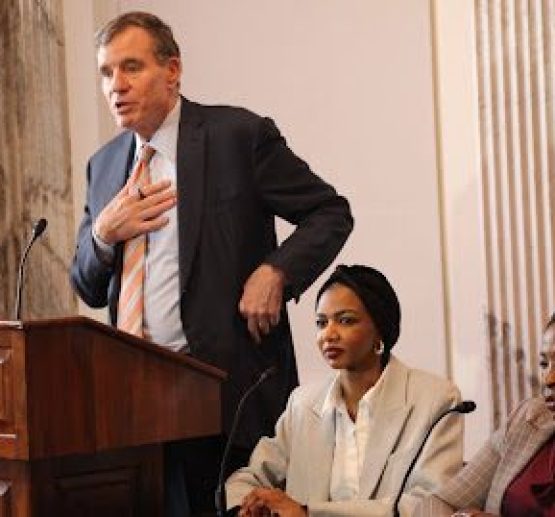
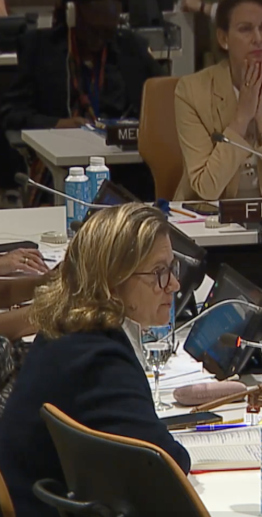
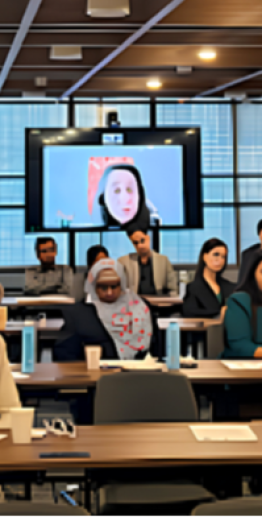
On Tuesday, 7 July 2026, ahead of the United Nations Security Council open debate on conflict-related sexual violence (CRSV), trafficking, and terrorism against women, the UN Office of the Special Representative of the Secretary-General on Sexual Violence in Conflict hosted a high-level side event. DWAG Founder and President Niemat Ahmadi joined a panel of distinguished experts, speakers and states representatives at the United Nations Headquarters, titled “Combatting Trafficking for the Purposes of Sexual Exploitation by Armed and Terrorist Groups: Closing Information Gaps and Strengthening Cooperation to Promote Accountability for Survivors.” The event was convened ten years after the adoption of UNSCR 2331 – the Security Council’s first resolution explicitly acknowledging the systemic nature of conflict-related sexual violence, trafficking, and terrorism against women and girls.
Sudan at the Forefront of Conflict-Related Sexual Violence & Trafficking
CRSV and trafficking impacts conflict-ridden communities all over the world; after nearly four years, the conflict in Sudan represents the worst of these impacts. Trafficking and CRSV do not cease at borders, nor do they cease within. Across Darfur, Kordofan, and greater Sudan, women and children face sexual exploitation and violence daily. Survivors who have escaped and those who remain victim have described their experiences of mass rape, gang rape, sexual slavery, forced marriage, and trafficking.
In the Rapid Support Forces (RSF)-controlled cities of Nyala and El Geneina, women are being forced into sexual slavery and exchanged internally by the RSF soldiers. Reports have documented over 19,000 individuals being detained in Nyala alone, with the majority being women and girls captured for the purposes of sexual exploitation. Subsequently, seven participants of various civil advocacy groups were abducted in Nyala after leaving a workshop focused on women’s rights. Their whereabouts remain unknown. The number of abductions recorded increased dramatically after the fall of El Fasher, but both independent and UN-commissioned fact-finding missions have failed to adequately document the number of victims and experiences of women being held in captivity. Documentation is the means of action, and it must be used to guarantee freedom for the women who remain subjected to unlawful detention and sexual abuse.
Refugees and displaced individuals are particularly vulnerable to CRSV, abduction, and trafficking. Sudan is currently the world’s largest displacement crisis – according to the International Organization for Migration’s Displacement Tracking Matrix (DTM), there are an estimated 8,805,506 internally displaced persons and 4,441,570 returnees across Sudan. Refugees who have survived sexual violence are often left with nowhere to turn. Sudan’s corrupt legal systems, deteriorating bureaucratic structures, and the greater lack of support from the international community have prevented the reporting of these crimes, actively silencing victims and survivors alike- effectively hindering accountability for perpetrators.
Opening Remarks
The event opened with powerful remarks by world readers on the necessity of combating trafficking by armed and terrorist groups.
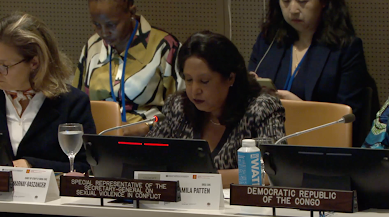
Notably, Pramila Patten – the UN Under-Secretary General and Special Representative on Sexual Violence in Conflict – opened by assessing the progress made in the decade since the resolution’s adoption.
Patten explicitly discussed the continued prevalence of sexual enslavement by armed groups across various regions in Africa and the Middle East, including Sudan.
Patten also emphasized the need to strengthen information collection and fact-finding missions, establish a legal framework to protect victims, persecute those responsible, and place pressure on perpetrators and their support systems through the implementation of sanctions. She further highlighted the need to focus on survivor experiences and reparations – a critical reform that DWAG has long advocated in favor of.
Other distinguished representatives from Denmark, Latvia, and France gave remarks, which focused on impunity, invisibility, and institutional fragmentation. These interventions by state parties underscore the need for stronger action and increased accountability for sexual violence and terrorist tactics.
A Panel Discussion of Experts on CRSV, Trafficking, and Terrorism – and the Interconnectedness of these Crimes
The panel featured Matteo Pasquali from the UN Office on Drugs and Crime; Sheila Keetharuth, the Senior Women’s Protection Advisor at the UN Mission in South Sudan; Niemat Ahmadi, the Founder and President of Darfur Women Action Group; Sue Eckert from the Analytical Support and Sanctions Monitoring Team for UNSCR1526/2253; and Siobhán Mullally, a special reporter on trafficking of persons, specifically women and children, for the UNHCR Council.
Ahmadi spoke of Sudan as the worst example of conflict-related sexual violence and trafficking, with violence persisting for years, and rape, sexual slavery, and abduction against women and girls being well-documented since the recent conflict began in 2023. Bringing the realities of the daily life of conflict-affected women and girls in Sudan and those who live as refugees in the neighboring countries.
“There are reports of multiple cases where women have been trafficked or held captive for sexual slavery or forced marriages, but they cannot report because they are vulnerable and have no adequate protection, and they don’t know where to turn,” Ahmadi stated during her powerful speech.
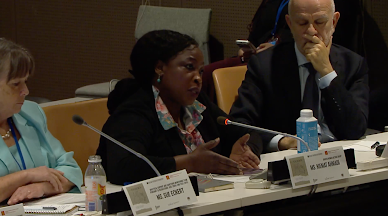
“This situation has continued with a lack of accountability. Perpetrators are emboldened…It is not terrorist groups who are doing this, but it is an act of terrorism. And until we treat it as such, it will continue to be perpetrated with impunity.” -Niemat Ahmadi
Collectively, the panelists agreed that the systemic nature of trafficking and CRSV is not being acknowledged as an international crime. They recognized that, although frameworks and documents exist, effective implementation must be enacted.
The panelists call for more information and engagement between NGOs and member states, and member states must bring this information forward. They highlight the importance of finding links between incidents to best utilize and implement UN resolution frameworks.
The Institutional Problem: Accountability Gaps
Ms. Ahmadi and her fellow panelists identified numerous gaps in the existing United Nations legal frameworks and systems of investigation. CRSV is a systemic process that is demonstrated by patterns and circumstances on the ground. The process of abduction, prolonged captivity, repeated abuses, forced marriage, and sexual slavery is systematic. While CRSV is recognized as an international crime based on existing UN frameworks, interrelated trafficking processes have yet to be recognized as such. These crimes cannot be effectively combatted with a legal framework that recognizes these acts as isolated incidents. Experts have confirmed that trafficking processes share various parallels with those of CRSV. They have emphasized the need to recognize the correlation between these crimes so that accountability frameworks can be expanded, strengthened, and made cohesive.
The State Representatives, distinguished guests, and panelists in attendance agreed and reinforced a point raised by Ms. Ahmadi, which emphasized increasing protection, documentation, and accountability on these issues as a matter of ensuring quick, flexible, and increased funding for affected communities. As women are the most affected by this issue, women-led organizations and survivors must be prioritized and taken into genuine consideration. International politics and relations have routinely dismissed the insights of women, and we cannot expect sufficient change if the international community remains reluctant towards female-led initiatives.
The panel and the side event demonstrated that despite the gaps in addressing this issue, there is a commitment among member states, CSOs, and experts. However, there is still an urgent need for increased coordination and the mobilization of resources to ensure steps are being taken to achieve collective action and accountability. DWAG recognises the challenges and the gaps in addressing these issues in Sudan. We remain determined in our efforts to ensure the voices and experiences of women in Sudan are being prioritized and included in such relevant forums. Ms. Ahmadi and the DWAG team will remain a committed and outspoken voice in respect to this issue.
For those interested in revisiting the event, here is a link to the recording of the event: High-Level Side Event on the Occasion of the Security Council Open Debate on Conflict-Related Sexual Violence | UN Web TV
Please visit DWAG’s website for urgent actions that you can take today to prevent genocide.
Contact us at policy@darfurwomenaction.org