Recognition Without Protection Is Not Enough: Sudan Demands Serious Action

This week, as we continue our call to action, atrocities continue to mount across Sudan. It is more urgent than ever to raise the alarm about a crisis that is rapidly spiraling beyond survival for millions. As we write, Civilians in El Fasher, Darfur, Kordofan, and Khartoum remain under attack, trapped, displaced, starving, and relentlessly subjected to violence by the genocidal Rapid Support Forces (RSF). Recent developments reflect a moment of long-overdue recognition by parts of the international community, but they also expose the continued depth of failure, delay, and selective action. For the people of Sudan, especially women and children, this is not a policy debate or a distant humanitarian concern; it is a daily struggle for life, dignity, and survival.

While recent steps toward accountability and humanitarian engagement signal progress, they unfold against a backdrop of ongoing mass atrocities, deepening famine, and collapsing humanitarian lifelines. Recognition without protection is not enough. Condemnation without consequences only prolongs suffering. Sudan’s crisis is not inevitable; it is the result of choices made and choices deliberately avoided by those with power and responsibility. This moment demands clarity and courage. The international community must act now, with urgency and resolve, to meet its moral and legal obligation to protect the people of Sudan from a tragedy that is entirely preventable.

The ICC sentencing of Ali Kushayb.

Last week, on Dec. 9th, the International Criminal Court ICC finally delivered its verdict on the case of Ali Abdulrahman Ali, widely known as Kushayb, a former Janjaweed commander found guilty of war crimes and crimes against humanity committed against the people of Darfur more than two decades ago. While we welcome the verdict as a form of recognition and some justice, DWAG is deeply disappointed by the sentence of just 20 years of imprisonment imposed. To the victims who have suffered murder, rape, torture, and forced displacement for more than two decades, it seems the court has more leniency toward the perpetrator than the victims. Millions of the affected community feel that, for the scale, severity, and intent of the crimes committed, the court should at least have sentenced Kushaby to life without possibility of parole.

As one woman CSO leader, H.A. stated, “ A harsh sentencing couldn’t bring what our people have experienced or lost, but it is necessary to send a strong signal to the perpetrators of the past and present that criminals are held to the highest standard of accountability.” 

We deeply appreciate the work the ICC is doing, but we can’t accept less than adequate justice for our suffering people. 

DWAG believes our fight for justice will not end here. We are committed to continuing to empower survivors to fight for their rights to justice in the most comprehensive and strongest manner possible.

UK Sanctions RSF Commanders for El Fasher Atrocities: Accountability Must Reach the Top

On December 12, 2025, after more than a month of brutal siege in El Fasher, the United Kingdom took an important step toward accountability by imposing asset freezes and travel bans on four senior Rapid Support Forces (RSF) commanders for their suspected involvement in atrocities in El Fasher, including mass killings, systematic sexual violence, and deliberate attacks on civilians. Those sanctioned are Abdul Rahim Hamdan Dagalo (RSF Deputy Leader and brother of RSF leader General Hemedti), Gedo Hamdan Ahmed (RSF Commander for North Darfur), Al-Fateh Abdullah Idris (RSF Brigadier General), and Tijani Ibrahim Moussa Mohamed (RSF Field Commander). The UK made clear that what is happening in El Fasher is not random, but part of a deliberate strategy to terrorise communities and seize control through fear and violence, underscoring the urgency of civilian protection and unhindered humanitarian access.

The UK also pledged an additional £21 million in humanitarian support, bringing its 2025 aid commitment to £146 million, to help deliver food, water, health care, and protection for women and children in the hardest-to-reach areas. We welcome and appreciate the UK government’s decisive steps toward accountability and lifesaving humanitarian support. These measures matter. However, they must be built upon and sustained

Sanctions on a limited number of commanders, while necessary, will not be sufficient if accountability stops short of those who design, direct, finance, arm, and enable the RSF’s campaign of extermination, starvation-by-design, and systematic sexual violence. If atrocities in Sudan are truly not to go unpunished, accountability must extend across the full chain of command and its enablers, and must be accompanied by meaningful civilian protection and guaranteed, unhindered humanitarian access for the people of El Fasher and across Sudan, now, not later. To reinforce these sanctions, assets frozen must be restored and reallocated to support the people with adequate humanitarian aid, peace building, and restoration of infrastructure as a foundation for a sustainable solution. Anything less risks reinforcing a dangerous precedent: that the world will condemn atrocities, yet hesitate to take the sustained action required to stop them.


El Fasher Under Siege: Survival Obliterated, Civilians Trapped

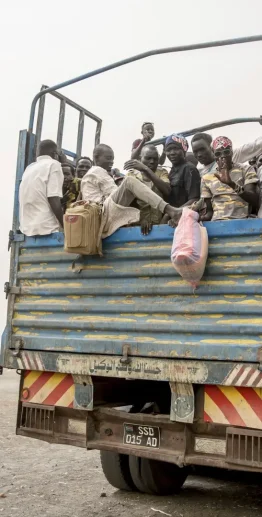
Deep concern continues for the tens of thousands of civilians still believed to be trapped in El Fasher, where UN agencies warn that the essentials for survival have been “completely obliterated.”  UN agencies report a fragile agreement in principle that may finally allow humanitarian access into El Fasher to conduct initial assessments and deliver lifesaving aid. This access cannot come soon enough. Communication blackouts have largely cut off those trapped inside the city, and every day of delay compounds death by hunger, disease, and violence. Those who have managed to flee have risked their lives along roads littered with mines, finding refuge in places like Tawila, now transformed into a massive displacement settlement of more than 650,000 people, the size of a small country. Families there are living in overcrowded, makeshift shelters, facing cholera outbreaks and severe shortages, after enduring months of famine and mass atrocities.

The situation reached a dangerous new threshold with the deadly drone attack on a UN peacekeeping logistics base in Kadugli, which killed six UN peacekeepers and injured eight others serving under the UN flag. The Secretary-General has condemned the attack as “horrific” and warned that attacks on UN peacekeepers may constitute war crimes under international law, underscoring the total disregard for international norms, civilian life, and humanitarian protection by the RSF. We cannot accept a reality where negotiations move slowly while bombs fall quickly. Protection delayed is protection denied. Without immediate civilian safeguards, accountability for those committing these crimes, and unhindered humanitarian access, Darfur and Kordofan will remain places of devastation rather than regions on a genuine path toward peace.

As the imposed Famine Tightens Its Grip, Aid Falls Short Across Sudan

Across Sudan, 21.2 million people, nearly half the population, are facing acute hunger, and in western Sudan, including North Darfur, South Darfur, West Kordofan, and South Kordofan, malnutrition is rising sharply as violence prevents aid from reaching those most in need. Hunger in Sudan is not accidental; it is the result of war, siege, and deliberate obstruction.

Against this backdrop of confirmed and imminent famine, the World Food Programme has announced that it will be forced to reduce food rations due to a severe funding shortfall. Beginning in January, rations will be cut by 70% for communities already facing famine and by 50% for those at risk of slipping into famine, even as hunger is expected to worsen further from February 2026, when food stocks run out, and fighting continues. WFP currently supports 4 million people each month, but an additional US$662 million is urgently needed to reach 8 million people monthly, a lifeline without which millions will be pushed beyond survival. These cuts do not occur in a vacuum; they compound suffering in a country where families are already skipping meals, borrowing food, and selling their last possessions to stay alive.

We cannot accept a world in which famine is acknowledged, yet funding collapses, and access remains blocked. The international community must urgently end hostilities, guarantee safe, sustained, and unhindered humanitarian access, and fully resource life-saving operations before starvation claims even more lives. Reducing food rations in a famine is not a technical adjustment; it is a moral failure. Sudanese civilians deserve protection, dignity, and the full enforcement of international obligations to prevent hunger from becoming yet another weapon of this war.

As this week’s developments make painfully clear, Sudan stands at a breaking point. Accountability, humanitarian access, and civilian protection cannot be treated as parallel conversations; they must move together, urgently and decisively. The people of Sudan cannot survive on statements alone.

DWAG calls on the United Nations, the African Union, the United Kingdom, the United States, and all international and regional actors to act without further delay to:

The people of Darfur and Sudan deserve the full protection of international law, now, not later. Silence has never stopped genocide. Only collective action, accountability, and protection can. DWAG will continue to stand with survivors, amplify women’s leadership, and demand justice. We urge the global community to stand with us, to raise their voices, sustain pressure, and ensure that Sudan is not abandoned to yet another chapter of preventable suffering.

We urge every supporter, ally, policymaker, and citizen of conscience to join our One Million Voices for Sudan campaign and speak with moral clarity: That genocide must not be normalized, it must be stopped. Additionally, you can donate to DWAG’s fight and lifesaving effort to bring peace and justice to Darfur here.


Thank you for your continued support,

Niemat Ahmadi

President, Darfur Women Action Group