On February 19, 2026, the Independent International Fact-Finding Mission for Sudan released a landmark report concluding that the Rapid Support Forces’ October 2025 assault on El Fasher bears “the hallmarks of genocide” against Zaghawa and Fur communities. The Mission, established by the UN Human Rights Council, found that the RSF committed at least three underlying acts of genocide: killing members of protected ethnic groups, causing serious bodily and mental harm, and deliberately inflicting conditions calculated to bring about their physical destruction. Most importantly, the Mission concluded that genocidal intent is “the only reasonable inference” from the systematic ethnic targeting, prolonged siege, mass starvation, mass killings, widespread sexual violence, and enforced disappearances documented during the three-day assault that killed over 6,000 people (Independent International Fact-Finding Mission for the Sudan, 2026, p. 2).
This recent development confirms what survivors, civil society, and Darfuri communities have been warning the international community about for months: It is worth noting that what occurred in El Fasher was not collateral damage of war, but a calculated and organized campaign of ethnic extermination. The report documents chilling evidence of explicit genocidal intent. RSF fighters were heard asking civilians, “Is there anyone Zaghawa among you? If we find Zaghawa, we will kill them all,” and declaring, “We want to eliminate anything black from Darfur”(Independent International Fact-Finding Mission for Sudan, 2026, p.5). The Mission found that sexual violence was used selectively and deliberately, with Zaghawa and Fur women systematically raped while Arab women were often spared, underscoring the ethnic motivation behind the violence. Mission Chair Mohamed Chande Othman stated, “The scale, coordination, and public endorsement of the operation by senior RSF leadership demonstrate that the crimes committed in and around El Fasher were not random excesses of war. They formed part of a planned and organized operation that bears the defining characteristics of genocide,” Mission Expert Mona Rishmawi added, “The body of evidence we collected, including the prolonged siege, starvation and denial of humanitarian assistance, followed by mass killings, rape, torture and enforced disappearance, leaves only one reasonable inference. These are the hallmarks of genocide”.
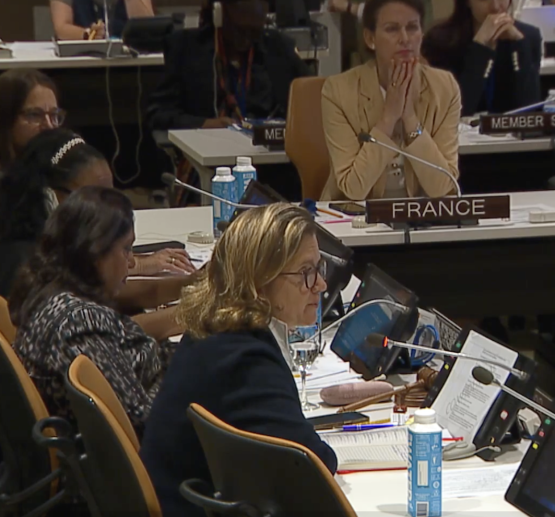
The Fact-Finding Mission presented this report to the UN Human Rights Council on February 26, 2026. The Mission has called for urgent protection of civilians in the Kordofan region, where the conflict has now expanded with similarly devastating patterns. For DWAG, this report is not merely a legal determination; it is a moral and political turning point. Recognition must now translate into enforcement: protection of civilians, enforcement of the arms embargo, sustained humanitarian access, and accountability through international legal mechanisms. Naming genocide without acting to stop it risks repeating the failures of the past.
Read the full UN press release here: https://www.ohchr.org/en/documents/thematic-reports/ahrc6177-sudan-hallmarks-genocide-el-fasher-report-independent
Read the complete report of the Independent FFM for the Sudan here:
https://www.ohchr.org/en/documents/thematic-reports/ahrc6177-sudan-hallmarks-genocide-el-fasher-report-independent
Latest Headlines
March 12 - 2026
March 15 - 2025
+ Read More
Latest Headlines
March 13 - 2025
March 13 - 2025
+ Read More