A Shameful Promotion of Evil

Recently the group, UN Watch, released this article which brought up a major issue within the UN. This July, Sudan’s Ambassador to the UN, Daffa-Alla Elhag Ali Osman, chaired the UN Economic and Social Council’s (ECOSOC) sessions in Geneva. ECOSOC oversees many human rights and humanitarian issues. The committee’s importance is described in a separate article by UN Watch’s executive director: “ECOSOC is the sole principal organ under the UN Charter mandated to adopt resolutions for the purpose of promoting respect for, and observance of, human rights and fundamental freedoms for all.” It almost goes without saying that having Sudan chair meetings that focus on humanitarian aid and the promotion of human rights, is not only hypocritical, but also counterproductive. With the Sudanese president and other senior government officials indicted by the International Criminal Court (ICC) for genocide, crimes against humanity, and war crimes, it is outrageous that this same government is heading sessions aimed at preventing mass atrocities and dealing with other human rights issues. The Sudanese government’s abysmal record with dealing with humanitarian organizations has long been documented. In 2009, they expelled 16 international and domestic aid organizations from Sudan that provided approximately 50% of the aid to the people of Darfur. The government also continues to limit the access of organizations to certain parts of the country. Most recently, on August 6, 2013, Sudan ejected 20 staff members of the UN High Commission on Refugees (UNHCR) working in the country after refusing to renew their work permits. Sudan continues to make it difficult for humanitarian workers to aid the millions of displaced currently living without basic necessities.

This current controversy began in January when Sudan was elected to the position of Vice President of ECOSOC. Their position was extended in February when it was announced they would chair the “humanitarian affairs segment.” In reaction to this turn of affairs, the US and members of the European Union protested the appointment in February. Fortunately, this participation by several members of the international community led to the post being given to Pakistan in March, while still taking a leading role in ECOSOC. Countries including China, Venezuela, and Cuba spoke against the claims against the Sudanese government and supported its appointed to the humanitarian affairs segment.

The UN can be a massive tool for change; however, when events like this take place the entire validity of the UN is called into question. These actions show that members of the international community are actively promoting Sudan’s status in humanitarian and human rights efforts, instead of enforcing any responsibility to protect the Sudanese people. The genocide against the people of Darfur has been occurring over the past 10 years with over 500,000 people killed and millions becoming internally displaced or international refugees. The government is responsible through acts of both omission and commission in the perpetration of these crimes. It is therefore reprehensible that an organization such as the U.N., which is responsible for ensuring basic human rights as well as international peace and security, can allow the representatives of this state to be responsible for an international forum whose is tasked with the promotion of humanitarian aid and human rights.

Events from on the ground in Sudan

Dear DWAG Supporters,

Darfur Women Action Group is pleased to inform you that we will be soon launching a new page dedicated to citizens’ reports, including eye witness accounts of the incidents on the ground in Darfur, where we will be sharing reports, similar to the following one, to give voice to those whose voices have been oppressed. Please find our first series below, which came last week from ordinary citizens on the ground in Darfur, Sudan.

Tuesday, July 2, 2013

Fighting in Nyala between Janjaweed and security forces began when the Commissioner of Nitega’s car was stolen by Janjaweed; both the car and the militia person who stole it were caught by Nyala security. Militia leader Dekron went to the Security office in Nyala to free that militia member, and was killed when he tried to shoot the security leader after it was clear the security forces were not going to let the person who stole the Commissioner’s car go. Dekron was taken to the hospital, but it was confirmed he was dead.

Wednesday, July, 3, 2013

Janjaweed militia from El Geneina, Ed Daein surrounded the security headquarters in Nyala.

At 11 am gunfire between security and Janjaweed started. The violence involved the use of large weapons including Kalishnikovs.

Between 1 pm and 2 pm the Janjaweed traveled to a district of Nyala containing security and NGO offices. Here they shot at the World Vision International compound, broke into World Vision houses, shot people inside and stole things. The Janjaweed also set up a roadblock on the road from the city to the airport, robbing anyone who was stopped by. They continued to rob people in the Malaja market and stole 28 motorcycles from Nyala.

At 5pm, the shop owners in the Nyala markets asked police for assistance to stop the looting of their shops, but there was no response from either the government or police.

At 8pm, Janjaweed went into Malaja market in the Riyad district of Nyala. They broke into and looted only the shops that belonged to Fur, not Arab tribe, owners. They broke into the shops by shooting down doors and set fire to any shops into which they could not force entry.

Friday, July 5, 2013

The Janjaweed continue to loot the city’s markets and shoot the inhabitants with no action taken by police and security forces. The Janjaweed are currently still inside Nyala, taking goods from markets without paying for them. There is still no security in Nyala.

In other news, it is reported that on July 27 and July 28, 94 people were killed between Zalengei and Nyala due to fighting between the Misseriya and Salamat tribes.

Press Release Regarding the Violence in Nyla, South Darfur the First Week of July

Darfur Women Action Group condemns the bloody violence in Nyla, South Darfur and calls on the international community to protect the people of Darfur

Darfur Women Action Group is gravely concerned, about violent clashes between the pro-government militias that erupted in an urban area of Nyla, South Darfur in the first week of July. These clashes resulted in the deaths of a number of civilians, including the shooting of students. These clashes also killed two World Vision humanitarian aid workers and injured of three others. According to World Vision, the staff members were killed in a grenade explosion and their compound was later looted. World Vision has since suspended aid to South Darfur, which has affected one million people.

This is just one instance of rampant violence in Darfur that affects not only NGO workers, but civilians as well. Such violence not only creates extreme danger for the people of Darfur, but also further undermines the flow of the humanitarian work by endangering lives and discouraging and ending aid programs that provide vital services such as food aid, healthcare, and water and sanitation assistance.

Darfur Women Action Group condemns these systematic acts of violence and the ongoing crimes against civilians and aid workers in Darfur. DWAG believes that the government of Sudan should be held accountable for the investigation of this incident, prosecution of the perpetrators, justice for those who lost their lives, and rehabilitation for those who have been injured. DWAG calls on the international community to protect all people in Darfur, including civilians and aid workers, and asks that NGOs and international aid agencies not abandon Darfur, as the aftermath of such violence is a time when support is needed most.

Darfur Women Action Group is a US based, women led anti-atrocity organization. Our core mission is to advance human rights by combating violence, preventing atrocities, and promoting peace. We support grassroots and national organizations both in the US and on the ground in Darfur. We hope to provide opportunities to amplify the voices of those most affected by the conflict and bring them to the attention of the international community.

The Human Rights-based Approach to the U.S. Policy in Sudan

June 19, 2013

This week the Tom Lantos Human Rights Commission held a hearing in which several experts from both the government and civil society organizations testified about the current human rights situation in Sudan. The hearing was chaired by James McGovern, a democratic representative from Massachusetts, and Frank Wolf, a republican representative from Virginia. The first panel to testify was made up of government officials including Larry André, the Director of the Office of the Special Envoy for Sudan and South Sudan, Bureau of African Affairs at the U.S. Department of State and Nancy E. Lindborg, Assistant Administrator, Bureau for Democracy, Conflict and Humanitarian Assistance at the U.S. Agency for International Development, whereas the second panel was made up representatives of private organizations including John Prendergast, the Co-Founder, Enough Project, and Co-Founder, Satellite Sentinel Project, Ken Isaacs, Vice President, Programs and Government Relations at Samaritan’s Purse, E.J. Hogendoorn, Deputy Director, Africa at the International Crisis Group, and Jehanne Henry, Senior Researcher on Sudan, Africa Division at Human Rights Watch.

The meeting began with an overview of the situation citing the well-known numbers of 2.3 million displaced persons, 300,000 of whom have fled to Chad, and noting the extreme escalation of violence especially in Darfur, Blue Nile, and South Kordofan that has recently taken place. In fact, the testimony revealed that since January, 2013 there has been a 50% swell in IDP camps in Darfur. Although some of the fighting is inter-ethnic or between rival militias, much of the violence is perpetrated by the government itself, which carries out aerial bombardments and scorched earth tactics against its very own citizens. Not only does the government carry out direct attacks and supply militia groups that do, but also restricts humanitarian access to the displaced and needy within Sudan, while also limiting civil society and imprisoning journalists and political dissenters. The displaced all around Sudan face horrendous humanitarian conditions. Ms. Lindborg stated in her testimony that 5 million people (15% of Sudan’s total population) is now in need of humanitarian assistance, 32% of children in Sudan are underweight, which has led to 35% of the children having stunted growth. In the face of statistics like these and the fact the conflict has now been going on for 10 years with no sign of abating, it is now more important than ever that strong and effective international action is implemented.

Although the hearing covered many different topics throughout the proceedings the co-chairs continued to bring up the question: what concrete actions can the U.S. take to improve the humanitarian crisis? This important question needs to be answered if the crimes against humanity, genocide, and war crimes are going to be put to an end. The general consensus was that a comprehensive peace agreement was needed among all parties, since it was unlikely one side or the other can win militarily and regional approaches to peace would not work either. This process according to the first panel would include the cessation of hostilities followed by an inclusive political process. Mr. André called for a “unified, holistic approach” to the peace process. While creating a comprehensive peace process sounds like a great idea, it is much harder to achieve in reality. Ms. Henry offered the most comprehensive list of actions the U.S. should take to end the conflict, including: (1) the appointment of a new Special Envoy to Sudan, (2) engaging with actors such as China, Qatar, and other regional actors such as the African Union, (3) push for justice and the handing over of war criminals to the International Criminal Court, (4) and working to disarm militias. Another approach was attacking the problem through the weapon supply routes, as Sudan gets many of its weapons from China, Russia, and Iran. There was also a discussion of a stringent withdrawal of non-humanitarian aid to those states who host those members of the Sudanese government who have been indicted by the ICC to attempt to pressure those countries who deal with suspected war criminals; however, is the U.S. one of these states themselves? Mr. André and Ms. Linborg were forced to defend their position on the recent invitation of Presidential Assistant and Vice Chairman of the National Congress Party, Nafie ali Nafie to Washington D.C. Although the specifics of his involvement with the genocide in Darfur are not known, he has been a senior adviser to ICC-indicted President al-Bashir for many years including serving as the head of Sudanese intelligence and in charge of the Darfur portfolio. The invitation to the nation’s capital was the Obama administration’s attempt to promote negotiations, but has been postponed indefinitely in light of Sudan’s recent failure to cooperate with South Sudan. As Mr. André stated in his testimony, there are not many people in Sudanese government who have clean pasts that the U.S. would find appropriate to hold talks with and there is an urgent need to find a comprehensive peace. Although negotiations are necessary, an invitation to Washington D.C. can be seen as a validation of a regime that has perpetrated over 10 years of violence against its own people. Congressman Wolf expressed his opinion that the idea of inviting Nafie to the capital was “immoral” and although there is a need to have negotiations, inviting Nafie to the U.S. was a step too far. The co-chairs asked each of the members of Panel II what their position on this highly controversial subject was. Even among these experts, there was division with some arguing for the high-road and not negotiating with a known criminal, whereas others argued that any chance at a solution is a step we should take. This classic trade-off between peace and justice has posed another conundrum for the U.S. to deal with.

All of these ideas have significant merit, but it is now up to the U.S. government to implement them. What will it take for the U.S. to take a moral stand and end genocide? Overall, the U.S. foreign policy needs to take into account the human rights record of the states that it deals with in order to ensure a more peaceful world. Hearings like this bring the crisis in Sudan to light and to focus the government’s attention on it, but it is now time to take real steps to make the U.S. policy in Sudan more effective. Some new proposed legislation is titled the Sudan Peace, Security and Accountability Act of 2013. This legislation has been introduced this bill on April 24, 2013. If you wish to support the bill, call your congressperson and voice your opinion. If any action is to be taken on behalf of the U.S. the government has to be aware of the will of the public to take action.

Ten years with no choice

Ten years with no choice

June 20, 2013

By: Haley Aubuchon

Today is World Refugee Day. The UN adopted world Refugee Day in December 2000 and on this day we recognize the struggles, impossible decisions, and resilience of refugees around the world.

The theme of this World Refugee Day is choice. The UN states that “refugees have no choice” and is unveiling a new campaign called “Decisions” that depicts the terrifying decisions refugees have to make between staying in their conflict ravaged homes and the possible dangers and hardships of fleeing. The goal is to help “the public to empathize with, and understand, their dilemma”. Although I believe it is impossible to understand the dilemma of a refugee and the horrors they have experienced, in the spirit of this year’s theme, here are some insights into the lives of Darfuri, refugees, taken directly from recent news.

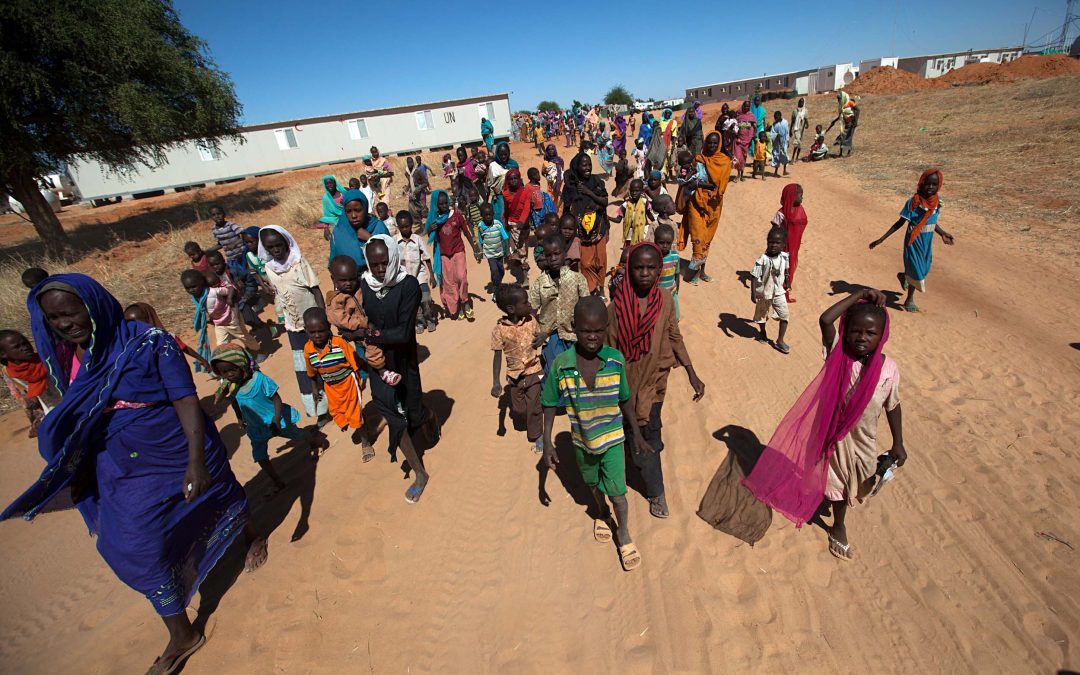
As of September 2012, Chad was hosting more than 288,000 refugees from Darfur in camps along the Chad-Sudan border. As of January 1, 2009 there were more than 2.6 million internally displaced persons (IDPs) in Darfur. Darfur has remained violent and unsafe, so return has not been an option for most IDPs. In fact, more people continue to flee affected areas; 300,000 Darfuris have been displaced between January and mid-May 2013. Although these IDPs are not considered refugees, as they have not crossed international borders, they have fled their homes and are living in camps and they deserve recognition on this day. Unlike refugees, IDPs remain under the protection of the Sudanese government, the very government that has perpetrated genocide against them.

Life in IDP and refugee camps is characterized by poor conditions and a lack of resources. In early June, five of nine IDP camps in West Darfur were found to have insufficient water supplies. In Chad, refugees were being transported away from camps on the border with Sudan because of the rainy season and safety concerns. The settlement that they have been moved to does not yet have adequate water to support all of the newcomers.

Huge influxes of newly displaced persons put strains on camp resources and newly displaced people must often wait for food and shelter that they need desperately. More than a month after an early April clash in Central Darfur 2,500 newly displaced families had not received any aid and were living out in the open with no food. The number of primary school aged-children in Kamala camp in South Darfur has risen to 22,000. There is a severe lack of teaching materials and space in schools; 4,357 of the children to not attend school at all.

One reason for this lack of aid is clearly related to budget and capacity. $685 million in aid went to Darfur in 2010 for food, health, infrastructure, sanitation, education, and other needs. This is clearly not enough to keep up with demand as more and more people are being displaced, markets are closing, and water pumps break and need to be replaced. However, another huge obstacle to providing aid to Darfur is a lack of cooperation from the Sudanese government. In mid-June Sudanese authorities refused to grant humanitarian groups access to 4,000 people affected by fighting in Central Darfur. Only four NGOs are currently operating in the affected area.

Disease is another huge problem for refugees and IDPs living in camps. These camps provide a deadly combination of a lack of sanitation, close living quarters, and a lack of health services which together can cause disease to run rampant. The recent arrival of new IDPs in El Salam, a South Darfur camp overwhelmed camp resources and disease killed twelve children and two women. The symptoms of diarrhea, coughing, and vomiting have spread through the camp and are too much for the single small health center to combat. The rapidly arriving rainy season will only make the situation worse in Darfur. Displaced people are often living out in the open with no shelter from rain or sun, which was the case on Thursday, June 6, when torrential rain in the Kamala camp in South Darfur led to the deaths of three children and the illness of many more. Sixteen people from the camp were reported to be ill, including seven who were considered severe and being treated at the understaffed and undersupplied camp hospital.

Security concerns also pose a threat to Darfuri refugees and IDPs. They have left their homes to escape violence and instability, but the camps do not keep them safe. Rape, beatings, and gun violence happen often in and around many IDP and refugee camps as displaced people are often targeted by militia groups. Even refuge camps on border regions in Chad are at risk, as refugees were moved away from the Tissi camp due to security risks as well as the approaching rainy season. The police, the Sudanese Army, UNAMID, and camp directors at El Salaam camp in South Darfur agreed upon a nighttime ceasefire to improve security in the camp, however, the ineffectiveness of this agreement was made clear when another shooting occurred shortly after it was signed.

Newly displaced persons at Garsila camp in Central Darfur live in fear of attacks by the rival tribesmen or pro-government militiamen that caused them to leave their homes in the first place. They receive no protection from UNAMID or government entities and feel that they would have no recourse should an attack occur. This is prompting many displaced Darfuris to consider moving yet again to another area they consider safer. These threats do not only put displaced persons and refugees in physical danger and haunt them emotionally. Fear of violence in West Darfur caused the Armenkol market to close. This, combined with fear of being caught by militias while traveling, caused a food shortage in the area, as there was nowhere to buy it.

There are few solutions to these complex and interconnected problems. Security concerns can cut IDPs and refugees off from food or safe water and the influx of new people is constantly overwhelming camp resources. Many people hope for resettlement, but the conflict in Darfur is not ending, instead is intensifying and more people are becoming displaced. Although camps are overwhelmed, voluntary resettlement is certainly not an option for these Darfuri people. However, IDPs at El Salam camp have reported that officials of the Darfur Regional Authority have attempted to coerce them into agreeing to return to their homes. The officials threatened to withhold the 100 sacks of sugar that had been sent as aid to the camp until inhabitants agreed to return home. This attempt to force people back to dangerous locations is doubly disturbing, as the 100 sacks of sugar would provide only a miniscule amount for each of the thousands of people in the camp. It is clear that the only way for these people to return home is to end to the violence and genocide that has been happening for more than ten years.

This tiny snapshot of life in refugee and IDP camps for Darfuri people demonstrates that they truly have no choice, no recourse, and nowhere to turn. World Refugee Day is an important day to think about the lives of refugees, but also to remember the second part of the UN theme; “Refugees have no choice. You do.” It is not enough to simply “empathize with, and understand” what refugees face, but to do something about it. Tell someone you know about the refugee situation in Darfur. Donate to provide the aid that is so desperately needed. Most importantly, lobby your government to work to create peace and bring refugees and IDPs home. You have a choice; choose to take action.

Haley Aubuchon,, Communication Intern at Darfur women Action Group

Read our past blogs :Justice cannot be ignored

By Haley Aubuchon

June 5th

Justice cannot be ignored

Darfur Women Action Group strongly supports the recent briefing by the ICC prosecutor given to the UN Security Council on June 5. The briefing calls on the international community, particularly the member states of the UN Security Council and the states parties to the ICC to fulfill their commitment, uphold to their legal obligation and provide all the necessary support needed to implement the pending arrest warrants against Albashir of Sudan, Abdelrahim Hussien, Ahmed Haroun and the notorious Janjaweed leader Ali Kushy.

On Wednesday, June 5, 2013 The UN Security Council was briefed by International Criminal Court Prosecutor Fatou Bensouda on the current situation in Darfur. The ICC Prosecutor briefs the Security Council twice a year on the current situation as well as the ICC’s progress and point of view. This is the seventeenth briefing that has been given on Darfur.

In her presentation, the Prosecutor addressed a number of concerns relating to Darfur and urged the Security Council to act. She stated that the situation continues to intensify and worsen, causing the daily suffering of millions. Bensouda cautioned that unmonitored business relations with Sudan can contribute financially to violence against civilians.

The prosecutor described the April 8 attack on the town of Um Dukhun. Several witness spotted Ali Muhammad Ali Abdel-Rahman, who is wanted by the ICC for several counts of war crimes and crimes against humanity, participating in the attack. She referenced the number of visits to Chad made by Sudanese president Omar al Bashir. As a signatory to the Rome statute, Chad is obligated to not only refuse to welcome al Bashir into the country, but to arrest him should he enter it.

Additionally, Bensouda pointed out the UN’s own visit to Khartoum, the capitol of Sudan, that included meetings with al Bashir. She encouraged the UN to analyze critically whether such contact was truly necessary and useful given his lack of cooperation with the ICC. The Prosecutor explained that such contact would embolden criminals. She stressed the need for strengthening relations between the ICC and the Security Council.

“We have done our part and it is up to this Council to live up to the legitimate expectations of Darfur’s victims, namely that individuals alleged to be responsible for their daily sufferings are brought to justice,” the Prosecutor stated.

For this reason DWAG call on the members of the UNSC to support the prosecutor’s report and to tell the Sudanese government that impunity for genocide, war crimes and crimes against humanity, particularly those perpetrated against women, are not acceptable. We call on our supporters to add their voice to our voice and press world leaders to bring long awaited justice for victims in Darfur.

For more information on the briefing, read articles at AllAfrica.com, UN News Centre, and the Sudan Tribune.

“My mother trapped between fires for ten years in Darfur”

“My mother trapped between fires for ten years in Darfur”

Please help Darfur Women Action Group speaks up for Darfur on this Mother’s Day

Dear Friends and Supporters of Darfur Women Action Group,

This mother’s day marks ten year since my mother has been caught up between the fires. Surviving genocide is not an easy task. It takes a lot of courage and resolve. Ten years for my aged mother is too long.

It’s because of my mother I survived. When I was under threat, she begged me and encouraged me to leave for my own safety and gave me the hope that I strongly hold onto until today by being a voice for my people.

When I left I had hope that I could speak for my people and the world would listen and do something to stop it. Sadly, a decade later my mother and millions of women are still trapped between the fires of Janjaweed and the government army’s attacks on a daily basis.

I continue to hold on to my commitment by speaking for my people everywhere to keep the hope alive, but the international community has shown a little commitment to end the suffering of millions mothers, fathers and children in Darfur and other regions in Sudan

This spring marks the 10th year of the genocide in Darfur where over 300, 000 people have been killed, over 2.7 million people have been displaced and many more have crossed the borders to live as refugees in the neighboring countries.

Recent reports indicate violence in Darfur has one again escalated and the security situation is deteriorating. This month the UN reported that 200,000 have been newly displaced in Darfur alone, among whom women and children are the most affected making up the overwhelming majority of the camps dwellers. The blockade of humanitarian access and attacks against the peacekeeping mission is ongoing.

Four years ago President Bashir of Sudan was been indicted by the International Criminal Court for crimes of genocide, war crimes and crimes against humanity committed in Darfur, yet he remains a fugitive of justice. Due to in-action by the international community Bashir extended attacks to the regions of South Kordofan and Blue Nile and has blockaded them from aid assistance for two years.

Today hundreds of men, women, and children continue to face death and are at extreme risk of starvation and disease. That is why we need your voice and we need your help more than ever before to continue speak up for them. With your support we are able to make our voices louder, and with your support to Darfur Women Action Group today we will continue to empower the most affected to stand up for themselves and to hold Bashir accountable to bring justice and lasting peace to our people.

Please make a tax deductable contribution today to honor your mother and many others in Darfur. Only with your generous support we can make a difference. Donate

Please feel free to share it with your network

Thank you,

Niemat Ahmadi& Darfur Women Action Group’s team

ICC Underscores Need for Justice for Genocide in Darfur

During the month of April, the international community remembers the victims of genocide and recognizes the horrendous crimes still being committed around the world. The genocide in Darfur began a decade ago this spring and despite international action the Sudanese government continues to target ethnic groups in Darfur as well as women through sexual violence. This week, the Chief Prosecutor of the International Criminal Court, Fatou Bensouda, issued the below statement marking the beginning of genocide awareness month and the Court’s efforts to provide justice for the victims of genocide in Darfur.

ICC Prosecutor marks Genocide Awareness Month

http://www.icc-cpi.int/en_menus/icc/press%20and%20media/press%20releases/Pages/OTP-statement-02-04-2013.aspx

In 2010, the International Criminal Court (ICC) issued its first warrant of arrest for genocide; a warrant which remains outstanding. Judges found that the evidence presented by the Prosecutor showed reasonable grounds to believe that Sudanese President Omar al Bashir is responsible for genocide by killing, causing serious bodily injury or mental harm and by deliberating inflicting conditions of life calculated to bring about the physical destruction of the Fur, Masalit and Zaghawa ethnic groups in Darfur.

Unfortunately for the victims in Darfur, their suffering continues because of lack of implementation of the arrest warrant. This April marks genocide awareness month and I call on all States, whether parties to the Rome Statute or not, to cooperate with the ICC in seeking/pursuing accountability for genocide. As we observea moment of silence for past genocides, we must not forget victims of the Darfur genocide.

To the Government of Sudan and other parties to the conflict, I remind you of your legal obligations to comply with Security Council Resolution 1593 adopted under Chapter VII of the UN Charter. To ICC States Parties, I remind you of yourcooperation duties under the Rome Statute. The Office of the Prosecutor appreciates the cooperation it has received to date from many states and international and regional organisations. But more can, must and should be done. Consistent concerted efforts are needed toenforce the warrants and ensure justice at last for the victims in Darfur.

To Contracting Parties to the Genocide Convention I recall article VI of the Convention which calls for persons charged with genocide to be tried “by a competent tribunal of the State in the territory of which the act was committed, or by such international penal tribunal as may have jurisdiction”.

The International Criminal Court is an independent, permanent court that investigates and prosecutes persons accused of the most serious crimes of international concern namely, genocide, crimes against humanity and war crimes. The Office of the Prosecutor is currently investigating and prosecuting such crimes in Uganda, the Democratic Republic of Congo, Central African Republic, the Darfur region of Sudan, Kenya, Libya, Ivory Coast and Mali. The Office is also conducting preliminary examinations in Colombia, Georgia, Afghanistan, Nigeria, Honduras, Guinea and South Korea.

DWAG Calls on the International Community to End Violence Against Women in Darfur

March 14, 2013

During the 57th session of the Commission on the Status of Women at the United Nations, the Darfur Women Action Group urges members of the international community to address the systematic violence directed toward women and their families throughout the 10 years of violence in Darfur.

The situation has been exacerbated by the lack of meaningful participation of female Darfuri civil society leaders in the regional and international forums, which provide them with opportunities to voice their demands or articulate their issues. Despite many years of suffering, women in Darfur have been doing incredible work supporting their communities and serving the most vulnerable populations in the camps. However, they still lack resources and effort needed to build the institutional capacity for their local NGOs.

Today, the situation on the ground in Darfur is truly dire. Girls as young as seven and eight years old are raped and some die as the result. Countless others have been ostracized because of the social stigma surrounding sexual and gender based violence. Women are considered spoiled because of rape and abandoned by their husbands and families. Many of the children born as the result of rape are left to die without care.

Despite the alarming rate at which rape and other forms of sexual violence occur as part of the ongoing genocide in Darfur, little has been done to address this deadly phenomenon. There have been no studies to determine the exact number of women raped or the actual impact of sexual violence on women and girls in Darfur. Women survivors are in desperate need of trauma counseling and psychosocial support as well as projects designed to provide fuel alternatives that could keep women safe inside the camps. Instead, women are left to go in search of firewood and other means of sustenance and risk facing this cruel act of violence on a daily basis.

The government of Sudan continues to obstruct any effort to put an end to this tragic situation which has persisted for years. The African Union-United National Hybrid Operation in Darfur (UNAMID), the largest UN peacekeeping mission in the world, is failing to meaningfully impact the security situation on the ground or provide protection for civilians. Despite Sudan’s ratification of several international human rights and humanitarian laws that are favorable to women rights, Sudan has no political will to meet its obligation on those terms. Further, Sudan continues to be reluctant to ratify the Convention on Elimination of all Forms of Discrimination against Women (CEDAW). All the international instruments that concern violence against women such as UN Security Council Resolutions UNSCRs 1325, 1820 and 1888 have not been implemented. Furthermore, many Sudanese laws and policies are discriminative and create unfavorable conditions for women in Darfur and all parts of Sudan including the capital, Khartoum.

Women represent about half of any nation’s talent and human resources, and even more so during times of war. In the midst of crises during which states’ resources are typically stretched to the limit, no society can afford to sideline those resources. Sadly in Sudan, where rape has been used as a weapon of war, women are extremely affected and they are still oppressed, having been forced to live in silence for all these years.

Women represent the overwhelming majority of the IDPs and refugees in Darfur and neighboring countries. Despite being victims of war and the long suffering that they have been enduring, women have demonstrated an outstanding resilience, strength and resolve to combat genocide and serve as spokespersons and leaders within their communities. Nevertheless, the abilities of women have not yet been utilized effectively by actors and stakeholders working to bring peace to Darfur. Unless women’s issues are brought to the forefront first, a sustainable end to the crisis will remain unattainable.

Ten years after the conflict began the situation for women in Darfur remains dismal. Widespread rape and sexual violence against women and girls continues to spread even in the absence of fighting. Recent trends show that Darfuri women are being systematically targeted even within other regions of Sudan especially in the capital Khartoum. There is also an increase in violence against female civil society leaders within the Sudan at large. Female civil society leaders are continuously abused by the authorities for raising their concerns about the repressive laws that restrict women’s freedoms and that allow impunity for security agents to abuse women under the Popular Discipline Act of the Sudanese security laws in the capital of Sudan. Female activists and human rights defenders have been subject to arrest and tortured for peaceful protests calling for legal reforms and even the simple act of wearing pants.

According to Niemat Ahmadi, the President of Darfur Women Action Group and survivor of the genocide in Darfur, “Women are raped everyday. They are raped during attacks on their villages while fleeing to safe refuge. They are raped in displacement and refugee camps when searching for firewood or water. Women are risking their lives every day because their basic needs are not being met.”

Ms. Ahmadi will brief members of the international community on the many challenges facing women in Sudan, particularly on violence against women in Darfur on March 14, 2013 during a side event during the Commission on the Status of Women at the United Nations and urge the world not to stand idly as rape and other forms of sexual violence become a norm in the lives of Sudanese women.

Security Council ignores realities of aerial attacks on civilians in Darfur

By Eric Reeves

The retreat on the part of the United Nations Security Council in responding to Khartoum’s continuous aerial military assaults on civilians in Darfur could not be clearer. In Resolution 1591 (March 2005) the Security Council had “demanded,”

“that the Government of Sudan, in accordance with its commitments under the 8 April 2004 N’djamena Ceasefire Agreement and the 9 November 2004 Abuja Security Protocol, immediately cease conducting offensive military flights in and over the Darfur region, and invites the African Union Ceasefire Commission to share pertinent information as appropriate in this regard with the Secretary-General, the Committee, or the [UN] Panel of Experts established under paragraph 3(b).”

On February 14, 2013—eight years and 500 UN Security Council resolutions later—this was reduced to the vague and tepid “demand,”

“that the [combatant] parties to the conflict exercise restraint and cease military action of all kind, including aerial bombardments….”

Rather than note the number of aerial attacks that have occurred, and their destructiveness within the civilian population—particularly in the Jebel Marra area, but throughout Darfur—aerial bombardment was simply one among many kinds of “military action.” No mention was made of the fact that literally hundreds of aerial attacks have been conducted in violation of Resolution 1591. In turn, this silence sends a clear message to Khartoum: “although we are obliged to say something publicly, we will not hold you accountable for these attacks, and will do as much as we can to equivocate in linking them to military actions by rebel groups.” Indeed, the language preceding mention of “aerial bombardments” was predictably equivocal, as the Resolution spoke to a new topic that focused mainly on the rebel groups:

“Expressing concern about the political and military links between non-signatory armed groups in Darfur and groups outside Darfur, and demanding that any form of direct or indirect external support for such groups ceases, and condemning any actions by any armed group aimed at forced overthrow of the Government of Sudan.”

No matter that the Sudan Revolutionary Front (SRF) is now broadly representative of the marginalized populations of Darfur, Blue Nile, South Kordofan, and eastern Sudan—and is working explicitly for regime change. The SRF comprises not only Darfuri rebel groups, but also the Sudan People’s Liberation Movement/Army-North (South Kordofan and Blue Nile), and the Eastern Front. Moreover, in an historic alliance, the coalition of political forces in northern Sudan known as the National Consensus Forces (NCF) signed a political agreement with the SRF in Kampala on January 5, 2013. It commits the coalition to removing the National Islamic Front/National Congress Party regime by political and military means.

In repudiating such broadly representative efforts by the Sudanese people to escape twenty-four years of vicious tyranny, the UN Security Council has decided that it will support Khartoum’s génocidaires and the principle of “national sovereignty” rather than those who suffer and die as a result of the regime’s continuing barbarism. It is this same commitment to “national sovereignty” that has immobilized the Security Council in the face of Khartoum’s continuing blockade of humanitarian relief to almost 1 million people in South Kordofan and Blue Nile. And it is this same commitment that leads to the Security Council’s looking away from more than a year and a half of relentless aerial attacks on civilians in South Kordofan and Blue Nile. On February 17, 2013, on behalf of the SPLA-N, Yasir Arman issued a statement that speaks precisely what the UN chooses to ignore:

“The Sudanese army and their allied militia have re-started a military dry season campaign beginning February 14th up to this morning, February 17th, in a heavily populated area with internally displaced civilians at Muffa Village and the surrounding area, 21 kilometers southwest of Kurmuk. The fighting has gone on for the last three days with heavy aerial bombardment from Sudan’s air force on the displaced camps in the village that resulted in putting 8,000 civilian displaced populations on the run towards the Ethiopian and South Sudan borders. It is to be noted seriously that the aerial and ground bombardment of the Sudanese army and their allied militia resulted in the displacement of more than 70 percent of the inhabitants of the rural Blue Nile, and as of now, nearly 200,000 from the civilian populations are refugees in Ethiopia and South Sudan.”

Such aerial attacks are now a constant, and extend well back in time. In December 2010 Khartoum bombed Kiir Adem (Northern Bahr el-Ghazal)—shortly before the Southern self-determination referendum (January 9, 2011); Khartoum denied the attack, but an Associated Press journalist present at the time confirmed the bombing. In November 2011—five months after it had begun its bombing campaign in South Kordofan, Khartoum’s military forces bombed the Yida refugee camp in Unity State, South Sudan. Khartoum again baldly denied the attack, but it was confirmed by a UN team on the ground, as well as by reporters for the BBC and Reuters who were present during the actual bombing attack. UN cowardice and disingenuousness, however, leave Khartoum’s UN ambassador unembarrassed as he makes the most absurd claims. Following the bombing of the Yida refugee camp,

“The Sudanese UN ambassador, Dafalla Haj Osman vehemently denied that SAF carried out any bombings inside their southern neighbour’s territories. “There is no aerial bombardment; we did not exercise any kind of military activity outside our borders,” he told reporters following the UNSC session on Sudan. Asked about confirmation from the BBC and Reuters correspondents at the scene, the Sudanese envoy suggested that the two are ’biased media’ outlets that are favouring rebels.” (Sudan Tribune, November 11, 2011)

In surveying the civilian destruction and suffering in Blue Nile and South Kordofan, one must conclude that the “Responsibility to Protect,” embodied in the Outcome Document unanimously adopted by the General Assembly (September 2005) and subsequently by the Security Council itself, has no legal or moral force:

“The international community, through the United Nations, also has the responsibility to use appropriate diplomatic, humanitarian and other peaceful means, in accordance with Chapters VI and VIII of the Charter, to help protect populations from genocide, war crimes, ethnic cleansing and crimes against humanity. In this context, we are prepared to take collective action, in a timely and decisive manner, through the Security Council, in accordance with the Charter, including Chapter VII, on a case-by-case basis and in cooperation with relevant regional organizations as appropriate, should peaceful means be inadequate and national authorities manifestly fail to protect their populations from genocide, war crimes, ethnic cleansing and crimes against humanity.” (International Coalition for the Responsibility to Protect)

Darfur has now entered its second decade of enduring “genocide, war crimes, ethnic cleansing and crimes against humanity.”

Following passage of Resolution 2091 Khartoum’s Permanent Representative to the UN Daffa Alla Alhag Ali Osman indulged in characteristic, which is to say obscene mendacity:

“[Daffa Alla] further denied that Sudan uses technical assistance for military purposes, describing the statement [concerning aerial bombardment] as a ’fallacious’ claim, saying Sudan used its air capacities only ’for peaceful and civilian purposes.’” (Reuters and Sudan Tribune, February 14, 2013)

In fact, there have been altogether more than 700 hundred confirmed aerial attacks on civilians in Darfur since the beginning of the conflict—more than 500 since UN Security Council Resolution 1591 was passed in March 2005 (a detailed spreadsheet, with specific incidents, casualties, sources of confirmation, as well as a broader analysis are available at: www.sudanbombing.org).

In Darfur the rebel forces have no aircraft of any kind. The more than 500 hundred attacks by the Khartoum’s Sudan Armed Forces (SAF) since March 2005 have been carried out overwhelmingly by highly inaccurate and inherently indiscriminate Antonovs (retrofitted cargo planes from which crude barrel bombs are rolled out the cargo bay).

Dismayingly, Khartoum is on the verge of completing a deal with Ukraine to purchase five more of these Antonovs (Reuters [Khartoum], February 13, 2013). Moreover, reliable sources in South Sudan report that Khartoum continues to use Antonovs to ferry supplies to the increasingly vicious Murle militia force of David Yau Yau in Jonglei State (South Sudan). Yau Yau’s forces were responsible for the February 8, 2013 attack on Walgar (Jonglei), in which some 120 people were killed, more than 100 of them civilians, including women and children. Yau Yau’s forces were reportedly wearing the uniforms of Khartoum’s Sudan Armed Forces (SAF). A UN investigative team has presumably filed its field report from Walgar, but we may be sure that it will not likely be made public. Nor will it place blame where it belongs for supplying the arms, ammunition, and equipment that allow Yau Yau’s forces to remain so potent in an area where re-supply of any sort is extremely difficult. Khartoum’s arming of the rebel forces is a flagrant violation of international law and a clear attempt to destabilize the South by exacerbating ethnic tensions.

None of this figures in the quarterly updates provide by Secretary-General Ban Ki-moon, who in his October 2012 report mentions only a single bombing attack (§16: July 8, 2012 south of Tawila, North Darfur). And yet dozens of aerial bombing attacks against civilians have been reported by eyewitnesses during the period covered by Ban’s report. The UN Secretary-General has essentially ignored the relentless and well-reported bombing of civilians in Darfur and thus egregious violations of the “demand” made by UN Security Council Resolution 1591. Moreover, there is nothing in Ban’s report about the campaign of annihilation that animates Khartoum’s relentless bombing campaigns in Blue Nile and the Nuba Mountains: it is as if there were no connection between what is occurring in Darfur and these regions. And nothing about Khartoum’s violation of the airspace of South Sudan to supply a renegade military force that is without a political agenda and trades almost exclusively on ethnic grievances that Yau Yau has deliberately inflamed.

Of course in the case of Darfur Ban has precious little data provided to him by UNAMID: the force is completely intimidated by Khartoum’s SAF and its militia allies, and has access only to those few regions of Darfur that Khartoum’s Military Intelligence designates. This most certainly does not include Jebel Marra, especially eastern Jebel Marra, where the bombing has been most intense. But the implicit suggestion that mentioning only a single aerial attack does justice to the relentless terror, destruction, and displacement experienced by many tens of thousands of human beings is a measure of Ban’s character as well as UNAMID’s dismal performance.

The UN’s New Fig-leaf: A reconstituted “Panel of Experts” for Darfur

At least partially in response to the outrageous disparity between what is occurring and what is being reported within the UN system, Resolution 2091 also “renews” the mandate of the so-called “UN Panel of Experts on Darfur.” But this is little more than a fig-leaf, if we are to judge by the most recent efforts of this politically eviscerated Panel. The highly authoritative Africa Confidential reported last April:

“A seismic diplomatic row is rumbling at United Nations headquarters in New York over the circulation of a damning report by former UN experts pointing to the supply of Chinese-made ammunition to the Sudan government for use against civilians in Darfur. The row exposes fresh divisions on Sudan at the UN Security Council and disarray in Secretary General Ban Ki-moon’s office. It may also unpick Beijing’s careful diplomacy as it seeks to realign its relations between Sudan and South Sudan.

“The report, which is circulating clandestinely at UN headquarters, was written by three of the original members of the UN’s Panel of Experts, which monitors violations of the UN arms embargo in Darfur. It argues that the Darfur crisis, far from winding down as Khartoum and some press reports suggest, is worsening, with new incidents of ethnic cleansing, arms deliveries and aerial bombing. Africa Confidential has obtained two separate reports on Darfur, one commissioned by Ban’s Under-Secretary for Political Affairs, B. Lynn Pascoe, which is highly conservative in its findings, and a more forthright, detailed unofficial version by the three specialists who resigned from Pascoe’s appointed Panel on Darfur in 2011.

“Weapons experts Mike Lewis (Britain) and Claudio Gramizzi (Italy), and Darfur and Chad specialist Jérôme Tubiana (France) resigned, Africa Confidential has learned, after Pascoe’s department declined to take seriously their complaints about the standards of competence and neutrality on the Panel. The trio have now sent their own report – with lengthy annexes – to the Security Council. This unofficial report details Sudan army ammunition found in Darfur that appeared to be Chinese-made. Some may have been made in the Sudan Technical Centre, a Sudanese military company in Khartoum. The findings upset China, which says the report is not an official document and should not be given a hearing. Diplomats from the United States and Britain are nonetheless backing the report in private.”

(“UN clash over Beijing bullets claim: UN experts’ reports differ over Darfur arms violations,” Africa Confidential 13th April 2012)

China is used to throwing its weight around at the UN, especially when it finds itself the target of criticism, which it clearly was in the reporting of the original Panel of Experts. As a consequence, Under-secretary Pascoe and Secretary-General Ban ensured that the make-up of the new Panel of Experts would be completely unthreatening because completely incompetent in the tasks demanded. I offer a detailed, side-by-side comparison of the weak “official report” that the UN has chosen to accept and the extraordinarily detailed and authoritative report by Mike Lewis (UK), Claudio Gramizzi (Italy), and Darfur specialist Jérôme Tubiana (France), the report that created such an angry response from China because it was so compelling in its findings.

What we are about to see, then, is the nominal renewal of mandate for the UN Panel of Experts on Darfur, but for a Panel that will in all likelihood be a reincarnation of the incompetent and politically pliable last Panel. Moreover, Resolution 2091 makes no explicit reiteration of the mandate of the UN Panel of Experts to monitor aerial military flights in Darfur. That more recent Panel was notable among other things for its laziness and lack of ambition: time on the ground in Darfur was minimal, and members of the Panel offered virtually no push-back when Khartoum denied them access, even as such access has been guaranteed by Khartoum in yet another (dishonored) agreement.

We should also be troubled by the recent assessment from UN Independent Expert on the situation of human rights in the Sudan, Mashood Adebayo Baderin, who claims that here has been “some significant progress towards the promotion and protection of human rights by the Government [of Sudan]” (Geneva, February 15, 2013). This is utterly preposterous, a gross misrepresentation that expediently ignores what has been reported by every single credible human rights group and news organization over many years. Baderin offers not a shred of evidence that justifies such a claim because of course there is none: praise is meant simply as a gesture to Khartoum to ensure future access to the country (during his first mission to Sudan, Baderin was denied entry to Darfur).

Baderin was sufficiently honest to point out a basic violation of the Doha Document for Peace in Darfur (DDPD), a farce the UN and the rest of the international community pretend is a viable arrangement for peace despite a complete lack of support among Darfuri civil society and consequential rebel groups:

“Darfur war crimes are being tried by ordinary courts, said on Sunday [February 10, 2013] UN expert on human rights in Sudan Mashood Adebayo Baderin who expressed concern over the lack of special courts. In accordance with the Doha Document for Peace in Darfur (DDPD), a Special Court for Darfur will be established to try gross violations of human rights and serious violations of international humanitarian law committed in Darfur, since February 2003.” (Sudan Tribune, February 10, 2013)

This ensures that no justice will be rendered and impunity will continue to prevail for Khartoum’s militias and proxies in the region (see below). There is no good news for Darfur from the UN; on the contrary, having given the illusion of doing something meaningful, the UN—the Secretariat, the Security Council, and the Human Rights Council—are likely to turn away from the worsening military and humanitarian situation in Darfur at precisely the wrong time.

Current realities:

I recently offered a lengthy overview of humanitarian conditions in Darfur (February 10, 2013, at http://www.sudanreeves.org/?p=3790). In just the intervening week, the reports from Radio Dabanga, Agence France-Presse, and the UN Office for the Coordination of Humanitarian Affairs (OCHA) make clear there has been yet further acceleration of the violence and threats to all humanitarian relief efforts:

§ Critical humanitarian aid delivery continues to be blocked by Khartoum using various means:

• Aid delivery is in jeopardy for an estimated 100,000 people affected by violence in Sudan’s Darfur region unless authorities grant better access, the United Nations warned on Thursday. One humanitarian agency has said the number of displaced people is the largest in recent years in Darfur, where a decade of civil war has been compounded by inter-Arab violence, banditry and tribal fighting. But the true extent of the problem is unclear because UN workers have had only limited access to the affected area of Jebel Amir, the UN humanitarian agency OCHA said in its weekly bulletin. Foreign aid workers, diplomats and journalists routinely face restrictions on their movement in Sudan’s far west. “The UN has informed the Sudanese authorities that it will not be able to continue providing food and other relief unless the relevant UN officials in North Darfur are permitted to travel to the area to register those in need of assistance and to carry out a comprehensive assessment,” OCHA said. (Agence France-Presse [Khartoum], February 14, 2013)

§ Some relief organizations have quietly withdrawn from various camps; others have been re-directed by Khartoum from humanitarian work to “resettlement” of displaced persons; many camps are bereft of critical food and medical supplies:

• Nine West Darfur camps dire conditions after agencies left: sources

Residents of nine displaced camps near El-Geneina, West Darfur, are facing dire conditions after humanitarian agencies left the sites months ago, sheikhs, leaders and activists told Radio Dabanga on Thursday [February 14, 2013]. UNAMID has reportedly halted its night patrols around the camps since the beginning of January, the sources said.

In addition, the distribution of grains has stopped for two months and the camps’ residents are now “receiving only lentils, sugar and salt.” Health centers are “lacking medicines,” the sources continued, explaining that medical organizations left the camps six months ago before the ministry of health took responsibility for running the establishments. Representatives of the following camps spoke with Radio Dabanga: Kirendink 1 and 2, Ardamata, Dorety, Riyadh, El-Sultan, Abuzer, Alhujaj and Jamiaat Zalingei. (Radio Dabanga [el-Geneina], February 14, 2013)

§ Increasing displacement of civilians inevitably adds to the crushing burden facing relief organizations:

• Tens of thousands of people flee fighting in Darfur in massive new displacement

Tens of thousands of people who have fled fighting in the largest displacement in western Sudan’s restive region of Darfur in recent years, face a severe shortage of clean water and sanitation services, Oxfam warned Thursday [February 14, 2013]. The international agency has called for increased access for humanitarian aid agencies in the El Sireaf, Garra Zawia and Kebkabiya areas of North Darfur following the fighting around Jebel Amir in January. “Tensions in the El Sireaf area are still high and have the potential to spread more widely. We are worried that there will be more displacement and we are already struggling to meet the needs of those who have already been forced to flee their homes,” El Fateh Osman, Oxfam’s Sudan Country Director, said. “We need key roads to be opened and for the authorities to allow for a full assessment of what the humanitarian needs are,” it said.

According to the UN, the displacement from Jebel Amir area in the past weeks has been more than the number displaced through all of 2012. “People are really in a panic and very fearful of more violence. Those who have been able to flee are not sure when they will return to their home areas, many of which have been destroyed in the fighting,” Oxfam’s Humanitarian Coordinator for North Darfur, Hamouda Kanu, said. “They have inadequate shelter for this colder time of year and are forced to defecate in the open. This could lead to the spread of disease,” he added….

An estimated 60,000 people have been displaced from surrounding villages to El Seraif town. Oxfam and [and it national Sudanese humanitarian partner] are attempting to send materials to construct 200 latrines in El Sireaf together with two technical experts but called on government authorities to improve access for humanitarian groups that so far has been limited.

Oxfam said the road linking Kebkabiya to El Sireaf town must be immediately opened to allow for bulky aid supplies to be transported to the area in order to help prevent the humanitarian situation there from worsening. The agency also warned that the areas affected by the new surge in fighting may also experience food shortages. Farmers were preparing for a good harvest this year but many crops in the area were burned in the conflict. Last year’s poor harvests in North Darfur have left people vulnerable. “The world has moved on from this entrenched conflict and humanitarian work is already severely under-funded. We are struggling to meet already existing needs even as more are pushed into crisis,” Osman said. “This conflict in Darfur is now 10 years old and we need to see a renewed effort to bring about stability and peace in this devastated area.” (PANA [Dar Es Saalam], February 15, 2013)

• Mornei camp in West Darfur facing water crisis

Displaced residents of Mornei camp in West Darfur are facing an acute drinking water crisis, due to the lack of fuel to operate the water stations in the camp. One of the camp’s sheiks told Radio Dabanga on Sunday, 10 February, that the camp is facing a water crisis due to the lack of fuel to operate the water stations in the camp. The sheikh added the water stations have not been operating for five consecutive days due to the lack of fuel. He claims that the responsible humanitarian organization has stopped providing fuel to the camp due to the fact that UNICEF suspended its fuel support. (Radio Dabanga [Mornei Camp], 11 February 2013)

§ Zam Zam camp (just outside el-Fasher, headquarters for UNAMID) has been particularly distressed in recent months:

• North Darfur camp closed for one week due to “constant attacks”

Displaced living in Zam Zam near El-Fasher in North Darfur are complaining the camp has been closed for one week due to constant attacks by pro-government militias and Central Reserve Forces (known as Abu Tira). Assaults began on 5 February at the camp when Abu Tira forces reportedly looted eight shops and fired random shots in the air in and outside the camp. Sources told Radio Dabanga they believed the incursion was in retaliation of the murder of two of their forces by “unknown gunmen” at a water station earlier that day. (Radio Dabanga [Zam Zam Camp], February 13, 2013)

• Tawila residents North Darfur complain about lack of medicine

Citizens from Tawila locality, North Darfur, have complained about scarcity and lack of medicine due to the restrictions imposed by government authorities on bringing medicine from El Fasher. Besides, the citizens complained about the deterioration of health services in the region. A number of patients from Tawila complained to Radio Dabanga about the scarcity and lack of medicine in addition to the poor health services being offered in the region. They revealed that the locality’s only health center, which is managed by Doctors Without Borders, receives more than 300 patients a day. It was added that the center’s staff informed patients that the authorities only allows them to bring medicine from El Fasher once every three months and that the medicine runs out in less than a month. (Radio Dabanga [Tawila], February 10, 2013)

§ In what me be the greatest threat to any peaceful resolution of the Darfur conflict, the lands of displaced African farmers continue to be appropriated by Arab groups from Darfur, but also Chad, Niger, and most ominously, Mali:

• Herders “settling” in displaced home-villages, West Darfur

[By “herders” Radio Dabanga typically refers to nomadic Arab groups, often heavily armed and part of the pro-regime militias—ER]:

Displaced living in different El-Geneina camps, West Darfur’s capital, are claiming that new herders’ groups have recently began settling in their home-villages and are threatening farmers to “voluntarily hand over their lands or die.” The areas, where the civilians lived before fleeing to camps, include Mujamra, Teriya, Mara, Kajan Kising, Habila and Kanary, they told Radio Dabanga on Friday. They are all located south of El-Geneina. A camp’s leader denounced the threats by the herders, calling them “unethical and irresponsible.” He appealed to the new comers to “resort to the voice of reason and dialogue” with the lands’ owners instead of using riffles. The leader called on state authorities to address the problem “before it turns into a disaster.” (Radio Dabanga [el-Geneina], February 15, 2013)

• Mali militants on 200 vehicles arrive in Kutum, North Darfur: sources

Multiple sources assert that 200 Land Cruisers with Islamist militants from Mali fleeing the hostilities in their country have arrived in Kutum, North Darfur, in the past 10 days. They told Radio Dabanga on Monday the groups are stationed in three different areas around Kutum, adding they are “inciting a state of fear and terror” among citizens. The first group can be found just one kilometer north of camp Kassab for displaced, the second in Jebel Mari, seven or eight kilometers northeast of Kutum, and the third in Sijana, about 10 kilometers north of Kutum, sources affirm. Upon arriving in Kutum, the militants’ vehicles were covered with thick green tarps and they were carrying heavy artillery, eyewitnesses pointed out. Some of the alleged Malian militants have “long beards, wear outfits resembling those found in Western Sahara and black shawls.” Witnesses added a number of them speak French and most do not speak Arabic. These groups go shopping at the Kutum market on a daily basis and use sign language to purchase goods, considering they do not speak the local language. They were last seen at the market on Monday and eyewitnesses claim they use Francs (savah), a currency mostly used in western African countries, while others use US dollars.

Displaced living in Kassab told Radio Dabanga they do not feel safe to leave the camp to collect firewood or to fetch water due to the presence of militants from Mali nearby.

Civilians are urging local and federal authorities to expel these groups from Sudan and keep them away from the country. They further urged the UN and international organizations to intervene. (Radio Dabanga [Kutum], February 11, 2013)

§ Fires have been a constant in camps for displaced persons, a great many of them of suspicious origin:

• Fire destroys 25 homes in South Darfur camp, Abu Tira blamed

A fire broke out on Monday night in the Dreige camp in Nyala, South Darfur, destroying 25 homes. The displaced are blaming the Sudanese Central Reserve Forces (known as Abu Tira) for setting the area ablaze. The accusations come after a member of the Abu Tira threatened to burn the camp just hours before the fire due to a discussion with a young man in a shisha place, sources informed Radio Dabanga. Families whose homes were destroyed are living out in the open and are in “urgent need of assistance.” Meanwhile, fellow camp’s residents have pledged to help them rebuild their houses. Displaced say Abu Tira are responsible for much of the insecurity around the camp, noting the forces periodically fire shots in the air in the evenings. Dreige’s activists stressed they cannot press charges at the police for fear of being murdered if identified by the perpetrators. (Radio Dabanga [Dreige Camp], October 14, 2013)

§ Spillover violence from the fighting in the Jebel Amer area continues to plague ordinary citizens, even as Khartoum seems content with the status quo. The regime has squarely aligned itself with one of the Arab groups in the conflict, the Northern Rizeigat (Abbala)

• Series of “killings, lootings” by Abbala militias in North Darfur

Abbala militias “armed by the Sudanese government” have been carrying a series of killings and lootings in North Darfur in the past two days, multiple sources affirm. On Tuesday [February 12, 2013], they opened fire on two high school students who were collecting hay killing them on the spot, the relative of one the victims told Radio Dabanga. The victims are Bashir Hammad Gassim and Abul Qasim Mohamed Abdul Rahman, who is deaf, the source noted.

Saraf Omra: five injured

Also on Tuesday, five people were injured in a two separate incidents in Saraf Omra, local sources informed Radio Dabanga. They alleged that Abbala militiamen stormed the city’s market late in the afternoon and started firing fiercely in the air. Two citizens were injured and the market was closed until Wednesday, according to eyewitnesses. About 500 citizens marched to the locality’s headquarters protesting against the market’s incident and demanding security. Guards responded by firing shots in the direction of the “angry” demonstrators wounding three of them, sources noted. Four out of the total five wounded victims were transferred to a hospital in Saraf Omra and the fifth was taken to a hospital in El-Geneina due to his serious injuries….

Lootings

A passengers’ vehicle on Tuesday was stopped in an area called Jebel Ireinat by Abbala militias, who stripped the commuters of all of their belongings, including their money and mobile phones, sources said. The vehicle belonged to a certain Ahmad Jelab and was traveling from Saraf Omra to Al-Sref Beni Hussein. On Wednesday, Abbala tribesmen looted a total of 80 cows and 320 goats in the areas of Korguleh north and Umm Khojara, Al-Sref Beni Hussein locality, sources reported. Members of the Arab Abbala and Beni Hussein tribes firstly clashed on 5 January in Jebel ’Amer, Al-Sref Beni Hussein locality, over control of gold mines in the region. Thousands were displaced as a result and the UN stated the tribal clashes led to the biggest forced displacement in Darfur in years, estimating that about 100,000 people fled their homes. Civilians fled mainly to the nearby towns of Al-Sref Beni Hussein, Saraf Omra, Kabkabiya and Abu Gamra. (Radio Dabanga [Seraf Omra], February 13, 2013)

§ The scale of the displacements continues to be extraordinarily great, with no end in sight:

• Abbala attacks in [West] Darfur “displace thousands” in 3 days

Attacks by Abbala militants have led to the displacement of thousands of people in the last three days in Central Darfur, sources allege, adding that three people were killed in the assaults. The three victims, who include two police officers, were killed in Umm Shalaya locality while several others were wounded. Sources speaking to Radio Dabanga on Friday from Mornei locality in West Darfur, assert that thousands of people fleeing the Abbala assaults have arrived in the area in the past three days. “Hundreds of families,” composed mostly of women and children traveling by foot or on the backs of horses and donkeys have been arriving in the locality’s capital, sources say. The displaced are now living in the outskirts of Mornei, without shelter or food, according to witnesses’ reports.

Other families reportedly fled to Zalingei. Clashes between the Arab Abbala and Beni Hussein tribes over control of a gold mine in North Darfur in the beginning of January spilled over into other states of Darfur. Coalition groups supporting each tribe were formed and also [formerly West] Darfur has witnessed a series of attacks in the past month. In addition, sources in West Darfur informed Radio Dabanga about the “increasing” presence of militias after the tribal clashes erupted. (Radio Dabanga [Umm Shalayla], February 15, 2013)

§ The level of impunity enjoyed by Khartoum’s militia and paramilitary allies is strikingly clear in the following incidents:

• North Darfur civilian killed for asking militia “to speak politely”

Four pro-government militiamen shot a civilian dead who asked them to speak politely to him at a Kabkabiya market in North Darfur. Onlookers said the gunmen wanted to purchase fuel at the city’s market on Thursday and asked the victim Adam Adam to remove his car from in front of the pump and give way to them. Adam asked the militia to speak to him “politely” prompting the gunmen to shoot him two times on the chest.

The victim, a resident of the Kirekir village, passed away upon arriving at the Kabkabiya hospital. (Radio Dabanga [Kabkabiya], February 15, 2013)

• SAF leader refuses to hand over alleged rapist to court, [West] Darfur

The leader of a Sudan Armed Forces (SAF) military base in Bindissey, [formerly West] Darfur, is reportedly refusing to hand over a colleague to court who is accused of raping two displaced girls last December. According to previous reports the girls were abducted at gunpoint and dragged outside the Bindissey camp where they were raped. The victims knew who the perpetrators were and their family pressed charges against them at the police station. On Wednesday, policemen announced one of the alleged perpetrators was scheduled to appear in court, but the local army commander said he would not hand over his soldier. He claimed not to recognize the testimonies provided by the victims, nor the accusations by the police or the court. (Radio Dabanga [Bindessey, West Darfur], February 13, 2013)

• Militants attack livestock traders in Kutum, North Darfur

A pro-government militia has been accused of beating four livestock traders in the area of Sandou, northern part of Kutum in North Darfur. Besides, the militants have been accused of looting the money the traders were carrying, 65 sheep and four mobile phones after beating them and stripping them of their clothes and shoes at gunpoint. The victims claim that several of the gunmen threatened them at gunpoint to remove their clothes. They added that they were held, without their clothes, for more than three hours, while the remaining gunmen took the money and livestock and fled. (Radio Dabanga [Kutum], February 18, 2013)

• Gunmen threaten to arrest Bindissey camp’s sheikhs, [West] Darfur

The Zakat Chamber in Bindissey locality, [formerly West] Darfur has threatened to arrest the sheikhs and omda’s of Bindissey camp unless they collect zakat (alms) from the camp’s residents. A camp activist informed Radio Dabanga that seven gunmen in a Land Cruiser vehicle arrived in the camp on Friday, 15 February, to arrest the camp’s sheikhs for not collecting zakat from the camp’s residents, as instructed by the Zakat Chamber. He stated that the displaced intervened and were able to prevent the arrests from taking place. The activist explained that the camp’s sheikhs and omda’s informed the Zakat Chamber previously that the displaced deserve to receive alms and are not able to give them. (Radio Dabanga [Bindissey, West Darfur], February 18, 2013)

§ Fighting is not, as press reports often suggest, confined to North Darfur—both West Darfur and South Darfur have seen heavy fighting and aerial bombardment:

• Fierce battles erupt in South Darfur between Sudan army and SLA-MM

The Sudanese Armed Forces (SAF) and Sudan Liberation Army of Minni Minnawi (SLA-MM) have clashed in different parts of South Darfur on Thursday [February 14, 2013] amid reports of heavy casualties. The deputy South Darfur governor Amin al-Sakin in remarks before a student convention in the state confirmed that fighting broke out in Oum-Gounga, which lies south of the capital town of Nyala…. [M]ultiple sources told Sudan Tribune that SAF suffered heavy losses in the battle and that the rebels managed to seize a number of army vehicles.

In Nyala, tension was growing among the residents amid rumors that rebels are closing in on the city. The local government has started mobilising paramilitary units to secure the state and stop any possible rebel attack. Saleh Abakr, a spokesperson of Sudan Revolutionary Front (SRF), of which SLA-MM is a member, claimed that they are now in control of Oum-Gounga, Baleel locality and South Railroad region. He said that they have inflicted heavy losses on SAF and captured 11 military vehicles and a large cache of ammunition. (Radio Dabanga [Khartoum], February 14, 2013)

§ And aerial bombardment, which apparently warrants only a single instancing in the October 2012 Darfur report of the UN Secretary General, is relentless:

• Rebels: shelling kills 12 in [West] Darfur, thousands displaced

The military spokesman of the Sudan Liberation Movement-Abdel Wahid (SLM-AW) is accusing the Sudanese government of shelling the Gidu village in West Jebel Marra, [formerly West] Darfur and killing 12 civilians on Thursday. Mustafa Tambour said an Antonov airplane bombed Gidu around 3:00pm, burning nine homes and all 12 civilians in them. He added three of the victims were children. In addition, more than 20 people were injured due to the shelling; some of them are in critical conditions. Tambour declared the Sudanese government is bombing civilians’ areas and called on the UN Security Council to establish no-fly zones over Darfur. Gidu residents fled the attacks and are hiding around valleys and mountains, he said.

9,000 displaced

The UN Office for the Coordination of Humanitarian Affairs affirms that recent fighting in West Jebel Marra has led to a new wave of civilian displacement with over 9,000 people arriving in Nertiti over the past week, bringing the total to 17,000. Nertiti is already home to 42,000 displaced, OCHA reported. (Radio Dabanga [Gidu, West Darfur], February 14, 2013)

• “Airstrike South Jebel Marra leaves several dead”

An airstrike by the Sudanese Air Forces in the area of Narwa, South Jebel Marra on Sunday, 17 February, has left several people killed and injured. Also, a number of livestock was killed as a result of the airstrike. Sources from the area told Radio Dabanga that an Antonov warplane dropped more than 10 bombs in two separate bombings on Sunday afternoon. According to the sources, several people have been killed and wounded as a result of the bombings in the area of Narwa, South Jebel Marra. Witnesses added that they were not able to count the number of dead and wounded victims as people fled in all directions. They pointed out that most of the people fled in the direction of Yama, on the way from Nyala to Zalingei. (Radio Dabanga [Narwa, South Jebel Marra], February 18, 2013)

§ The avalanche of rape, unreported by the UN, also continues to sweep across Darfur; again Ban Ki-moon’s report is wholly inadequate to this widespread and vicious brutality that goes completely unpunished:

• “Nine raped” in just over a week in Gereida camps, South Darfur

Displaced camps around Gereida in South Darfur have witnessed nine rapes in just over one week by pro-government militias, sources say, adding the general security situation at the camps is “worsening.” The first incident occurred on 5 February when seven militiamen raped three women from the Hashaba camp in Gereida while they were collecting firewood. Witnesses told Radio Dabanga two of the victims were minors. Six women who were also collecting firewood were raped by the same faction on 7 February. According to sources these victims live at camp Foreeka. Females suffer the most from the lack of security around camps, a source explained. Besides, he noted that pro-government militias commonly invade camps at night and start firing shots “at random.” The source demanded state and local authorities to provide security and protection to displaced persons. He further demanded UNAMID to establish patrols so women can collect firewood. (Radio Dabanga [Gereida, South Darfur], February 13, 2013)

• Militants rape displaced woman in West Darfur

Pro-government militants raped a displaced woman from Sirba locality in West Darfur on Saturday and wounded four other displaced women, sources informed Radio Dabanga. A witness claims that pro-government militias on horses attacked the neighborhood of “Shafo Helou” and beat the village’s residents in addition to seizing their belongings and livestock. After beating and looting residents, approximately nine militants raped an 18-year-old displaced woman in turns, the witness continued. (Radio Dabanga [Sirba], 11 February 2013)

• Militants kidnap displaced girl near Garsila, [West] Darfur

A pro-government militia kidnapped a displaced girl on Saturday from Garsila camp in Wadi Saleh locality, [formerly West] Darfur. It was reported that the child was taken to an unknown destination. A sheikh from Garsila camp told Radio Dabanga that the militants arrived on camels and attacked a group of children, aged between six and 13. Among the group were seven displaced girls. The sheikh added they were attacked while they were on their way back to the camp from collecting firewood. He stated that the girl is still missing, while the other children returned to their homes on Saturday evening. (Radio Dabanga [Garsila, South Darfur], February 18, 2013]

§ Khartoum has sent a clear signal to the embryonic Panel of Experts in an account that comes from the UN itself:

• UN Spokesman: “On 26 September 2012, two Sudanese Armed Forces helicopters flew at low altitude over a UNAMID patrol that was returning from an assessment mission to Thabit (North Darfur). The authorities claimed the aircraft mistook the patrol for an armed movement convoy. The patrol, which was clearly displaying UNAMID/United Nations insignia, returned to base safely. The mission was a pre-planned verification patrol that a Panel of Experts member availed himself of the opportunity to join.” (Inner City Press UN/New York], February 14, 2013)

This was no mistake or accident: it was the clearest possible signal to the UN and its new “Panel of Experts” that they will travel only to those areas that Military Intelligence designates.

Why Khartoum believes it has succeeded

Despite its open contempt for various elements of the UN, Khartoum too often continues to have its way within the UN. In one of the most bizarre and morally incomprehensible decisions every made by any UN body, Khartoum appears poised to head the committee charged with monitoring humanitarian access:

“A UN subcommittee dealing with economic and social matters selected Sudan to chair a special session in Geneva in July on the promotion of humanitarian assistance, prompting European and other Western governments to request the decision be reversed and that Sudan be given a less controversial assignment, diplomats told Turtle Bay. Nestor Osorio, the president of the UN Economic and Social Council, was expected to announce Sudan’s selection for the post tomorrow at a meeting at UN headquarters. But European governments requested that a decision be postponed as government scrambled to convince Sudan to abandon its quest for the job. Susan Rice, the U.S. ambassador to the UN, spoke with Osorio this week to express Washington’s concerns about the selection of Sudan.

“Western powers are concerned that appointment of Sudan would set the stage for another embarrassing UN spectacle in which a country routinely denounced for denying access to humanitarian aid workers is given the job of advocating for their interests. The move comes against a background of troubled relations between Khartoum and humanitarian aid workers. In March 2009, one day after the International Criminal Court accused Sudanese President Omar al-Bashir of committing genocide, his government expelled 13 international relief agencies from Darfur. Sudan has also prevented international aid workers into the restive Sudanese regions of Southern Kordofan and Blue Nile states, where conflict has displaced nearly 700,000 people and forced more than 200,000 to flee to Ethiopia and South Sudan. (Colum Lynch, Turtle Bay, February 14, 201)

Khartoum persists in its barbaric ways because the world refuses to take the suffering and destruction in Darfur seriously, and nowhere is this more conspicuous than within the United Nations. The National Islamic Front/National Congress Party long ago calculated that it could simply outwait the international community on “changing the demography of Darfur,” in the words of notorious Janjaweed leader Musa Hilal. It has taken a full ten years, but success for Hilal and his partners in Khartoum is now in sight.