Genocide Awareness and Prevention Month: A Time to Act
24th April, 2026
April marks Genocide Awareness and Prevention Month, a time to remember the victims and survivors of some of the darkest chapters in human history, and to reflect on our collective responsibility to ensure such atrocities are never repeated.
From Rwanda to Armenia to Cambodia to Darfur, the world has witnessed unimaginable violence against targeted communities. These were not inevitable tragedies. They were preventable. And yet, time and again, they unfolded in the face of delayed action, political hesitation, and a failure to act when it mattered most.
We remember the lives lost in the Holocaust, the Armenian genocide, the Rwandan genocide, and the genocide in Darfur. These are not distant events confined to the past. They are warnings of what happens when hatred is normalized, when early signs are ignored, and when the international community looks away.
Today, those warnings are once again unfolding before our eyes.
Nearly three years since the start of the war in Sudan on April 15, 2023, civilians continue to face mass atrocities, including targeted violence, displacement, and widespread sexual violence. In Darfur, patterns once recognized as genocide are re-emerging. This is not happening in a vacuum; it reflects the failure of longstanding international commitments, from the Genocide Convention and the Responsibility to Protect doctrine to Sudan-specific peace agreements and repeated UN Security Council resolutions, to translate into meaningful protection on the ground. Since the capture of El Fasher by the RSF in October 2025, they have committed mass killings, systematic sexual violence, and targeted ethnic killings, showcasing hallmarks of genocide confirmed by the UN FFM.
Genocide does not happen overnight.
It begins with dehumanization, exclusion, and impunity.
It escalates when those responsible are led to believe there will be no consequences.
Prevention, therefore, cannot be symbolic. It requires early action, sustained attention, and the political will to prioritize protection over indifference. Real genocide prevention means investing in early warning and early response systems that identify risks before violence escalates. It means supporting research, documentation, and evidence that can expose warning signs and guide action. It means listening to and involving civil society leaders and the diaspora community to heed their warning and advice, stemming from lived experiences. It means strengthening accountability mechanisms so perpetrators know there will be consequences.
A failure to follow genocide prevention measures in the past has resulted in signals of impunity, as armed actors have maintained their power, and civilians have remained unprotected. A glaring example of this is the Darfur Genocide in 2004. In the years that followed, ceasefire agreements were repeatedly violated, the 2006 Darfur Peace Agreement and later the 2011 Doha Document were only partially implemented, and key provisions on disarmament, restitution, and the safe return of displaced communities were never fully realized. Civilian protection remained inadequate despite the deployment of the African Union-United Nations Hybrid Operation in Darfur, while ICC arrest warrants against senior officials went unenforced for years. Rather than being dismantled, Janjaweed networks were absorbed into state security structures and later evolved into the Rapid Support Forces, while many perpetrators continued to wield political and military influence. The result was not justice or durable peace, but entrenched impunity, and it laid the groundwork for renewed atrocities that we see today.
As we mark this month, remembrance alone is not enough. Honoring victims means standing with those at risk today. It means listening to survivors, supporting those on the frontlines, and ensuring that accountability is not delayed or denied.
For Sudan, this moment demands urgency. It demands protection for civilians, meaningful humanitarian access, and credible pathways toward justice. It also requires recognition of the critical role Sudanese women and civil society continue to play, often under impossible conditions, in sustaining communities and advocating for peace.
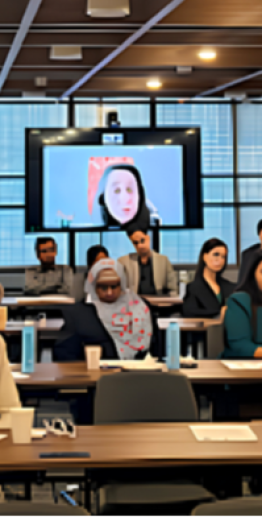
As part of this commitment, Darfur Women Action Group, in partnership with No Business with Genocide, Genocide Watch, United Nations Association-National Capital Area and the Alliance Against Genocide, convened “A World Without Genocide: The Case of Sudan” on April 24, 2026. This event served as not only a space for remembrance but a forum for accountability and reflection, bringing together survivors, advocates, and policymakers to confront the failures that have allowed genocide to occur and persist, and to identify concrete paths forward.
At Darfur Women Action Group, we reaffirm our commitment to amplifying these voices and advancing a world where genocide is not only remembered but prevented.
Because the question before us is no longer whether we understand the risks.
It is whether we are willing to act.
For inquiries, please contact: policy@darfurwomenaction.org
For more resources and to find ways in which you can help, go to: www.darfurwomenaction.org