Sudan Update – Week of Jan 12th 2026
ICC Confirms Atrocities in El Fasher as Genocide Expands Across Sudan
We are extremely alarmed and outraged by the accelerating campaign of mass atrocities unfolding across Sudan, and we raise the alarm as civilians in Darfur and Kordofan face deliberate extermination, imposed starvation, mass displacement, and the systematic destruction of civilian life. Recent developments, including the collapse of health systems, the mass killing and disappearance of civilians in Kordofan, the terrorization of communities under RSF control in Darfur, and the International Criminal Court’s confirmation that war crimes and crimes against humanity were committed in El Fasher, mark a dangerous new phase of this genocide. These crimes follow the same patterns seen in El Geneina and elsewhere: ethnic targeting, siege tactics, sexual violence, forced displacement, and attempts to erase evidence. The warning signs are unmistakable. The cost of continued delay will be measured in mass graves, lost generations, and irreversible human suffering.
ICC Confirms War Crimes and Crimes Against Humanity in El Fasher: Justice Cannot Be Selective
On January 19, 2026
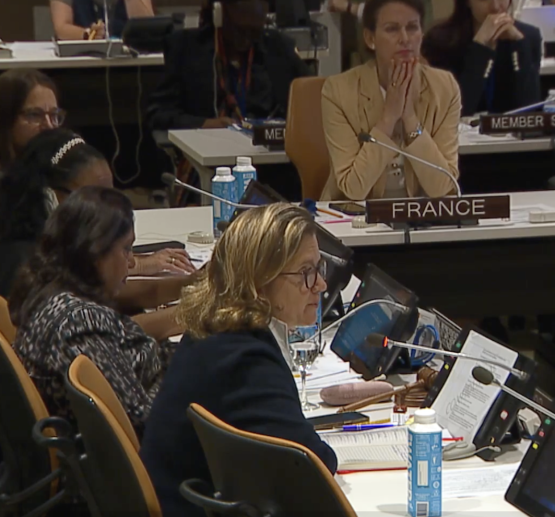
In a briefing to the UN Security Council, ICC Deputy Prosecutor Nazhat Shameem Khan confirmed that information gathered by the Office of the Prosecutor corroborates the commission of war crimes and crimes against humanity in El Fasher, naming the genocidal paramilitary Rapid Support Forces (RSF) as responsible. She warned that what the world is witnessing in El Fasher is not isolated; it mirrors the atrocities committed in El Geneina and will continue “from town to town” unless impunity is ended. The ICC described a pattern of ethnically targeted killings against non-Arab communities, celebration of executions, desecration of bodies, and efforts to conceal crimes; supported by ongoing analysis using imagery verification and satellite data, and by engagement with affected communities and witnesses.
This moment must be treated as a turning point, not another briefing filed away while civilians die. The ICC’s confirmation reinforces what survivors have testified to for months: El Fasher is not a battlefield, it is a crime scene, and the RSF’s violence is part of a deliberate and systematic campaign of extermination. DWAG calls for urgent, concrete cooperation with accountability mechanisms, including the ICC and the UN Fact-Finding Mission, and for immediate steps to preserve evidence, protect witnesses, and ensure prosecutions move beyond statements to arrests, indictments, and trials because justice delayed in Darfur has repeatedly become genocide repeated.
Health Systems Destroyed as a Weapon of War in Kordofan and Darfur
After more than 1,000 days of war, Sudan’s health system has not merely deteriorated, it has been deliberately destroyed, leaving civilians in Kordofan and Darfur to die from entirely preventable causes. In Kadugli, South Kordofan, the health sector has collapsed almost completely. All doctors and specialists have fled after sustained insecurity, leaving hospitals operating with only a handful of nurses, volunteers, and medical assistants. Laboratories function at less than 30 percent capacity using expired reagents; pharmacies have been cut off from medical supply chains for more than three years; and essential medicines—including insulin, malaria treatment, antibiotics, and anesthesia—are either unavailable or sold at extortionate prices. Specialized services, including dialysis, maternal health, tuberculosis, HIV treatment, mental health care, and vaccination campaigns, have shut down entirely, exposing pregnant women, children, and chronically ill patients to imminent death.
This collapse is unfolding alongside the resurgence of deadly epidemics across conflict-affected regions. In Jebel Marra, measles outbreaks have infected hundreds of children within days, killing unvaccinated infants who have been systematically denied basic immunization since the war began. In Khartoum and Omdurman, dengue fever and malaria have surged amid environmental collapse, stagnant sewage, and waste accumulation, killing dozens, disproportionately women and children, while medicines remain unavailable even on the black market. Health professionals warn of additional catastrophic risks, including potential plague outbreaks, as animal die-offs spread across eastern Sudan. These deaths are not the result of natural disaster or administrative failure; they are the foreseeable outcome of siege warfare, humanitarian obstruction, and the withdrawal or expulsion of aid agencies. The destruction of Sudan’s health system is part of a broader campaign of imposed suffering that turns disease, starvation, and medical abandonment into tools of war against civilian populations.
Famine Warning as WFP Funding Shortfalls Threaten to End Life-Saving Aid
As Sudan enters its 1,000th day of war, UN leaders are once again calling for an immediate cessation of hostilities, but civilians cannot survive on speeches while famine accelerates. On January 15, 2026, UN Secretary-General António Guterres reiterated calls for an immediate end to the fighting, while the World Food Programme (WFP) warned that food stocks could be depleted by the end of March without urgent financing, stating it requires $700 million to sustain assistance through June. WFP has already been forced to reduce rations to bare survival levels, meaning millions, especially children, pregnant women, and breastfeeding mothers, are being pushed deeper into starvation by a combination of violence, obstruction, and international abandonment.
This is not a humanitarian “shortfall”, it is the predictable outcome of a world that allows armed actors to besiege civilians while donors retreat and institutions normalize mass death. If WFP pipelines collapse, famine will not be an accident but rather enabled, and it will disproportionately affect women and children trapped in areas under siege. DWAG demands immediate international action to protect humanitarian access, sustain food pipelines, and hold perpetrators and enablers accountable for the use of starvation as a weapon of war through coordinated pressure, sanctions enforcement, and full support to the ICC and Fact-Finding Mission so that this atrocity economy does not outlast the world’s attention.
Civilians Across Kordofan and Darfur Targeted Through Killings, Abductions, and Forced Displacement
Across Kordofan and Darfur, civilians are facing a widening campaign of terror marked by mass killings, abductions, forced displacement, and the collapse of all civilian protections. Between January 15–17, 2026, local leaders and Sudanese legal monitors reported that Sudanese Armed Forces (SAF) units and allied armed groups attacked multiple villages south of El Obeid (North Kordofan), killing at least 220 civilians, wounding or disappearing hundreds more, looting livestock, and burning homes in what witnesses described as a scorched earth policy. At the same time, the RSF intensified atrocities across West Kordofan and South Darfur, carrying out indiscriminate shelling, summary executions, mass kidnappings, and forced recruitment, including the detention of thousands of civilians in Abu Zaid, Al-Mazroub, and Wad Banda, where families were coerced into paying ransoms or seeing their loved ones forcibly transferred to frontlines. In Nyala, under RSF control since October 2023, civilians continue to be abducted, extorted, and killed in a city gripped by lawlessness, identity-based targeting, and the total absence of policing or judicial institutions.
These abuses are not isolated incidents, nor the chaos of battle; they reflect deliberate strategies of domination through terror, displacement, and collective punishment. Civilians are not caught in crossfire but rather chosen, targeted, and destroyed with intent, whether through RSF governance-by-terror or attacks by SAF-aligned forces that violate international humanitarian law. DWAG is unequivocal: all armed actors committing crimes against civilians must be held accountable. The international community’s selective outrage and failure to enforce civilian protection have enabled perpetrators on all sides to act with impunity, allowing Kordofan and Darfur to slide further into mass atrocity.
DWAG Calls on the International Community to Act Now
- Enforce an immediate ceasefire with civilian protection guarantees, including an end to aerial bombardment, drone strikes, sieges, forced recruitment, and attacks on villages, displacement sites, and urban neighborhoods across Darfur and Kordofan.
- Establish and secure humanitarian corridors by land and air, including cross-border access through Chad and other routes, to ensure safe, sustained, and unhindered delivery of food, medicine, fuel, and emergency assistance, and to allow civilians freedom of movement without fear of abduction or execution.
- Deploy international civilian protection mechanisms, including a Chapter VII–mandated protection presence, to safeguard civilians, displacement camps, hospitals, health workers, and humanitarian operations, particularly in El Fasher, Kadugli, El Obeid, Nyala, and surrounding areas.
- Advance accountability without exception, including full political and financial support for the ICC and the UN Fact-Finding Mission for Sudan; immediate cooperation to arrest and surrender individuals subject to ICC warrants, including Omar al-Bashir, Ahmed Haroun, and Abdel Raheem Hussein; and the preservation of evidence related to mass killings, sexual violence, and starvation crimes.
- Cut the weapons pipeline fueling genocide by expanding and enforcing the arms embargo across all of Sudan, imposing targeted sanctions and travel bans on RSF leadership and their enablers, and holding states and private actors accountable for financing or supplying forces committing mass atrocities.
For inquiries, please contact policy@darfurwomenaction.org
About DWAG
Darfur Women Action Group (DWAG) is a women-led anti-atrocities nonprofit organization with 501(c)(3) status, founded in 2009 by a Darfuri genocide survivor to amplify the voices and empower the affected communities and to provide a platform for interested stakeholders to work on advancing its unique goals.