

DWAG staff with local partners in Gorom, South Sudan
Women Leading the Response
Gorom, South Sudan- When Niemat Ahmadi founded Darfur Women Action Group (DWAG), she was an individual with a promise to create an organization that would raise the alarm and amplify the voices of conflict-affected Sudanese women. When in April of 2023 violence and atrocities committed against civilians resumed, DWAG responded by reenergizing and recommitting to recognizing the resilience, courage and resolve of women on the frontlines. In 2026, DWAG operates across 11 states in Sudan, in addition to our regional work in Chad, Uganda, and South Sudan with displaced communities in refugee camps.
Thanks to the work of Samyia Abdelrahman, Mohamed Salih, Niemat Ahmadi, dedicated volunteers, and DWAG staff, community lead support has grown in the Gorom Refugee Camp, home to over 22,000 people southwest of Juba, South Sudan; one of the critically overwhelmed refugee camps in the region. Sudanese women are facilitating documentation, aid, and working hard to keep their communities united. Despite deliberate and heinous sexual violence and gender based warfare, women are leading their communities as survivors and fierce protectors– not victims.
Deeply rooted in the communities we serve, our team includes displaced Sudanese people dedicated to supporting their people. As we grow, we collaborate closely with experts and survivors to ensure our work remains culturally competent. In South Sudan, working closely with established institutions, structures, and civil society organizations promotes authentic and rapidly implemented support. Shared language, context, and experiences offer sensitivity and authenticity that is vital to the movement.
“Women in Gorom know exactly what they need. Our job is to make sure someone is listening.” – Mohamed Salih
Fleeing War, Facing New Crises
In 2011, South Sudan became independent from Sudan, marked with conflict before and after the split, over oil and economic resources, land disputes, support for armed groups, and marginalization and political exclusion including of the Dinka, Nuer, and Shilluk ethnic communities in South Sudan. According to the UNHCR, 661,529 asylum seekers and refugees across 183,313 households are living in South Sudan, as of September 2026. 75% are women and children, while 11% are persons with special needs. Some vulnerable communities include people with serious medical conditions at risk due to the collapse of the health system, elderly people at risk of isolation and mobility loss, women at risk of violence and exploitation, single parents supporting families, unaccompanied minors at risk of exploitation, and children facing malnutrition and disease. The vast majority, 621,766, are Sudanese nationals but people from the DRC, Ethiopia, Eritrea, Central African Republic, and other countries in the region are also seeking refuge in South Sudan.
Gorom Refugee Camp, located approximately 26 kilometers southwest of Juba in Central Equatoria State, South Sudan, was established in 2010 by the United Nations High Commissioner for Refugees (UNHCR) and the Government of South Sudan. The camp originally hosted roughly 2,500 displaced people. Conflict continues to displace people from Sudan to South Sudan especially along the border states. As violence continues in Sudan without meaningful intervention, South Sudan’s neighboring countries are facing the ripples of war and the brunt of the refugee and displacement crises.
On October 15th, OCHA released a humanitarian update on South Sudan, raising concerns over the disease outbreaks and emphasizing the drought-like conditions affecting nearly 4 million people. Severe and increasing food insecurity and malnutrition are creating new waves of mass displacement. An estimated 1.2 million people across the country require urgent mental and psychosocial support. Insurgent fighting and political tensions grow as economic hardships continue taking a toll on the people of South Sudan.
An Overcrowded Camp, Shrinking Support
Today Gorom is 5 times over the intended capacity with over 22,000 people, according to Peace Winds America. In January 2025, sources indicate nearly 7,000 people arrived in a single influx, mostly Sudanese nationals, who faced displacement first by the war at home and then again by the violence in Juba.
Funding shortfalls from the UNHCR budget collapses and the U.S. cuts to international humanitarian aid and World Food Program USA in paradox to the influx of need have significantly inhibited food rations and aid, and water, sanitation, and health services are stretched far past capacity. Women and children queue longest for water and are the least likely populations to be consulted about what response should look like.
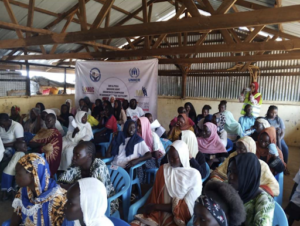
GBV and PSEA Massive Joint Awareness Campaign in Gorom Refugee Settlement
Women and Girls Bear the Heaviest Burden
Women and children who arrive with severe trauma after surviving violence and sexual abuse, carry the sharpest edge of this. Gender based violence (GBV) remains significantly underreported due to concerns of retaliation, stigma, and social exclusion, according to the UNHCR. In addition, the consequences of GBV are substantial and long-term, including sexually transmitted infections, unintended pregnancies, the risks of unsafe abortions and unassisted birth, and serious physical and mental health impacts for Sudanese women and girls.
Local Partnerships Put Support Into Action
Through working within the camps existing structures, workshops and humanitarian aid can be delivered jointly with local governance and UN partners, including UNHCR, the government of South Sudan, Camp Committee, Host Community Leadership, Local Police, and the local Secondary School to support our rights-based policies of financial management, code of conduct, safe guarding, data protection, and protection from sexual exploitation and abuse.
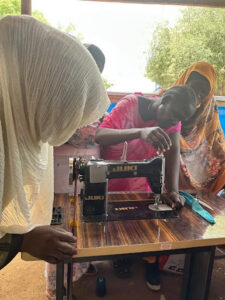
Economic Empowerment of Women, Handicrafts
Women’s Priorities Shape the Response
DWAG has one mission here: to empower displaced and refugee women with the protection, skills and resources they need to rebuild their lives, support their families, and take a leading role in their communities. Registered as a national organization with the Relief and Rehabilitation Commission, DWAG works in Gorom Refugee Camp on protection, psychosocial support, education and increasing quality of life. Our work is led by women from the communities we serve. We work alongside camp leadership, local authorities, and humanitarian partners to ensure women’s needs shape the response, not follow it.
DWAG organizes protection and gender based violence prevention workshops for women, youth, and men, delivered in partnership with UN agencies, to invest everyone in prevention as a community responsibility. Trauma recovery workshops for women carrying the psychological impacts of war and displacement are delivered alongside dignity kits to empower women with support and tools to process trauma and work towards recovery. Four workshops have been delivered in 2026, helping over 150 people. Subsequent planning is now underway to support collective healing through creating safe places.
Handicraft workshops offer therapeutic opportunities to exercise and develop design, tailor, and sewing skills. Over 60 women have participated in three sessions so far, with developments for future sessions underway. These women have designed and made clothes, handbags and jewelry, fostering connection, cultural preservation and healing.
Continuous English language classes have run since January, with 60 learners, working to build skills in the midst of displacement. English language classes support quality of livelihoods as English is more predominately spoken in South Sudan– along with local languages, as opposed to Sudan where Arabic is the official language.
Farmland secured through agreements with the local secondary school have been allocated to camp farmers and are currently being cultivated to support Gorom’s most vulnerable families. Food parcels have been distributed, including for Ramadan, made possible by individual donations and organizational support.
Women in Gorom take part in these programs not as recipients, but as partners. Building leadership among those historically excluded from decision making is how sustainable change is made.